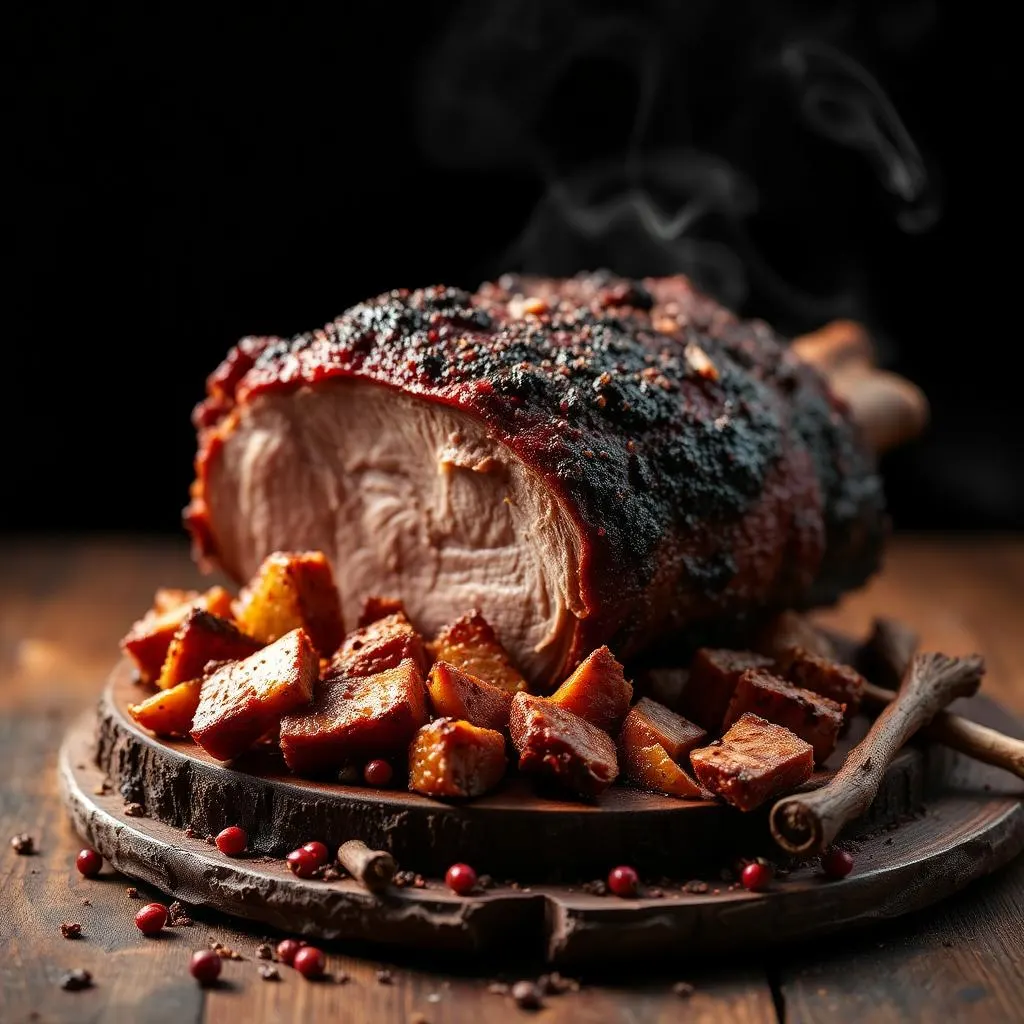
Pimento-Wood Whole Shoulder Authentic Jerk Pork
Real Boston Bay jerk. Made-from-scratch wet jerk, two-day cure, smoked over pimento wood until mahogany. The recipe the whole region builds toward.
Cook Mode
One step at a time, big text, timers, and your screen stays awake. 0/8 steps done.
Ingredients
Tap to tick off · 0/19 gathered
- — MAIN —
- — AUTHENTIC WET JERK —
Method
- 30 min
Begin by toasting the 0.25 cup of whole allspice berries in a dry skillet until fragrant, then grind them fresh with 2 tbsp black peppercorns. In a high-speed blender, combine the fresh grind with 0.25 cup ground allspice, 9 scotch bonnet peppers, 2 bunches of scallions, 1 head of garlic, 3 inches of ginger, 3 tbsp fresh thyme, 2 tbsp brown sugar, 1 tbsp cinnamon, 1 tbsp nutmeg, 1 tsp clove, 0.25 cup soy sauce, 0.25 cup lime juice, 2 tbsp white vinegar, 0.25 cup oil, and 2 tbsp salt. Process until it forms a coarse, emulsified wet paste that is loose enough to spread but thick enough to cling to the meat surface.
Why it matters
Freshly toasting and grinding allspice releases volatile oils that provide the signature aromatic backbone of authentic Jamaican jerk.
Common mistake
Using pre-ground allspice which lacks the pungent depth required for this high-flavor profile.
- 20 min
Take the 13 lb whole bone-in pork shoulder and score the fat cap and muscle deeply in a diamond pattern, reaching nearly to the bone in thicker sections. Massage the wet jerk paste aggressively into every crevice, ensuring the interior muscle fibers are exposed to the marinade. This traditional 'cured' jerk method uses the salt and acids in the marinade to begin denaturing the proteins, allowing the heat-resistant scotch bonnet oils and spices to penetrate deep beyond the surface.
Why it matters
Deep scoring increases the surface area for flavor penetration and ensures the internal meat is seasoned, not just the bark.
Common mistake
Failing to score deep enough, leading to bland interior meat in a large 13 lb cut.
- 48h
Place the coated shoulder into a non-reactive vessel or heavy-duty vacuum bag and refrigerate for 24 to 48 hours. During this phase, flip the meat every 12 hours to ensure the marinade doesn't pool at the bottom. This prevents the pork from sitting in the 'danger zone' (40-140°F) for too long during the eventual cook, as the salt and vinegar cure the exterior while the proteins tenderize in the cold environment.
Why it matters
A multi-day cure allows the allspice and capsaicin to bond with the muscle fibers, resulting in the characteristic mahogany color and flavor depth.
Common mistake
Rushing the cure to less than 12 hours, which results in surface-level flavor only.
- 235°F1h
Establish a clean-burning fire using pimento wood chunks or logs, aiming for a steady ambient smoker temperature of 235°F. If using a charcoal-based offset, ensure you have enough pimento wood to provide 'blue smoke' for the first 6 hours of the cook. If available, lay green pimento branches across the grates to create a natural rack; this allows the meat to be steamed by the moisture in the green wood while being smoked from below, mimicking the traditional Boston Bay jerk pits.
Why it matters
Pimento wood provides a specific clove-like smoke profile that is chemically distinct from hickory or oak.
Common mistake
Using heavy white smoke from unseasoned wood which creates a bitter, creosote-heavy finish.
- 235°F10h
Place the pork shoulder on the pimento branches or grates and smoke at 235°F. For the first 6 hours, do not open the lid to ensure the bark sets properly. After the 6-hour mark, begin mopping the meat every 90 minutes using the reserved jerk marinade diluted with a 1:1 ratio of water or apple cider vinegar. This prevents the sugars in the marinade from scorching while maintaining a humid environment to help the pork navigate the 'stall'.
Why it matters
Maintaining a 235°F temp allows fat to render slowly without drying out the picnic portion of the shoulder.
Common mistake
Opening the lid too frequently, which causes temperature swings and stalls the rendering process.
- 200°F2h
Monitor the internal temperature until it reaches a target of 200°F. Authenticity dictates an unwrapped cook to maximize the 'jerk bark' (a dark, crusty exterior), but if the color is becoming too dark or you are behind schedule, you may wrap in butcher paper at an internal temp of 170°F. The pork is done when a probe enters the thickest part of the shoulder with no resistance, like 'sliding into warm butter'.
Why it matters
The 200°F internal mark ensures the collagen has fully converted to gelatin for a tender bite.
Common mistake
Pulling the meat by time rather than tenderness, resulting in tough, unrendered pork.
- 1h
Remove the shoulder from the smoker and wrap loosely in foil or butcher paper. Place it in a dry cooler or a room-temperature oven for at least 60 minutes. During this time, carryover cooking will finish the tenderization process, and the muscle fibers will reabsorb the rendered fats and juices, ensuring the meat doesn't dry out the moment it is cut.
Why it matters
Resting prevents the juices from purging onto the cutting board, keeping the final product moist.
Common mistake
Cutting into the meat immediately after removal from heat, causing an immediate loss of moisture.
- 15 min
Instead of pulling the pork into shreds, jerk is traditionally served 'chopped'. Use a heavy cleaver to hack the shoulder into rustic 1-inch chunks, ensuring every serving contains a mix of the bone-side meat, rendered fat, and the highly seasoned mahogany bark. Serve with the traditional scotch bonnet vinegar sauce on the side for those who want additional heat.
Why it matters
Chopping identifies the dish as authentic Jamaican jerk and provides a superior texture compared to shredded pork.
Common mistake
Pulling the pork too finely, which hides the textural contrast of the bark.
6 more steps locked
You've seen the ingredients and the first two steps. Pit Members get every step, every temp, every glaze — plus the Cook Monitor and Pitmaster AI.
See Membership OptionsAlready a member? Sign in.
Sauce It
Cooks & Reviews
Guild members can rate this recipe, log their cooks and share photos.
Sign in to continueMember reviews
No reviews yet — be the first to rate this cook.
Ask the Pitmaster about this recipe
Substitutions, scaling, technique, troubleshooting — get answers grounded in this cook.
Sign in to try the AI Pitmaster on Pimento-Wood Whole Shoulder Authentic Jerk Pork. New members get 3 free questions.
Sign in to tryComments(0)
Loading comments…