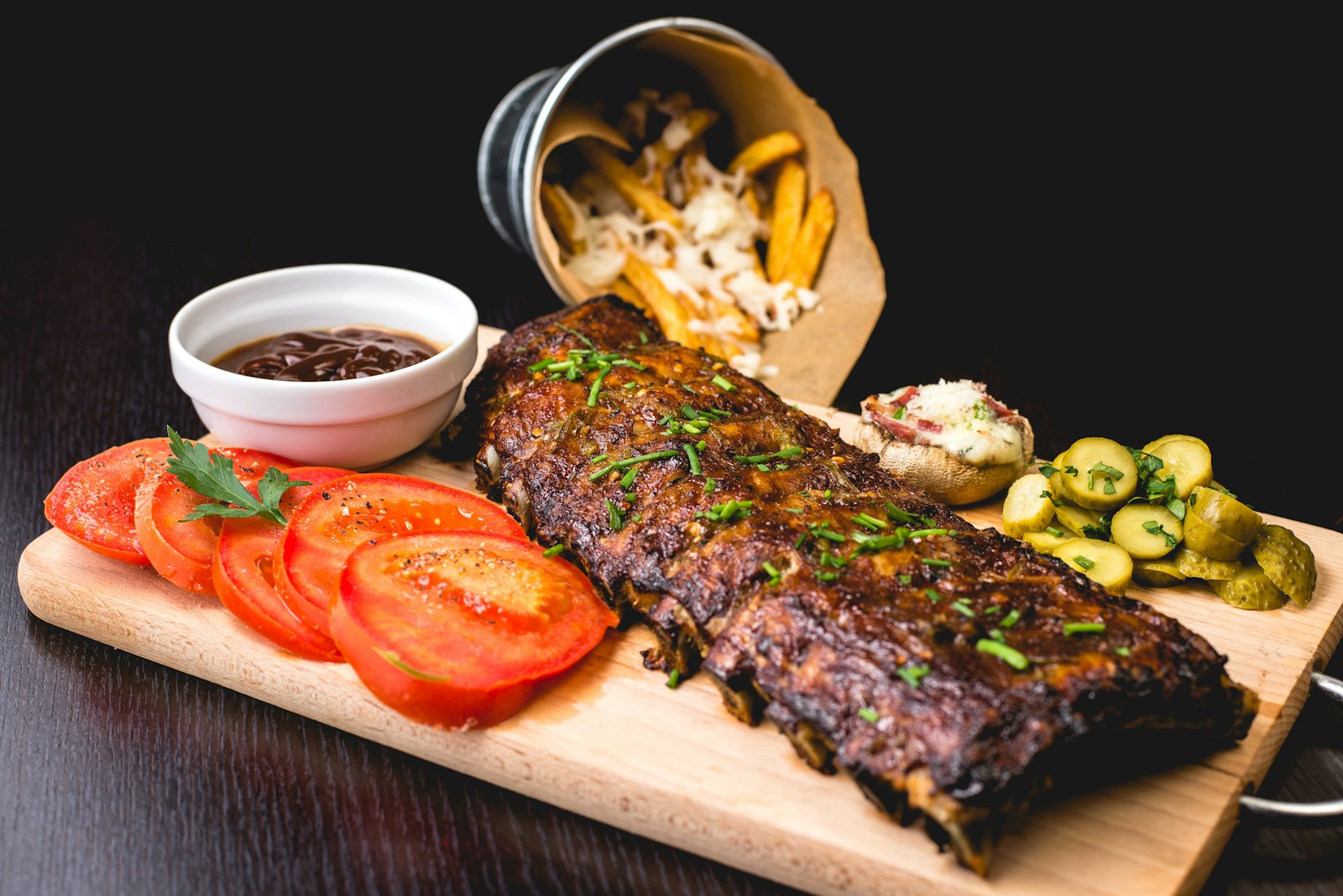
Block-Famous Asian Smoked Ribs
Freeze-marinade pork ribs smoked low and lacquered with a sticky Japanese tare glaze. The kind of ribs that make people stop talking.
Cook Mode
One step at a time, big text, timers, and your screen stays awake. 0/9 steps done.
Ingredients
Tap to tick off · 0/7 gathered
Method
- 12h
Combine 0.5 cup soy sauce, 0.25 cup mirin, 0.25 cup brown sugar, 2 tbsp grated fresh ginger, 6 cloves crushed garlic, and 1 tbsp toasted sesame oil in a bowl. Place the 2 racks of St. Louis style pork ribs into heavy-duty vacuum bags and pour in the marinade. As the liquid freezes over 12 hours, the expansion of ice crystals creates micro-tears in the muscle fibers, allowing the high-sodium soy base to penetrate deeper than a traditional soak once the thawing process begins.
Why it matters
Freezing the marinade into the meat forces flavor compounds into the cellular structure of the pork.
Common mistake
Leaving the membrane on prevents the marinade from reaching the meat through the bone side.
- 12h
Transfer the frozen ribs to the refrigerator for a slow 12-hour thaw. This gradual temperature shift—keeping the meat below the 40°F food safety danger zone—ensures the muscle fibers reabsorb the rendered marinade liquids rather than purging them. Once fully thawed, remove the ribs from the bags and discard the remaining liquid; do not rinse the ribs, as the surface sugars are essential for the upcoming bark formation.
Why it matters
A slow thaw prevents 'purge,' ensuring the moisture and flavor stay inside the rib meat.
Common mistake
Thawing on the counter at room temperature, which invites rapid bacterial growth.
- 1h
Pat the ribs dry with paper towels to remove excess surface moisture. Place the ribs bone-side down on a wire rack over a sheet pan and return to the refrigerator uncovered for 60 minutes. This airflow creates a 'pellicle'—a tacky, translucent skin on the surface of the meat. This protein layer is scientifically critical as it provides the necessary friction and chemistry for smoke particulates to adhere to the meat rather than sliding off with condensation.
Why it matters
The pellicle acts as the 'glue' for smoke, ensuring a deep mahogany color and clean smoke flavor.
Common mistake
Skipping the drying phase, which leads to 'steamed' meat and a grey, unappealing exterior.
- 225°F45 min
Prepare your smoker for a steady 225°F using a blend of Cherry and Hickory wood. Cherry provides the deep red aesthetic required for Asian-style ribs, while Hickory provides the backbone of traditional BBQ smoke. Ensure the smoke is 'thin and blue'—this indicates complete combustion. Heavy white smoke contains creosote, which will turn the delicate ginger and mirin notes bitter and metallic.
Why it matters
Clean combustion is the difference between a refined smoky flavor and a bitter, dirty aftertaste.
Common mistake
Starting the cook before the fire has stabilized, leading to temperature spikes and acrid smoke.
- 225°F3h
Place the ribs in the smoker bone-side down. Smoke for approximately 3 hours, or until the surface of the meat has achieved a dark, semi-firm 'bark.' Spritz the ribs every 45 minutes with apple juice or water to keep the surface cool and moist, which encourages smoke rings to form. The target at the end of this phase is an internal temperature of roughly 160°F before the transition to tenderizing.
Why it matters
The first three hours are where the majority of smoke absorption and color development occur.
Common mistake
Opening the lid too frequently, which drops the temperature and stalls the rendering of fat.
- 225°F1h 30m
Remove the ribs and place them on a large sheet of peach butcher paper or heavy-duty foil. Add a small knob of butter and a 1 tbsp splash of mirin to each rack. Wrap tightly to ensure no steam can escape. Return to the smoker for 90 minutes. This creates a high-humidity environment that accelerates the breakdown of tough collagen into gelatin, providing that 'competition tender' feel where the meat yields to the tooth without falling apart completely.
Why it matters
Wrapping bypasses the 'stall' and ensures the ribs become tender without drying out.
Common mistake
Wrapping too loosely, which allows steam to escape and results in dry, tough ribs.
- 225°F15 min
Unwrap the ribs and check for doneness using a probe; they should feel like soft butter (internal approx. 195°F-203°F). Using the remaining tare or a reduced version of the marinade, brush a thin, even coat over the top of the ribs. Increase the smoker temp slightly or allow the heat to set the glaze for 5 minutes until tacky. Apply two more thin coats, waiting 5 minutes between each. This 'Japanese Lacquer' technique builds a deep, glossy umami crust that adds texture and concentrated flavor.
Why it matters
Multiple thin coats create a professional, glossy finish that thick sauces cannot replicate.
Common mistake
Applying one thick layer of glaze, which usually slides off the meat and pools in the smoker.
- 15 min
Remove the ribs from the smoker and let them rest on a cutting board, tented loosely with foil, for 15 minutes. During this time, the internal temperature will equalize and the muscle fibers will relax, reabsorbing the rendered juices. This prevents the liquids from rushing out when you make your first cut, ensuring every bite is succulent.
Why it matters
Resting allows the internal juices to redistribute, preventing the meat from becoming dry upon slicing.
Common mistake
Slicing the ribs immediately, which results in a pool of juice on the board and dry meat.
- 5 min
Place the ribs meat-side down to clearly see the bone structure. Use a sharp brisket knife to slice between the bones in a single, clean stroke to avoid shredding the meat. Flip them back over to display the glossy tare finish. Serve immediately. For a competition-style look, ensure the ends of the bones are clean and the glaze is uniform with no visible brush strokes.
Why it matters
A clean cut and glossy appearance are the hallmarks of a master pitmaster's presentation.
Common mistake
Using a serrated or dull knife, which tears the bark and destroys the aesthetic of the ribs.
Sauce It
Cooks & Reviews
Guild members can rate this recipe, log their cooks and share photos.
Sign in to continueMember reviews
No reviews yet — be the first to rate this cook.
Ask the Pitmaster about this recipe
Substitutions, scaling, technique, troubleshooting — get answers grounded in this cook.
Sign in to try the AI Pitmaster on Block-Famous Asian Smoked Ribs. New members get 3 free questions.
Sign in to tryComments(0)
Loading comments…