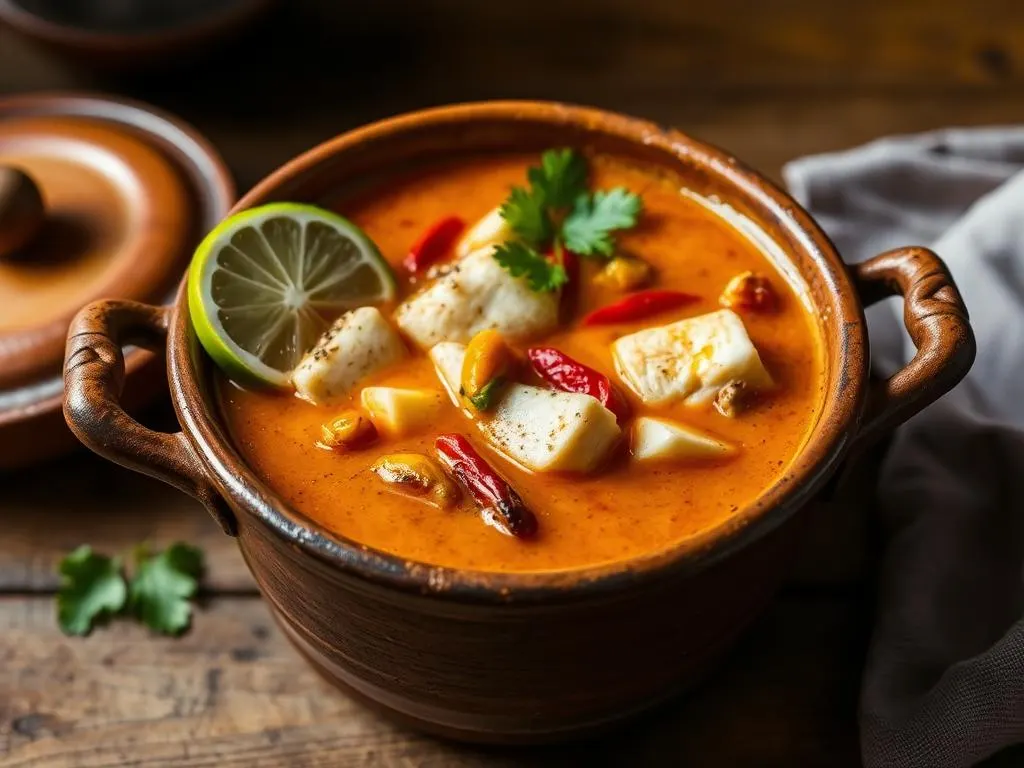
Moqueca-Smoked Fish (Bahian)
Moqueca is the soul of Bahian cooking, a fragrant fish stew built on coconut milk, tomatoes, peppers, and dendê palm oil. The twist here is smoking the fish first, then folding it into the moqueca at the end. The smoke adds a layer the classic never had, and it's a two-stage cook that shows real command of fire and pan.
Cook Mode
One step at a time, big text, timers, and your screen stays awake. 0/8 steps done.
Ingredients
Tap to tick off · 0/14 gathered
- — FISH & MARINADE —
- — MOQUECA BASE —
Method
- 1h
Begin by prepping 2.5 lbs of firm white fish (grouper, snapper, or cod) into uniform 2-inch chunks to ensure even cooking. In a non-reactive bowl, toss the fish with 0.25 cup lime juice, 4 crushed garlic cloves, and 1 tsp salt. While the salt begins to denature the protein through a light cure, the lime juice provides an acidic punch that balances the fat in the coconut milk; however, keep this phase under 60 minutes. Because fish is delicate, exceeding this time will cause the acid to 'cook' the exterior, resulting in a mushy texture before it even hits the smoker.
Why it matters
The salt and acid penetrate the fish, seasoning the interior while the short duration prevents the texture from degrading.
Common mistake
Leaving the fish in the marinade too long, which causes the lime juice to break down the proteins until the fish turns rubbery.
- 30 min
Remove the fish from the marinade and pat each chunk thoroughly dry with paper towels. Arrange the fish on a wire rack over a tray and place it in the refrigerator or in front of a fan for 20-30 minutes. This step creates a 'pellicle,' a slightly tacky surface on the exterior of the fish. This protein skin is essential because smoke particles (phenols) do not adhere well to wet surfaces; without a pellicle, your smoke flavor will slide off with the moisture rather than binding to the flesh.
Why it matters
The pellicle allows smoke compounds to bond to the protein, creating a superior color and deep flavor profile.
Common mistake
Skipping the drying step, which leads to a steamed fish texture and a bitter, patchy smoke flavor.
- 250°F20 min
Preheat your smoker to a steady 250°F using Alder or a light fruit wood like apple or cherry. These woods provide a mild, sweet smoke that complements the delicate nature of grouper or snapper without overpowering the aromatics of the Bahian base. Ensure your fire is burning clean with blue smoke—white, billowy smoke indicates incomplete combustion and will leave an acrid, soot-like taste on the fish.
Why it matters
Maintaining a low, clean fire ensures the fish takes on a golden hue and a subtle smoke profile that enhances the coconut base.
Common mistake
Using heavy woods like hickory or mesquite, which are far too aggressive for white fish.
- 130°F40 min
Place the fish chunks on the smoker grates, ensuring they are not touching to allow for full airflow. Smoke for approximately 30-40 minutes. You are not looking for final doneness here; the goal is to infuse the fish with smoke flavor and set the texture while reaching an internal temperature of 125°F-130°F. Because the fish will be simmered later, pulling it early prevents it from becoming dry and flaky during the stewing phase.
Why it matters
This two-stage approach ensures the fish is flavored by the wood fire but remains moist after the final simmer.
Common mistake
Overcooking the fish to the standard 145°F during the smoke phase, leaving no room for the final simmer.
- 15 min
While the fish smokes, heat 2 tbsp of dendê (palm oil) in a wide clay pot or Dutch oven over medium heat. Layer the sliced onion, red bell pepper, yellow bell pepper, and 4 sliced tomatoes into the pot, adding 4 minced garlic cloves between the layers. The dendê oil is crucial—it provides a distinct earthy flavor and the iconic orange hue of Bahian cooking. Sauté these aromatics until they begin to soften and release their natural juices.
Why it matters
Layering the vegetables allows them to steam in their own juices and the palm oil, creating a rich foundation for the stew.
Common mistake
Using standard olive oil exclusively, which lacks the authentic color and nutty flavor profile of dendê.
- 10 min
Pour one full can of coconut milk over the sautéed vegetables. Stir gently to incorporate the dendê oil into the milk, creating a creamy, vibrant sauce. Bring the mixture to a slow simmer for 10 minutes. This allows the sauce to reduce slightly and the flavors of the peppers and tomatoes to meld with the coconut fats. Season with salt to taste at this stage so the base is perfectly balanced before the fish is added.
Why it matters
Simmering the base separately ensures the vegetables are tender without overworking the delicate smoked fish.
Common mistake
Boiling the coconut milk too vigorously, which can cause the fat to separate and the sauce to break.
- 145°F10 min
Gently nestle the smoked fish chunks into the simmering coconut base, including any resting juices that accumulated on the tray. Minimal agitation is key here to keep the chunks whole and presentable. Simmer for an additional 5-10 minutes until the fish reaches a final internal temperature of 145°F. This allows the smoke phenols from the fish surface to leach into the broth, flavoring the entire Moqueca with a subtle campfire depth.
Why it matters
The final simmer bridge the flavors between the wood-fired protein and the tropical aromatic base.
Common mistake
Stirring too aggressively, which breaks the delicate smoked fish into small pieces.
- 5 min
Remove the pot from the heat. Stir in one bunch of chopped fresh cilantro and the juice of one lime to provide a bright, herbaceous contrast to the rich fats and smoke. Allow the stew to rest for 5 minutes; this allows the temperature to stabilize and makes the sauce coat the fish more effectively. Serve immediately in bowls over white rice, ideally with a side of farofa to provide a crunch that contrasts the silky stew.
Why it matters
The fresh acid and herbs added at the end cut through the heavy fats of the coconut and palm oil.
Common mistake
Adding the cilantro and lime juice during the boiling phase, which mutes their flavor and turns the herbs brown.
Sauce It
Cooks & Reviews
Guild members can rate this recipe, log their cooks and share photos.
Sign in to continueMember reviews
No reviews yet — be the first to rate this cook.
Ask the Pitmaster about this recipe
Substitutions, scaling, technique, troubleshooting — get answers grounded in this cook.
Sign in to try the AI Pitmaster on Moqueca-Smoked Fish (Bahian). New members get 3 free questions.
Sign in to tryComments(0)
Loading comments…