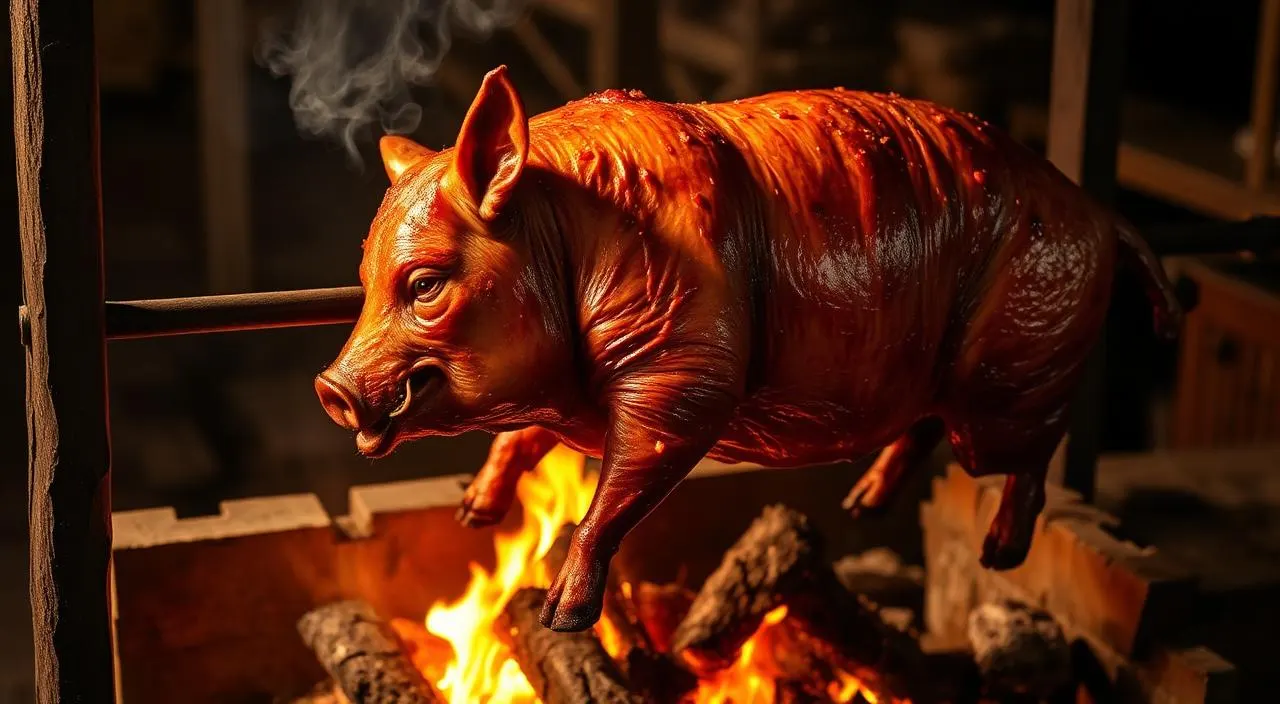
Lechón al Palo — Peruvian Whole Roasted Suckling Pig
This is a celebration dish. A whole pig on a spit, cooked over wood for hours until the skin is shatteringly crispy and the meat falls apart. The Peruvian version gets a rub of garlic, cumin, and ají panca paste before it goes on the fire.
Cook Mode
One step at a time, big text, timers, and your screen stays awake. 0/8 steps done.
Ingredients
Tap to tick off · 0/9 gathered
Method
- 20 min
In a large bowl, whisk together 0.25 cup aji panca paste, 10 minced garlic cloves, 2 tbsp ground cumin, 2 tbsp dried oregano, 0.25 cup vegetable oil, 0.25 cup white vinegar, 1 tbsp black pepper, and 0.25 cup coarse salt. This high-acid and enzyme-rich mixture (from the vinegar and aji panca) is designed to penetrate deep muscle fibers and tenderize the pork during the long marination. Ensure the paste is emulsified into a thick, uniform consistency so it clings to the meat during the high-velocity rotation of the spit.
Why it matters
The acidity and spices create a chemical brine that seasons the meat to the bone while preparing the skin for dehydration.
Common mistake
Using a weak paste that runs off the meat instead of being massaged into the fibers.
- 45 min
Lay the 20-30 lb suckling pig flat and use a sharp knife to score 1-inch deep cross-hatches into the thickest muscles of the shoulders and hams, as well as along the interior backbone. Aggressively rub the prepared adobo paste into every incision and coat the entire internal cavity, using approximately 0.5 to 1 cup of paste total. Scoring increases the surface area for the dry/wet cure to work, ensuring the deep interior sections don't remain bland while the exterior over-seasons.
Why it matters
Large whole-hog cuts require physical channels for salt and aromatics to bypass the fat cap and reach the center of the ham.
Common mistake
Failing to score the thick shoulder region, resulting in flavorless meat near the bone.
- 12h
Apply the remaining 0.25 cup of coarse salt specifically to the exterior skin of the pig. Wrap the entire carcass tightly in heavy-duty plastic wrap to exclude air and refrigerate for 8 to 24 hours. Placing the pig in the 40°F environment of a refrigerator allows the salt to draw moisture out of the skin (osmosis) while the internal rub breaks down connective tissue. This step is critical for food safety to ensure the meat stays out of the 40-140°F danger zone until the moment it hits the fire.
Why it matters
The long salt cure is what enables the skin to transition from leathery to shatteringly crispy during the roast.
Common mistake
Skipping the overnight rest, which leads to rubbery, unrendered skin.
- 40 min
Remove the pig from the wrap and pat the skin completely dry with paper towels to encourage a pellicle. Thread the rotisserie spit through the mouth and out the tail, securing the spine with U-bolts if available. Use butcher's twine to truss the front and back legs tightly against the body; loose limbs will flop during rotation, causing uneven cooking and potential mechanical failure of the motor. The pig must be balanced on the spit to prevent 'surging', which puts undue stress on the rotisserie gears.
Why it matters
A poorly balanced pig results in uneven heat exposure, with one side burning while the other remains raw.
Common mistake
Insecure trussing that allows the legs to swing and tear the skin mid-cook.
- 300°F7h
Establish a base of oak or apple wood coals, aiming for an ambient temperature of 300°F at the level of the pig (approximately 18-24 inches above the heat source). Position the pig on the rotisserie and begin a slow, constant rotation. Maintain the 300°F environment by adding fresh wood every 45 minutes; you want a clean, blue smoke rather than heavy white billows, as the long cook time will lead to creosote buildup if the fire is oxygen-deprived. This 'low and slow' approach allows the internal fat to render without scorching the delicate skin.
Why it matters
Steady, moderate heat provides enough energy to melt collagen into gelatin while keeping the skin temperature below the burning point.
Common mistake
Starting the fire too hot, which blisters the skin before the deep meat is cooked through.
- 185°F
Check the internal temperature at the 5-hour mark using an instant-read thermometer in the center of the ham and the thickest part of the shoulder (avoiding the bone). You are looking for a minimum internal temperature of 185°F to ensure the meat pulls easily from the bone. Unlike pork loin, suckling pig requires these higher temperatures to break down the high concentration of connective tissue present in young animals. Ensure the skin has turned a deep, translucent mahogany and sounds hollow when tapped with a knife.
Why it matters
185°F is the sweet spot where the meat stays juicy but the collagen has fully liquefied for a 'fall apart' texture.
Common mistake
Pulling the pig at 145-160°F (standard pork temp), which results in tough, chewy whole-hog meat.
- 30 min
Carefully remove the spit from the fire and transfer the pig to a large cutting board or a clean, insulated surface. Allow the meat to rest uncovered for at least 30 minutes. Do not tent with foil, as the trapped steam will soften and ruin the crispy skin you worked 7 hours to achieve. Resting allows the internal juices, which have been pushed to the surface by the heat, to redistribute back into the muscle fibers, preventing the meat from drying out the moment it is carved.
Why it matters
Resting prevents the loss of internal moisture through 'purge' when the first incision is made.
Common mistake
Filing or covering the pig during the rest, which turns the crackling skin soft and soggy.
- 15 min
For a professional presentation, remove the skin in large sheets first to serve as 'cracklings' on the side. Slice the hams and shoulders across the grain into uniform pieces, and pull the ribs individualistically. Arrange the meat in even rows, mixing the leaner loin meat with the fatty belly and shoulder portions to ensure every guest gets a balanced plate. Serve immediately while the skin is at its maximum 'shatter' stage and the meat is at a safe serving temperature above 140°F.
Why it matters
Proper carving ensures that the textural contrast between crispy skin and succulent meat is highlighted for the diner.
Common mistake
Cutting with the grain, which makes even the most tender pig feel tough and stringy.
6 more steps locked
You've seen the ingredients and the first two steps. Pit Members get every step, every temp, every glaze — plus the Cook Monitor and Pitmaster AI.
See Membership OptionsAlready a member? Sign in.
Sauce It
Cooks & Reviews
Guild members can rate this recipe, log their cooks and share photos.
Sign in to continueMember reviews
No reviews yet — be the first to rate this cook.
Ask the Pitmaster about this recipe
Substitutions, scaling, technique, troubleshooting — get answers grounded in this cook.
Sign in to try the AI Pitmaster on Lechón al Palo — Peruvian Whole Roasted Suckling Pig. New members get 3 free questions.
Sign in to tryComments(0)
Loading comments…