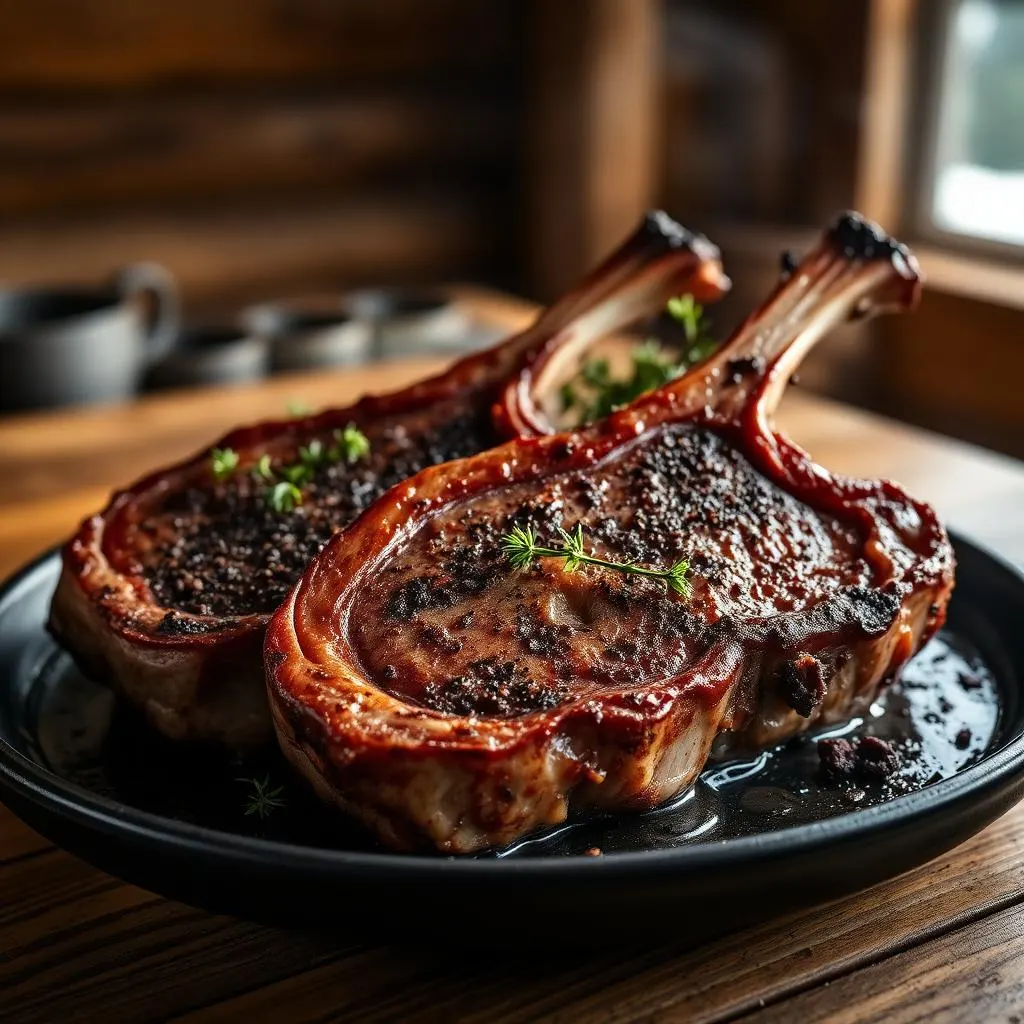
Juniper-Smoked Pork Chops
Juniper is the signature aromatic of northern smoking — piney and resinous. Thick bone-in chops get a quick brine, then beech smoke with crushed juniper on the coals.
Cook Mode
One step at a time, big text, timers, and your screen stays awake. 0/8 steps done.
Ingredients
Tap to tick off · 0/11 gathered
- — MAIN —
- — BRINE —
- — RUB —
Method
- 20 min
Combine 4 cups water, 0.25 cup kosher salt, 2 tbsp brown sugar, 2 tbsp crushed juniper berries, 1 tbsp black peppercorns, and 3 bay leaves in a pot. Bring to a simmer to fully dissolve the solutes and release the essential oils from the aromatics. Once dissolved, remove from heat and allow the liquid to cool completely to below 40°F before adding meat; never add raw pork to a warm brine as it creates a breeding ground for bacteria within the danger zone.
Why it matters
The brine equilibrates moisture and seasons through the center of the meat, preventing the lean chop from drying out under smoke.
Common mistake
Adding meat to a warm brine, which partially cooks the surface and risks foodborne illness.
- 4h
Place the 4 bone-in pork chops (1.5 inches thick) into a non-reactive container or heavy-duty bag and pour the chilled brine over them until fully submerged. Refrigerate for 2 to 12 hours; for a 1.5-inch chop, 4 hours is the sweet spot for salt penetration without turning the proteins mushy. Ensure the pork remains fully submerged to maintain consistent salinity throughout the cut.
Why it matters
Controlled curing time ensures the salt denatures the proteins just enough to hold onto juices during the cook.
Common mistake
Brining for over 12 hours, which results in a spongy, overly salty ham-like texture.
- 1h
Remove the chops from the brine and discard the liquid. Pat each chop extremely dry with paper towels to remove surface moisture. Allow the chops to sit uncovered on a wire rack in the refrigerator for at least 30-60 minutes; this creates a 'pellicle,' a tacky surface layer that allows smoke particulates to adhere better for a superior bark and deeper beech-smoke flavor.
Why it matters
A dry surface is essential for smoke adhesion; wet meat will steam rather than take on the desired smoky characteristics.
Common mistake
Skipping the drying phase, which leads to splotchy color and poor smoke absorption.
- 10 min
Mix 1 tbsp toasted and ground juniper berries, 1 tsp coarse salt, 1 tsp black pepper, and 1 tsp dried thyme. Apply the rub sparingly to both sides of the chops. Because the meat has already been brined, be cautious with additional salt—focus the application on the ground juniper and thyme to provide that signature resinous Alpine aroma.
Why it matters
Toasting the juniper berries before grinding awakens the resins, offering a more complex piney flavor than raw berries.
Common mistake
Over-salting with the rub after an intensive brine bath.
- 250°F30 min
Preheat your smoker to a steady 250°F using beech wood for the primary fuel source. Beech provides a mild, nutty smoke that complements pork without the harshness of hickory. Ensure you have a clean fire with thin blue smoke; thick white smoke indicates poor combustion and will leave a bitter soot on the delicate meat.
Why it matters
Stable temperatures and clean smoke are the foundation of competition-grade BBQ appearance and taste.
Common mistake
Loading meat into a smoker that is still producing heavy, acrid white smoke.
- 250°F1h 15m
Place the chops on the grate, ensuring space between them for airflow. Toss a handful of crushed juniper berries directly onto the beech coals or into the wood tray to create a concentrated aromatic 'smudge.' Close the lid and maintain 250°F, monitoring closely until the internal temperature of the thickest part of the chop reaches 140°F.
Why it matters
Continuous airflow and consistent heat allow the fat to render while the juniper smoke penetrates the surface.
Common mistake
Opening the lid frequently to check the meat, which causes temperature swings and stalls the cook.
- 145°F10 min
Remove the chops promptly when the internal temperature hits 140°F. Tent them loosely with foil on a warm platter. During this rest, carryover cooking will cause the internal temperature to rise to the USDA-safe target of 145°F. This phase allows the muscle fibers to relax and reabsorb the internal juices, ensuring the liquid stays in the meat rather than on the cutting board.
Why it matters
Resting is mandatory for moisture retention; the fibers need time to reoccupy the moisture they squeezed out during heating.
Common mistake
Cutting into the chop immediately, which results in losing all the accumulated juices.
- 5 min
Slice the 1.5-inch chops against the grain if serving off the bone, or serve whole for a competition-style presentation. The meat should present a light pink smoke ring around the edges with a glistening, juicy center. Ensure no grey, overcooked bands are visible by checking your thermometer placement during the cook.
Why it matters
Slicing against the grain further enhances the perception of tenderness by shortening the muscle fibers.
Common mistake
Applying a heavy sauce that masks the delicate juniper and beech flavors you've developed.
Sauce It
Cooks & Reviews
Guild members can rate this recipe, log their cooks and share photos.
Sign in to continueMember reviews
No reviews yet — be the first to rate this cook.
Ask the Pitmaster about this recipe
Substitutions, scaling, technique, troubleshooting — get answers grounded in this cook.
Sign in to try the AI Pitmaster on Juniper-Smoked Pork Chops. New members get 3 free questions.
Sign in to tryComments(0)
Loading comments…