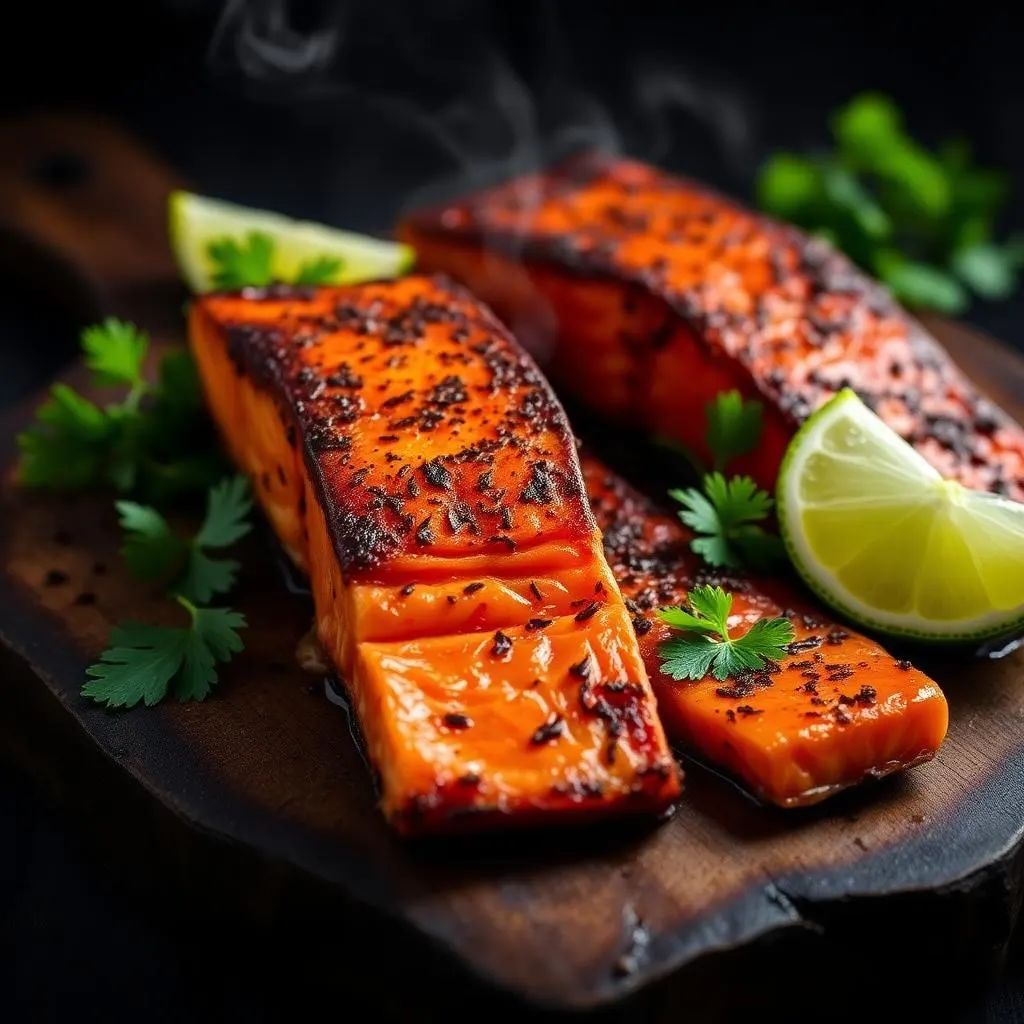
Caribbean-Spiced Smoked Salmon
The one seafood smoke on the beginner list — fast, rich, and salmon takes jerk beautifully. Watch your temp and pull the moment it flakes.
Cook Mode
One step at a time, big text, timers, and your screen stays awake. 0/7 steps done.
Ingredients
Tap to tick off · 0/9 gathered
- — MAIN —
- — JERK RUB —
Method
- 10 min
Begin by whisking together 2 tbsp ground allspice, 1 tbsp brown sugar, 1 whole minced scotch bonnet (or 2 tsp dry seasoning), 1 tsp garlic powder, 1 tsp dried thyme, and 1 tsp salt in a small bowl. Slowly incorporate 2 tbsp oil and 1 tbsp lime juice to create a cohesive paste. This oil-based slurry suspends the spices and helps distribute the heat of the scotch bonnet evenly across the fillet, ensuring every bite has a balance of spice and acidity.
Why it matters
The oil-based paste acts as a conductor for fat-soluble flavors in the allspice and pepper, ensuring deep penetration into the flesh.
Common mistake
Using dried-out scotch bonnets or skipping the lime juice, which provides the necessary acid to cut the fatty salmon.
- 1h
Pat the four 6-oz salmon fillets dry with paper towels to remove surface moisture. Apply the jerk paste generously to the flesh side only, leaving the skin bare. Place the fillets on a parchment-lined tray and refrigerate for 30 to 120 minutes. This short 'cure' allows the salt and sugar to draw seasoning into the protein structure, while the lime juice lightly denatures the surface for better texture.
Why it matters
A short refrigeration rest allows the salt to stabilize the protein fibers, preventing albumin (white protein) from weeping out excessively during the cook.
Common mistake
Leaving the fish at room temperature during this phase, which risks entering the 40-140F danger zone for bacterial growth.
- 30 min
Remove the salmon from any wrap and let it sit uncovered in the refrigerator for the final 30 minutes of the curing time. You are looking for a tacky, slightly shiny surface known as the pellicle. This sticky layer is essential for smoke adherence; without it, the smoke particles will bounce off a wet surface rather than sticking to the spice rub.
Why it matters
A proper pellicle creates a lacquer-like finish that traps moisture inside the fillet while grabbing onto the smoke profile.
Common mistake
Attempting to smoke a 'wet' fillet, which results in a muddy, steamed flavor rather than a clean smoke profile.
- 225°F20 min
Preheat your smoker to 225°F using light fruitwood like Alder, Apple, or Cherry. These woods complement the delicate oils of the salmon without overpowering the complex allspice notes of the jerk rub. Ensure you have a clean, blue smoke (invisible or light blue) before adding the fish to avoid depositing bitter creosote on the fillets.
Why it matters
Stable, low heat is critical for fish to ensure the fat doesn't render out too quickly, which leaves the meat dry and chalky.
Common mistake
Using heavy woods like Hickory or Mesquite, which can make the salmon taste like campfire smoke.
- 140°F1h
Place the fillets skin-side down directly on the grates. Close the lid and smoke until the internal temperature reaches 135°F to 140°F in the thickest part of the fillet. You will see the flesh turn from translucent to opaque and it should flake easily with a fork. This usually takes 45 to 60 minutes. Monitor closely after 30 minutes, as salmon transitions from perfectly tender to overcooked very rapidly.
Why it matters
Targeting 135-140°F allows for carryover cooking to reach the final safe and succulent 145°F range.
Common mistake
Cooking by time alone rather than using a calibrated instant-read thermometer.
- 145°F5 min
Transfer the fillets to a warm plate and tent very loosely with foil—do not wrap tightly or you will soften the spicy bark you've created. Let the salmon rest for 5 minutes. During this time, the internal temperature will rise about 3-5°F and the juices will redistribute within the flakes, ensuring the fish doesn't lose all its moisture when sliced.
Why it matters
Resting allows the heat to equalize throughout the fillet, preventing a 'raw' center in thicker cuts.
Common mistake
Slicing or eating immediately, which causes the internal juices to run out on the plate.
- 5 min
Garnish the fillets with fresh cilantro and serve with extra lime wedges. The fresh acidity of the lime brightens the earthy, smoky notes of the allspice. Slide a spatula between the skin and the flesh for an easy, skinless presentation, or serve with the crisp skin attached for texture.
Why it matters
A final hit of acid (lime) reacts with the salt in the rub to amplify the jerk flavor profile.
Common mistake
Omitting the fresh lime at the end, leaving the dish feeling heavy and overly smoked.
Sauce It
Cooks & Reviews
Guild members can rate this recipe, log their cooks and share photos.
Sign in to continueMember reviews
No reviews yet — be the first to rate this cook.
Ask the Pitmaster about this recipe
Substitutions, scaling, technique, troubleshooting — get answers grounded in this cook.
Sign in to try the AI Pitmaster on Caribbean-Spiced Smoked Salmon. New members get 3 free questions.
Sign in to tryComments(0)
Loading comments…