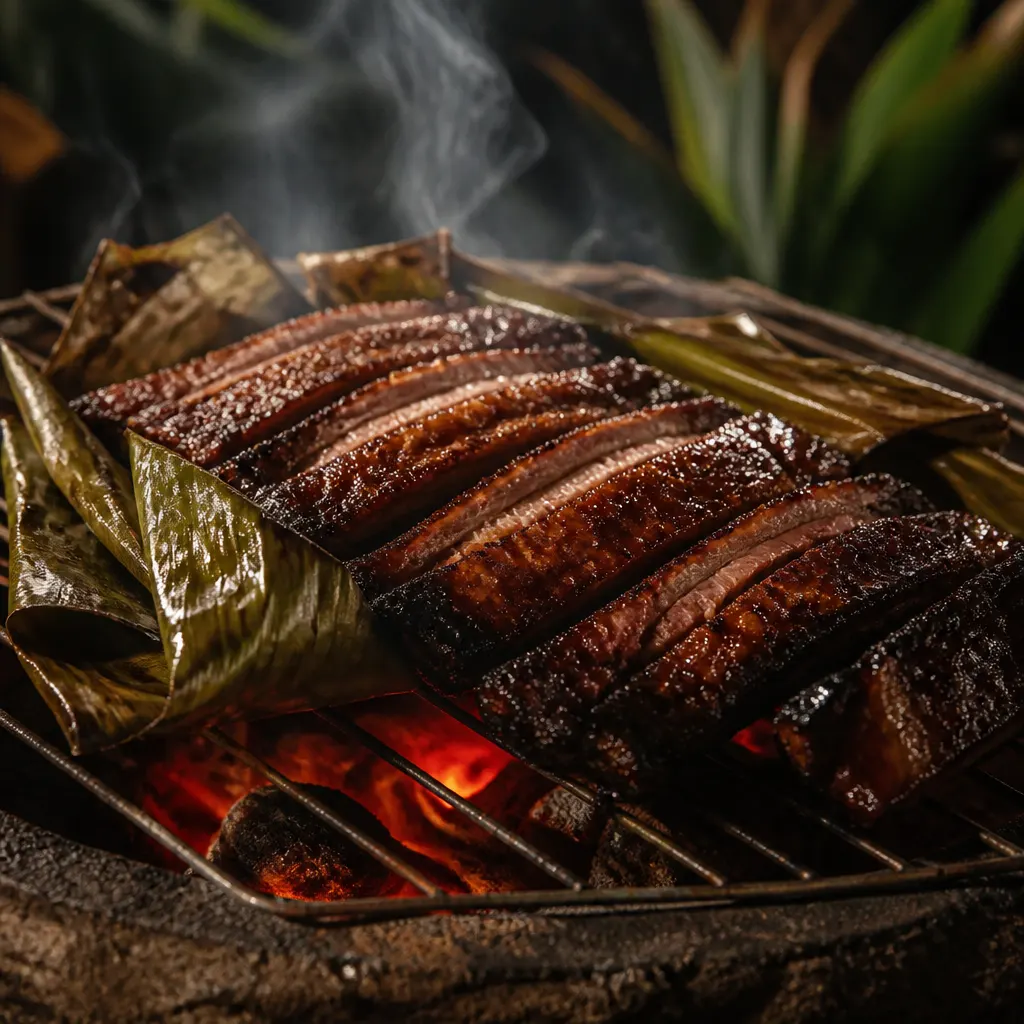
Island Smoked Kalbi-Style Pork Ribs
Hawaii's mixed-plate culture borrowed Korean kalbi flavor and made it local. Here that sweet-savory sesame-soy marinade goes onto pork ribs and through a low slow smoke. The result is sticky, deeply flavored, and falls-off-the-bone tender. Use the wrap method and the ribs basically cook themselves.
Cook Mode
One step at a time, big text, timers, and your screen stays awake. 0/8 steps done.
Ingredients
Tap to tick off · 0/9 gathered
- — MAIN —
- — KALBI-STYLE MARINADE —
Method
- 15 min
Begin by removing the silver-skin membrane from the bone side of the 2 racks of pork ribs. Insert a butter knife under the skin against a middle bone, lift until you can grip it with a paper towel, and pull it away in one motion. This allows the marinade to penetrate the meat rather than bouncing off a rubbery barrier. Inspect the meat for loose fat deposits and trim any 'shiners' where bone is exposed to ensure an even cook.
Why it matters
The membrane acts as a waterproof shield; removing it allows flavor and smoke to reach the meat and ensures a tender bite-through.
Common mistake
Leaving the membrane on creates a tough, plastic-like texture that prevents seasoning from reaching the bone-side meat.
- 38°F12h
Combine 0.5 cup soy sauce, 0.333 cup brown sugar, 0.25 cup pineapple or pear puree, 2 tbsp sesame oil, 3 tbsp grated ginger, and 5 cloves garlic in a large bowl. Place the ribs in a non-reactive dish or vacuum bag and coat thoroughly with the mixture. The fruit puree contains natural enzymes that begin to break down the muscle fibers, while the soy provides the salt needed for deep seasoning. Ensure the ribs are fully submerged or vacuum-sealed to prevent oxidation.
Why it matters
The enzymes in the pear/pineapple act as a pre-tenderizer, while the salt in the soy sauce denatures proteins to retain moisture during the smoke.
Common mistake
Marinating for too long (over 24 hours) will cause the fruit acids and enzymes to turn the pork surface into a mushy, unappealing texture.
- 250°F1h
Remove the ribs from the marinade, reserving the liquid for later glazing. Pat the ribs completely dry with paper towels—this is critical for bark formation. Place the ribs on a wire rack in the refrigerator for 60 minutes. As the surface dries, it forms a sticky 'pellicle.' During this time, fire up your smoker to 250°F using guava or kiawe wood. Guava provides a mild, fruity smoke that complements the sweet soy profile without overpowering the pork.
Why it matters
A dry, tacky surface is required for smoke particles to adhere efficiently and create a clean, mahogany-colored bark.
Common mistake
Putting wet meat into the smoker leads to steaming rather than smoking, resulting in a grey, muddy appearance and poor smoke flavor.
- 250°F2h 30m
Place the ribs bone-side down on the smoker grates. Maintain a steady 250°F to stay well above the 40-140°F danger zone quickly. During this 150-minute phase, the heat begins to render the intramuscular fat while the wood smoke reacts with the proteins. Do not open the lid frequently; you are looking for the meat to pull back slightly from the bone ends (about 1/4 inch) and for the surface to transition from a raw pink to a deep reddish-brown bark.
Why it matters
This phase builds the foundational smoke flavor and the exterior bark that defines quality barbecue.
Common mistake
Opening the lid too often causes temperature swings that delay fat rendering processes depend on for consistency.
- 250°F1h 30m
Lay out high-quality aluminum foil and place the ribs on it. Before sealing, add 2-3 tablespoons of the reserved marinade (boiled briefly for safety) or a splash of pineapple juice. Seal the foil tightly to create a pressurized steam environment. This 'crutch' accelerates the breakdown of collagen into gelatin, ensuring the ribs reach that 'Island-style' tenderness where the bone releases easily. Return to the 250°F smoker for 90 minutes.
Why it matters
The wrap prevents evaporative cooling (the stall) and uses moisture to soften tough connective tissues quickly.
Common mistake
Wrapping too loosely allows steam to escape, which dries out the meat rather than tenderizing it.
- 200°F45 min
In a small saucepan, simmer the remaining reserved marinade until it reduces by half to a honey-like consistency. Remove the ribs from the foil carefully. Using a silicone brush, apply a very thin coat of this reduced tare glaze over the entire surface. Let it sit in the smoker for 10 minutes to set, then repeat with a second coat. This Japanese-inspired lacquering technique builds layers of flavor and a glossy, professional sheen that judges look for in competition.
Why it matters
Multiple thin layers of glaze create a complex, caramel-like finish rather than a single cloying, sticky coat.
Common mistake
Applying a single thick layer of sauce too late results in a runny, messy rib that hasn't properly caramelized.
- 203°F20 min
Remove the ribs from the smoker once they reach an internal temp of roughly 200°F-203°F or pass the 'bend test' (the bark cracks when the rack is lifted from one end). Place them on a cutting board and tent loosely with foil. Allow the meat to rest for 20 minutes. This allows the internal juices to redistribute and the sugar-heavy glaze to fully set, ensuring the meat doesn't shred when sliced.
Why it matters
Resting allows the muscle fibers to relax and reabsorb moisture, preventing the juices from running out on the board.
Common mistake
Slicing immediately after the smoke causes the meat to lose its moisture, resulting in a dry, stringy texture.
- 5 min
Slice the ribs between the bones using a long, sharp slicing knife. For a traditional Hawaiian mixed-plate presentation, scatter 2 tbsp toasted sesame seeds and the 3 chopped scallions across the top of the rack before cutting. Each rib should have a clean, bite-through texture—meaning the meat comes off the bone where you bite, but the rest stays intact. Serve warm with white rice or macaroni salad to balance the savory-sweet profile.
Why it matters
Visual presentation and garnishing provide the textural contrast of fresh greens and toasted seeds against the rich, fatty pork.
Common mistake
Drowning the finished ribs in extra cold sauce, which ruins the bark and masks the smoke profile.
Sauce It
Cooks & Reviews
Guild members can rate this recipe, log their cooks and share photos.
Sign in to continueMember reviews
No reviews yet — be the first to rate this cook.
Ask the Pitmaster about this recipe
Substitutions, scaling, technique, troubleshooting — get answers grounded in this cook.
Sign in to try the AI Pitmaster on Island Smoked Kalbi-Style Pork Ribs. New members get 3 free questions.
Sign in to tryComments(0)
Loading comments…