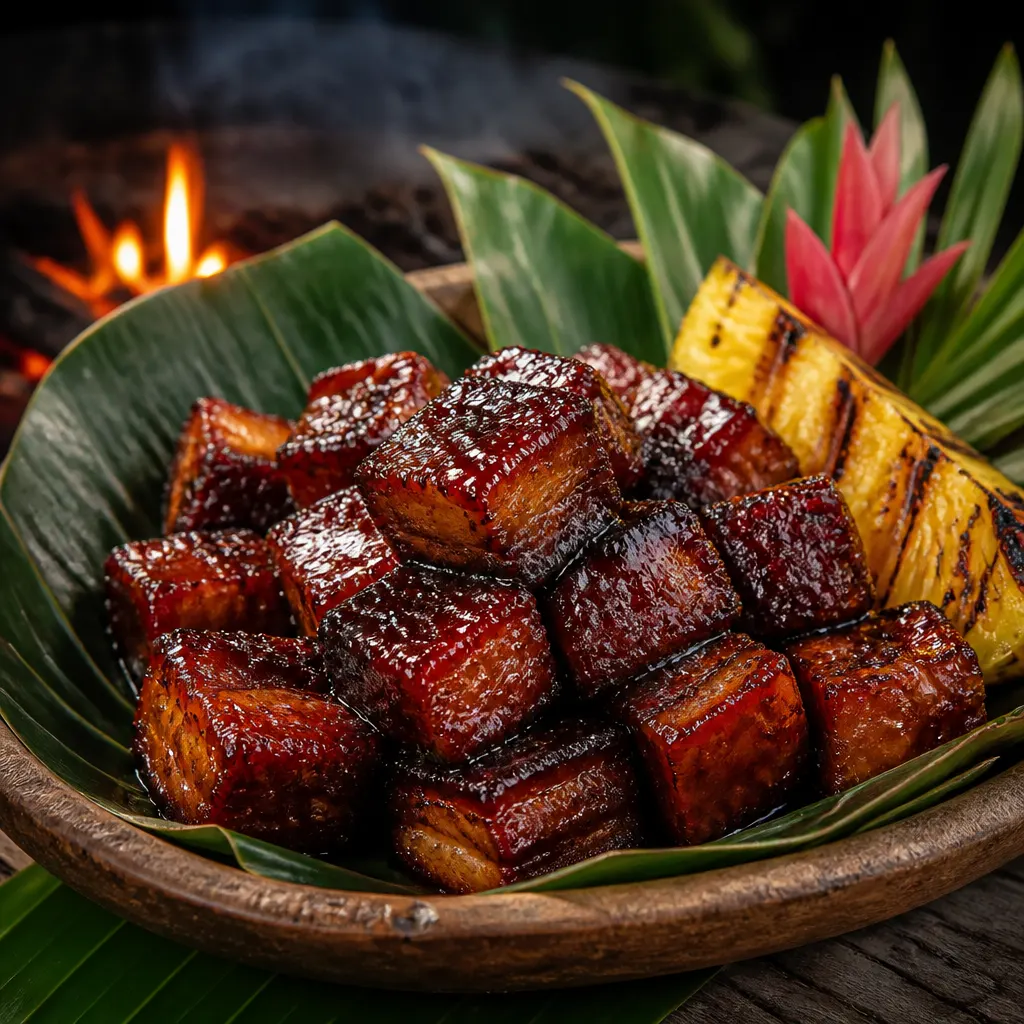
Huli Huli Glazed Pork Belly Burnt Ends
Competition-style burnt ends with a full island makeover. Cubes of pork belly, seasoned and smoked to tender, then tumbled in a sticky huli huli glaze of pineapple, soy, and ginger and set back in the smoke until they lacquer. They hit every note a judge looks for — color, tenderness, sweet-savory balance — and they vanish off any platter.
Cook Mode
One step at a time, big text, timers, and your screen stays awake. 0/8 steps done.
Ingredients
Tap to tick off · 0/13 gathered
- — MAIN —
- — DRY SEASON —
- — HULI HULI GLAZE —
Method
- 15 min
Slice 3 lbs of skinless pork belly into uniform 1.5-inch cubes. In a small bowl, combine 2 tbsp brown sugar, 1 tbsp Hawaiian sea salt, 1 tbsp garlic powder, 1 tbsp ground ginger, and 1 tsp black pepper. Toss the cubes thoroughly in this mixture until every surface is coated. This early seasoning allows the salt to penetrate the muscle tissue and denature proteins, ensuring the belly remains juicy despite the long render time required for fat breakdown.
Why it matters
Uniform cube size ensures all pieces reach tenderness at the same time, preventing a mix of mushy and tough bites.
Common mistake
Using a pork belly with the skin still attached, which becomes leathery and inedible during the smoking process.
- 40°F12h
Place the seasoned cubes on a wire rack over a sheet pan and refrigerate uncovered for 12 hours. This time allows the salt to move past the surface and the sugar to create a tacky exterior. By leaving them uncovered in the fridge, you use the refrigerator's natural dehumidifying properties to build a pellicle, which is essential for the heavy smoke particulates of Guava and Kiawe to adhere to the meat without becoming bitter.
Why it matters
The cold cure stabilizes the meat and ensures deep flavor penetration while setting the stage for superior smoke adhesion.
Common mistake
Covering the meat with plastic wrap, which traps moisture and prevents the necessary pellicle from forming.
- 250°F3h
Preheat your smoker to a steady 250°F using a blend of Guava and Kiawe wood. Kiawe provides a punchy, mesquite-like profile while Guava adds a fruity, floral sweetness that characterizes Hawaiian BBQ. Arrange the cubes on the grates with at least 1 inch of space between each piece. This airflow is critical for even fat rendering and consistent bark formation across all six sides of every cube.
Why it matters
Proper spacing prevents 'steaming' where the cubes touch, which would result in grey, unappetizing patches on the meat.
Common mistake
Crowding the smoker, which leads to uneven cooking and patches of unrendered fat.
- 20 min
While the pork is smoking, prepare the glaze by simmering 0.5 cup pineapple juice, 0.333 cup soy sauce, 0.333 cup brown sugar, 2 tbsp ketchup, 2 tbsp rice vinegar, 2 tbsp grated ginger, 3 cloves grated garlic, and 2 tbsp honey in a saucepan. Reduce the mixture over medium-low heat until it coats the back of a spoon with a honey-like consistency. This reduction concentrates the sugars and umami, transforming the thin liquid into a 'lacquer' that will cling to the fat.
Why it matters
Applying an unreduced glaze results in a watery mess that washes off the bark instead of building a glossy finish.
Common mistake
Boiling the glaze too hard, which can scorch the honey and garlic, creating a bitter flavor profile.
- 203°F1h 30m
Once the cubes have reached an internal temp of roughly 165°F and have a deep mahogany color, transfer them into a foil pan. Pour half of the Huli Huli glaze over the cubes and toss gently to coat. Cover the pan tightly with heavy-duty foil. This step creates a 'braise' environment within the pan, using the rendered pork fat and glaze to break down the tough connective tissue until the cubes reach a target internal temperature of 203°F.
Why it matters
The foil wrap accelerates the breakdown of collagen, turning what could be chewy fat into 'meat candy' texture.
Common mistake
Wrapping too late, which can lead to the meat drying out before the fat fully renders.
- 250°F30 min
Remove the foil and drain any excess liquid or rendered grease from the pan, leaving the cubes. Apply the remaining Huli Huli glaze in a thin, even coat. Increase the smoker humidity if possible and cook uncovered for another 30 minutes. The sugars in the pineapple and honey will undergo caramelization and polymerization, creating a high-gloss, 'lacquered' appearance that is a hallmark of competition-grade pork.
Why it matters
This final set-step transforms a sticky sauce into a permanent, tacky glaze that won't run off when the judge bites in.
Common mistake
Overcooking at this stage, which can burn the high sugar content of the pineapple juice glaze.
- 15 min
Remove the pan from the heat and allow the burnt ends to rest uncovered for 15 minutes. During this rest, the internal temperature will stabilize and the glaze will fully set into its final glossy state. This also prevents the 'scalding' effect of hot sugar, allowing the palate to actually perceive the nuances of the ginger and kiawe smoke without being overwhelmed by heat.
Why it matters
A proper rest allows the proteins to relax, ensuring that the juice stays inside the cube rather than spilling out upon the first bite.
Common mistake
Tenting with foil during the rest, which creates steam and ruins the beautiful lacquer you just built.
- 150°F
For a true competition presentation, skewer each cube with a bamboo pick or arrange them neatly on a bed of fresh curly parsley. The glaze should be translucent enough to see the bark underneath but thick enough to catch the light. Ensure each piece is served between 145°F and 160°F for the optimal melting fat texture. Serve immediately while the contrast between the sweet glaze and salty smoke is most intense.
Why it matters
First impressions in the box count for a massive portion of the appearance score in KCBS-style judging.
Common mistake
Serving the pieces cold, which causes the rendered fat to coagulate and creates a greasy mouthfeel.
6 more steps locked
You've seen the ingredients and the first two steps. Pit Members get every step, every temp, every glaze — plus the Cook Monitor and Pitmaster AI.
See Membership OptionsAlready a member? Sign in.
Sauce It
Cooks & Reviews
Guild members can rate this recipe, log their cooks and share photos.
Sign in to continueMember reviews
No reviews yet — be the first to rate this cook.
Ask the Pitmaster about this recipe
Substitutions, scaling, technique, troubleshooting — get answers grounded in this cook.
Sign in to try the AI Pitmaster on Huli Huli Glazed Pork Belly Burnt Ends. New members get 3 free questions.
Sign in to tryComments(0)
Loading comments…