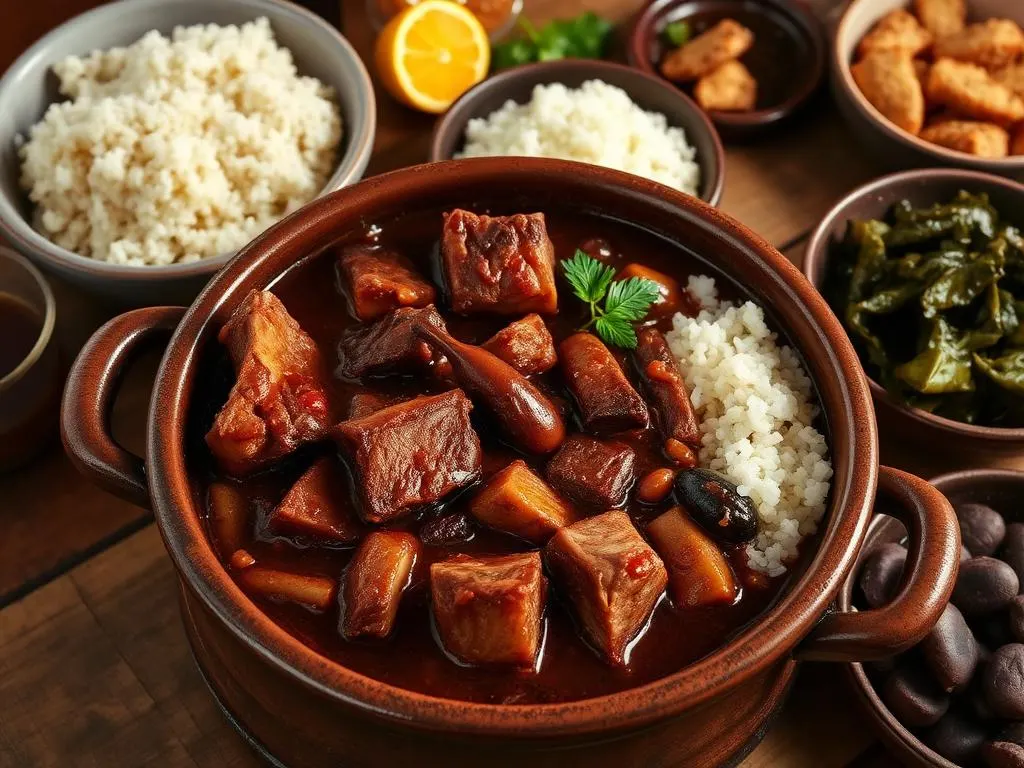
Home-Smoked Feijoada
Brazil's national dish, and a serious project. Feijoada is a black bean stew loaded with smoked and cured pork, traditionally a way to use every cut. The move here is to smoke your OWN meats first instead of buying them pre-smoked, then build the stew around them. It's a full day across two cookers, and it feeds a crowd for days.
Cook Mode
One step at a time, big text, timers, and your screen stays awake. 0/9 steps done.
Ingredients
Tap to tick off · 0/15 gathered
- — MEATS TO SMOKE —
- — STEW BASE —
- — TO SERVE —
Method
- 24h
Begin by prepping 1 lb pork ribs, 1 lb pork shoulder (cut into 2-inch chunks), and 8 oz slab bacon or pork belly. Following the guild's umami-first principle, apply a thin coat of salt and black pepper or an optional shio koji paste (10g per 500g of meat) to the pork shoulder and belly. Vacuum seal or wrap tightly and refrigerate for 24 hours. The enzymes in the koji break down complex proteins into savory amino acids, ensuring the shoulder chunks remain melt-in-your-mouth tender throughout the long stewing process rather than turning to mush.
Why it matters
Pre-seasoning and enzymatic breakdown ensure the denser pork cuts develop deep umami and perfect texture before hitting the heat.
Common mistake
Skipping the overnight seasoning window which results in the meat tasting bland once it is submerged in the bean broth.
- 10h
Rinse 2 lbs of dried black beans thoroughly to remove dust and debris. Submerge them in a large vessel with at least three inches of water above the bean line and soak for a minimum of 8 to 12 hours. This step is critical for even cooking; it hydrates the starch granules so they soften at the same rate as the pork. Drain the soaking water and replace with fresh water before the next phase to minimize the compounds that cause digestive discomfort.
Why it matters
Proper hydration prevents 'blow-outs' where the bean skin splits before the interior is creamy.
Common mistake
Using the soaking water for the final stew which can impart a bitter, metallic taste.
- 250°F30 min
Fire your offset or pellet smoker using seasoned Oak wood to a steady 250°F. Ensure you have a clean, blue smoke—grey or white billowing smoke will deposit soot on the meat and lead to a bitter Feijoada base. Place the seasoned ribs, shoulder chunks, and pork belly on the grate, ensuring space between each piece for maximum smoke circulation. This 'low and slow' session is where we develop the primary mahogany color and smoky foundation that defines this Brazilian classic.
Why it matters
Oak provides a medium-strength smoke profile that complements the earthy beans without overpowering them.
Common mistake
Crowding the smoker which creates 'steam zones' and prevents even bark formation.
- 250°F4h
Smoke the ribs, shoulder, and belly for roughly 4 hours. We are looking for an internal temperature around 165°F to 175°F for the shoulder chunks—enough to render fat and take on smoke, but leaving enough structure for the second cook in the pot. For the final 60 minutes of the smoke, add the 8 oz of linguiça or smoked sausage. This prevents the sausage casing from becoming leathery while still absorbing the oak aromatics.
Why it matters
This step imparts the 'smokehouse' flavor that distinguishes a competition-grade Feijoada from a standard stovetop version.
Common mistake
Smoking the sausage for the full 4 hours, which dries out the internal fat and ruins the snap.
- 210°F1h
While the meats are hitting their final hour of smoke, place the 2 lbs of soaked beans in a large heavy-bottomed pot (like a Dutch oven) with fresh water and 2 bay leaves. Bring to a gentle simmer for 60 minutes. In a separate skillet, sweat 1 large diced onion and 6 cloves of minced garlic in a bit of pork fat or oil until translucent. This aromatics base provides the sulfurous depth needed to balance the heavy meat fats.
Why it matters
Par-cooking the beans ensures they are ready to receive the meat fats without undercooking the beans themselves.
Common mistake
Hard-boiling the beans, which destroys their texture.
- 200°F2h 30m
Remove the meats from the smoker and slice the ribs between the bones, and chop the belly and sausage into bite-sized medallions. Add all smoked meats into the pot with the beans and onion/garlic base. Halve 1 whole orange and drop both halves directly into the broth. The acidity and citrus oils from the orange peel help cut through the intense richness of the four different pork cuts, brightening the entire dish.
Why it matters
The low-temperature braise allows the smoke-infused collagen from the ribs to melt into the bean liquid, creating a velvety sauce.
Common mistake
Removing the orange too early; it needs the full simmer time to release its pectin for thickening.
- 30 min
Monitor the liquid level; it should always just cover the solids. If the stew is too thin after 2 hours, take a ladle of beans, mash them into a paste against the side of the pot or in a bowl, then stir back in. This starch release acts as a natural thickener. Taste for salt toward the end; the smoked meats and bacon will have contributed significant salt, so only adjust at the very finish to avoid over-concentration.
Why it matters
The 'mash' technique created a creamy, luxurious broth without the need for flour-based thickeners.
Common mistake
Over-salting the stew at the beginning of the simmer.
- 30 min
Remove the pot from the heat and take out the orange halves and bay leaves. Let the Feijoada rest for at least 30 minutes before serving. During this time, the internal temperature of the meats will equalize and the starches in the beans will set, significantly improving the 'mouthfeel' of the broth. Like any complex stew, the flavors will continue to marry as the temperature drops through the 140-160°F range.
Why it matters
Resting allows the fats to emulsify into the bean liquor rather than floating on top.
Common mistake
Serving immediately while piping hot, which masks the nuances of the oak smoke.
- 150°F
Serve the Feijoada in wide bowls over a bed of fluffy white rice. To achieve the KCBS-style contrast in look and texture, garnish with toasted farofa for crunch, shredded and sautéed couve (collard greens) for bitterness, and fresh orange slices on the side. Ensure each bowl gets a diverse selection of the various smoked meats for the full experience.
Why it matters
The traditional sides are not just decorative; the acidity of the orange and the bitterness of the greens provide essential balance to the heavy pork.
Common mistake
Omitting the farofa, which provides the necessary textural contrast to the soft beans and meat.
Sauce It
Free Guide
5 Techniques Competition Smokers Use That Home Cooks Don't
Join the Guild email list and we'll send you the free guide — the exact moves that separate backyard cooks from competition pitmasters.
Cooks & Reviews
Guild members can rate this recipe, log their cooks and share photos.
Sign in to continueMember reviews
No reviews yet — be the first to rate this cook.
Ask the Pitmaster about this recipe
Substitutions, scaling, technique, troubleshooting — get answers grounded in this cook.
Sign in to try the AI Pitmaster on Home-Smoked Feijoada. New members get 3 free questions.
Sign in to tryComments(0)
Loading comments…