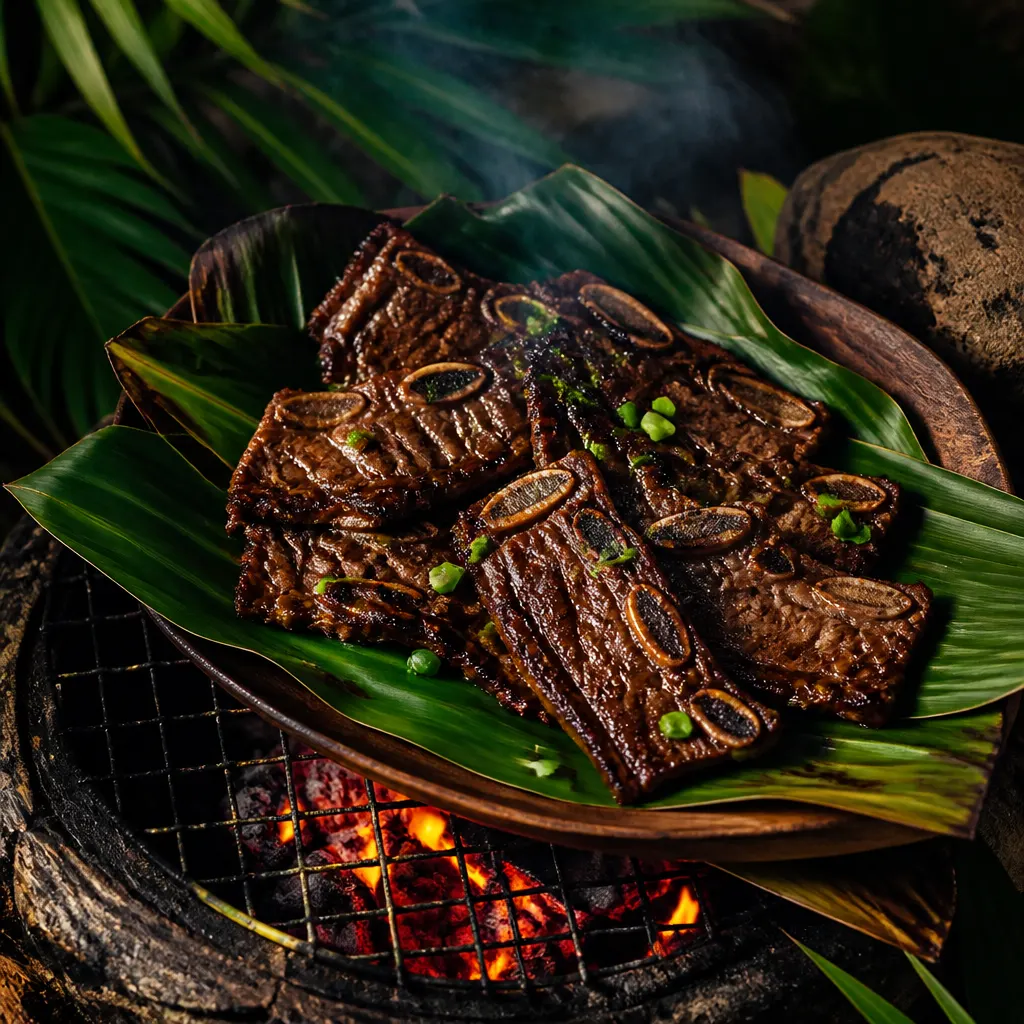
Hawaiian Smoked Teriyaki Short Ribs
Thin cross-cut flanken short ribs are a Hawaiian plate-lunch and backyard staple. Cut across the bone so they're thin and quick-cooking, they soak up a ginger-garlic teriyaki fast and take smoke even faster. One of the most forgiving things you can put on a smoker.
Cook Mode
One step at a time, big text, timers, and your screen stays awake. 0/8 steps done.
Ingredients
Tap to tick off · 0/9 gathered
- — MAIN —
- — TERIYAKI MARINADE —
Method
- 15 min
Inspect your 3 lbs of flanken-cut beef short ribs. These should be sliced across the bone into 1/4 to 1/2-inch thick strips. Trim any loose, dangling pieces of fat that might flare up, but leave the intramuscular marbling intact. Ensure the meat is cold when you move to the marinade phase to maintain food safety and prevent the fats from softening prematurely.
Why it matters
Properly trimmed flanken ribs ensure even heat distribution and prevent grease fires during the finishing char.
Common mistake
Leaving large fat globules that won't render in the short cooking window of a thin rib.
- 10 min
In a non-reactive bowl, whisk together 0.5 cup soy sauce, 0.333 cup brown sugar, 0.25 cup pineapple juice, 2 tbsp mirin, 2 tbsp grated ginger, 4 cloves grated garlic, and 1 tbsp sesame oil. The salt in the soy sauce and the bromelain enzyme in the pineapple juice will work together to deeply season and tenderize the tough connective tissues typical of short ribs. Ensure the sugar is fully dissolved to avoid gritty textures.
Why it matters
The pineapple juice and soy sauce act as a chemical brine that breaks down tough muscle fibers before cooking.
Common mistake
Using canned pineapple juice only; fresh contains more active enzymes for tenderizing.
- 40°F12h
Place the ribs in a gallon-sized vacuum bag or a heavy-duty zip-top bag and pour in the marinade. Massage the liquid into every surface of the meat. Refrigerate for 4 to 24 hours. Because these ribs are thin, they absorb salt and flavor quickly; do not exceed 24 hours or the pineapple juice will turn the beef texture mushy and the salt will over-cure the meat into a ham-like consistency.
Why it matters
Time allows the marinade to penetrate to the center of the thin cut, ensuring flavor isn't just on the surface.
Common mistake
Curing at room temperature which risks bacterial growth in the 40-140°F danger zone.
- 275°F45 min
Preheat your smoker to a steady 275°F using guava or kiawe wood. These woods provide a sweet, fruit-forward smoke profile traditional to Hawaiian BBQ that doesn't overpower the delicate ginger and mirin notes. Ensure you have a clean, blue smoke harvest rather than thick white billowing smoke, which would leave a bitter creosote taste on the high-sugar marinade.
Why it matters
Setting the smoker to 275°F allows for faster rendering of the rib fat without drying out the thin meat.
Common mistake
Using heavy woods like hickory or mesquite which clash with the bright teriyaki flavors.
- 275°F1h 15m
Remove the ribs from the marinade, but do not rinse them. Reserve the leftover marinade in a small saucepan. Lay the ribs flat on the smoker grates, ensuring they do not overlap. Smoke for 60 to 90 minutes. You are looking for the meat to take on a deep mahogany color and for the fat to begin to soften and glisten. Because they are so thin, we are cooking for color and tenderness rather than a specific internal temperature at this stage.
Why it matters
The low and slow smoke period allows the smoke particles to adhere to the tacky surface of the marinated meat.
Common mistake
Overcrowding the grates, which prevents smoke from reaching the edges of the ribs.
- 212°F15 min
While the ribs smoke, bring the reserved marinade to a rolling boil for at least 5 minutes to kill any bacteria from the raw meat. Simmer until the liquid reduces by half into a thick, syrupy tare glaze. This Japanese lacquer technique concentrates the sugars and umami, allowing you to paint a thick, glossy coat onto the ribs that won't simply run off into the fire.
Why it matters
Boiling the used marinade ensures food safety while concentrating flavors for the final lacquer.
Common mistake
Failing to boil the marinade long enough, posing a cross-contamination risk.
- 165°F5 min
Increase your heat source or move the ribs to a direct heat zone. Brush a thin layer of the reduced tare onto the ribs. Sear for 1-2 minutes per side until the sugars bubble and slightly char (the 'Maillard reaction'). Apply a second coat of tare and sear again briefly. This builds the 'Hawaiian lacquer' look—a shiny, tacky, and slightly blackened crust that defines authentic plate-lunch ribs.
Why it matters
Direct heat caramelizes the sugars in the tare, creating a complex sweetness and crispy texture.
Common mistake
Walking away during this step; the high sugar content will go from caramelized to burnt in seconds.
- 165°F5 min
Remove the ribs from the heat and let them rest for only 5 minutes—enough for the juices to redistribute but not so long that the crispy edges soften. Sprinkle with 1 tbsp toasted sesame seeds and fresh scallions. Serve immediately with white rice and macaroni salad to balance the salt and smoke of the beef. Ensure the internal temperature has surpassed 160°F for beef safety while maintaining the juicy bite of the short rib.
Why it matters
A short rest period allows the sticky glaze to set properly before the ribs are handled or cut.
Common mistake
Resting too long, which causes the thin meat to lose heat rapidly and the crust to become soggy.
Sauce It
Free Guide
5 Techniques Competition Smokers Use That Home Cooks Don't
Join the Guild email list and we'll send you the free guide — the exact moves that separate backyard cooks from competition pitmasters.
Cooks & Reviews
Guild members can rate this recipe, log their cooks and share photos.
Sign in to continueMember reviews
No reviews yet — be the first to rate this cook.
Ask the Pitmaster about this recipe
Substitutions, scaling, technique, troubleshooting — get answers grounded in this cook.
Sign in to try the AI Pitmaster on Hawaiian Smoked Teriyaki Short Ribs. New members get 3 free questions.
Sign in to tryComments(0)
Loading comments…