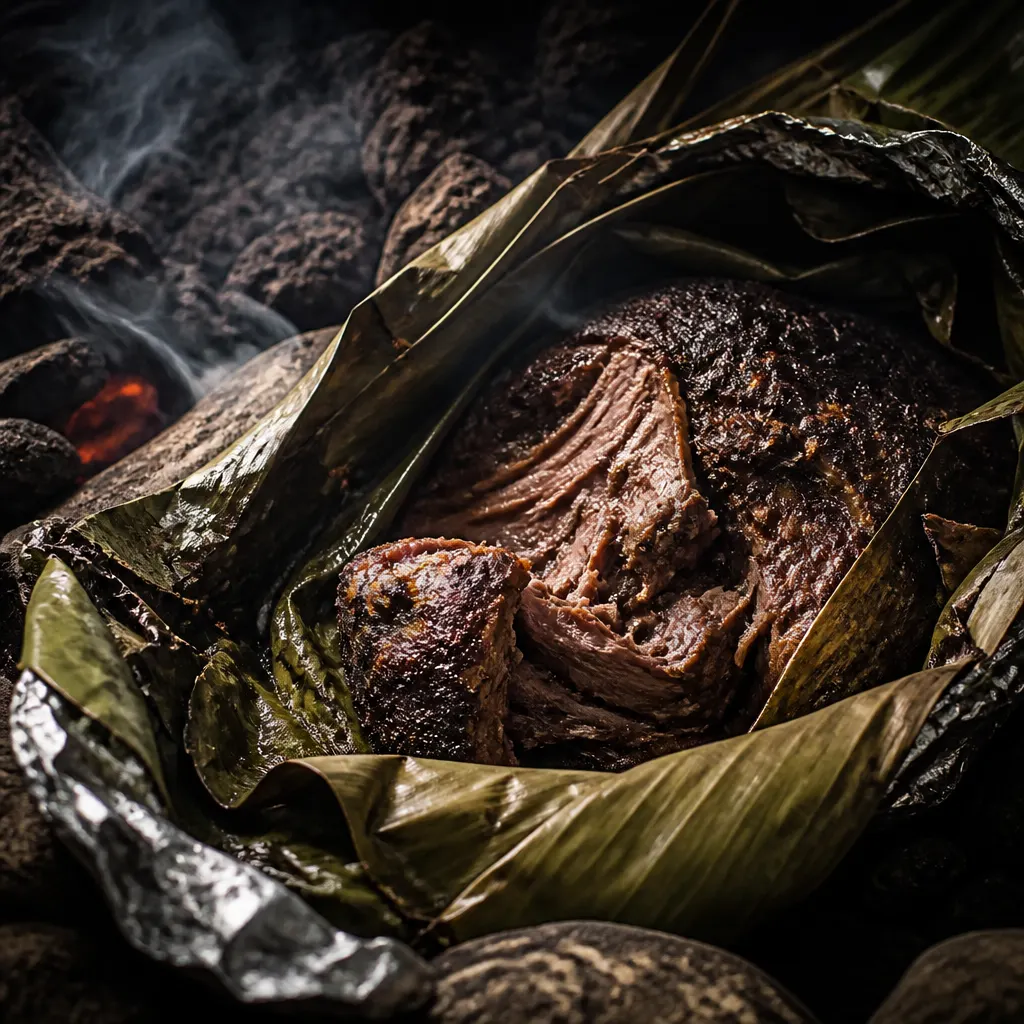
Hangi-Style Smoked Lamb Shoulder
The hangi is the Māori earth oven, New Zealand's cousin to the imu, where lamb, pork, and root vegetables cook underground over heated stones for hours. Lamb shoulder is the heart of it, and translated to a smoker with a leaf-and-foil steam wrap and manuka smoke if you can get it, it becomes deeply tender, earthy, and faintly sweet.
Cook Mode
One step at a time, big text, timers, and your screen stays awake. 0/7 steps done.
Ingredients
Tap to tick off · 0/9 gathered
- — MAIN —
- — RUB & AROMATICS —
- — WRAP & STEAM —
Method
- 24h
Begin by patting the 6 lbs bone-in lamb shoulder dry with paper towels to ensure the rub adheres properly. In a small bowl, combine the 3 tbsp coarse salt, 1 tbsp black pepper, 4 cloves of crushed garlic, and 2 tbsp neutral oil to create a thick paste. Massage this mixture thoroughly over all surfaces of the meat, then tuck the 2 sprigs of rosemary against the flesh. Wrap the shoulder tightly in plastic wrap and refrigerate for 12 to 24 hours; this allows the salt to penetrate the muscle fibers, seasoning the meat deeply and helping it retain moisture during the long cook.
Why it matters
The brine equilibrates moisture and seasons through the flesh; skipping it gives you dry, bland lamb.
Common mistake
Under-salting or failing to give the salt time to penetrate leads to meat that is only seasoned on the surface.
- 250°F45 min
Preheat your smoker to a consistent 250°F, using Manuka wood if available to achieve that authentic New Zealand flavor profile, or oak as a suitable earthy substitute. Ensure you have a clean-burning fire; you are looking for thin, blue smoke rather than thick white clouds to avoid an acrid creosote taste. If using a charcoal-based unit, set up for indirect heat to prevent the bottom of the lamb from scorching before the connective tissue breaks down.
Why it matters
A stable, clean environment ensures even cooking and a pleasant smoke profile without bitter off-flavors.
Common mistake
Adding the meat before the fire has stabilized and the heavy white smoke has cleared.
- 250°F3h
Place the lamb shoulder unwrapped onto the center of the grate, fat-side up. Smoke undisturbed for approximately 180 minutes or until the internal temperature reaches roughly 160°F. During this stage, the smoke adheres to the moist surface and the maillard reaction begins to form a dark, flavorful crust (the bark). This open-air phase is critical for capturing the essence of the wood before the meat is sealed for steaming.
Why it matters
This phase allows the meat to absorb smoke and develop the necessary crust that defines smoked barbecue.
Common mistake
Opening the lid too frequently to check the meat, which causes temperature swings and stalls the bark formation.
- 20 min
Once the lamb has a deep mahogany color, remove it from the smoker. Lay out a double layer of heavy-duty aluminum foil, then line it with cabbage or banana leaves. Place the lamb in the center of the leaves and add 0.5 cup of water or stock. Carefully fold the leaves over the meat and wrap the foil tightly to create an airtight seal; this mimics the high-moisture environment of an underground earth oven, which is essential for breaking down the tough collagen in the shoulder.
Why it matters
The leaves add an earthy vegetal layer and protect the meat from drying out during the intensive breakdown phase.
Common mistake
Failing to seal the foil completely, which allows steam to escape and results in tough, dry meat.
- 205°F4h
Return the wrapped lamb to the smoker at 250°F. Continue cooking for another 3 to 5 hours until the internal temperature reaches 200°F to 205°F. At this temperature, the connective tissue has fully rendered into gelatin. Use an instant-read probe to check for 'probe tenderness'—the probe should slide into the meat with no resistance, like a knife through soft butter, and the meat should be visibly pulling away from the bone.
Why it matters
Collagen breakdown is a function of time and temperature; reaching this internal target is required for a pull-apart texture.
Common mistake
Pulling the meat based on time alone rather than checking for the specific tactile cue of probe tenderness.
- 45 min
Remove the lamb from the smoker and let it rest, still wrapped in its foil and leaf 'oven,' for at least 45 to 60 minutes. If your service time is later, you can place the wrapped bundle in an insulated cooler. During the rest, the internal muscle fibers relax and reabsorb the rendered juices; if you cut into the lamb immediately, the moisture will rush out, leaving the meat dry despite the long cook.
Why it matters
Proper resting allows for carryover cooking to finish and ensures the juices stay within the meat.
Common mistake
Cutting into the meat too early out of hunger, which wastes the hours spent of moisture retention.
- 15 min
Unwrap the meat, discarding the spent rosemary and leaves. Use your hands or two forks to pull the lamb into large chunks or shreds, ensuring you incorporate the accumulated juices from the bottom of the foil. Serve the smoky, tender lamb alongside traditional root vegetables like kumara (sweet potato) or carrots that have been smoked or roasted. The final product should be rich, earthy, and reflect the depth of Māori-style cooking.
Why it matters
Mixing the juices back into the meat provides a final coat of seasoning and moisture for each bite.
Common mistake
Discarding the flavorful juices found inside the wrap instead of using them to dress the finished meat.
5 more steps locked
You've seen the ingredients and the first two steps. Pit Members get every step, every temp, every glaze — plus the Cook Monitor and Pitmaster AI.
See Membership OptionsAlready a member? Sign in.
Sauce It
Cooks & Reviews
Guild members can rate this recipe, log their cooks and share photos.
Sign in to continueMember reviews
No reviews yet — be the first to rate this cook.
Ask the Pitmaster about this recipe
Substitutions, scaling, technique, troubleshooting — get answers grounded in this cook.
Sign in to try the AI Pitmaster on Hangi-Style Smoked Lamb Shoulder. New members get 3 free questions.
Sign in to tryComments(0)
Loading comments…