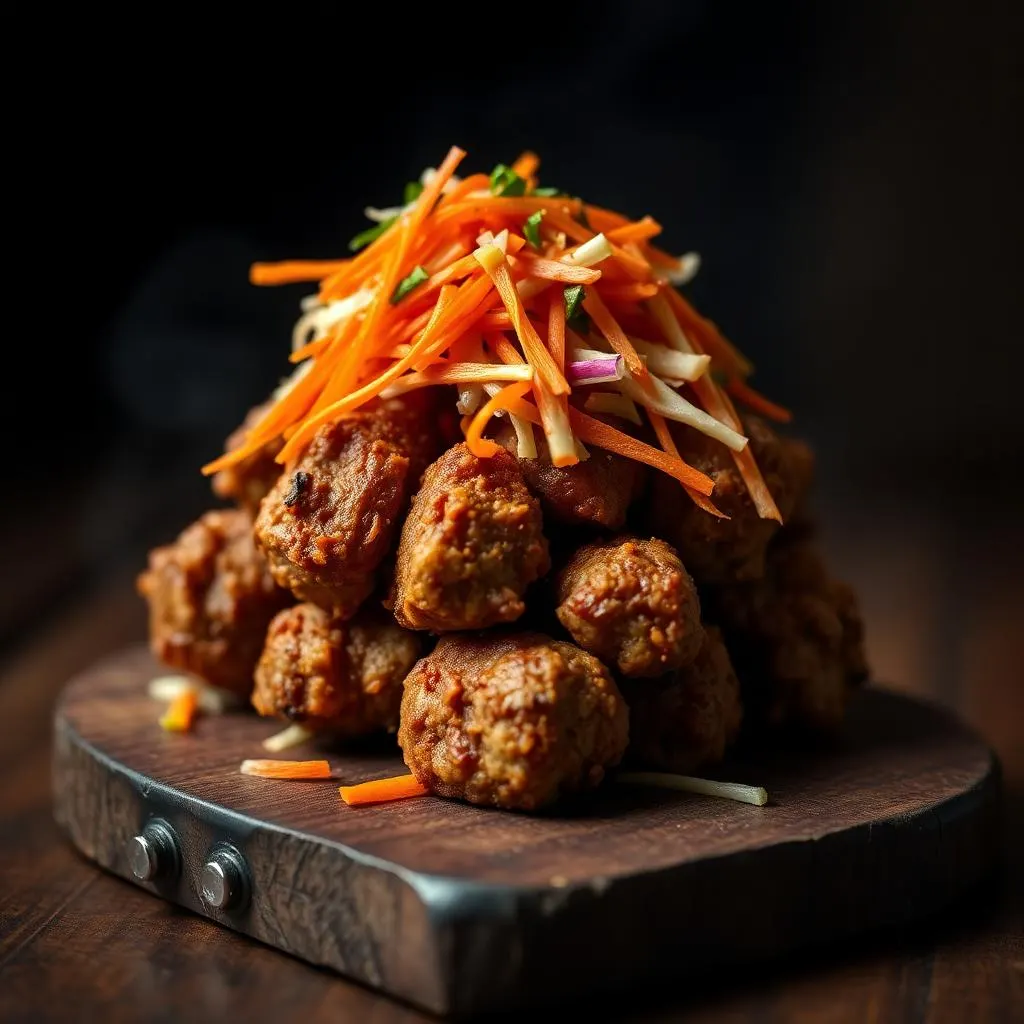
Haitian Smoked Griot with Pikliz
Haiti's crown jewel routed through the smoker first, then crisped hard. Served with fiery pikliz slaw, it's a study in contrast — smoke, citrus, crunch, pickled heat.
Cook Mode
One step at a time, big text, timers, and your screen stays awake. 0/8 steps done.
Ingredients
Tap to tick off · 0/17 gathered
- — MAIN —
- — EPIS MARINADE —
- — PIKLIZ (make ahead) —
Method
- 24h
Combine 3 cups shredded cabbage, 1 julienned carrot, 1 sliced onion, 3 sliced scotch bonnet peppers, and 6 whole cloves in a large glass jar. Pour in 1.5 cups white vinegar, the juice of 2 limes, and 1 tsp salt, ensuring the vegetables are completely submerged. This step is critical as the acetic acid and salt initiate a light pickle that provides the necessary acidic counterbalance to the fatty pork shoulder. Allow this to rest in the refrigerator for at least 24 hours to develop the signature 'bite' required for Haitian cuisine.
Why it matters
The acidity of the pikliz cuts through the heavy fat of the pork, providing a flavor balance essential for high-scoring palate fatigue prevention.
Common mistake
Using a plastic container which can absorb the scotch bonnet oils and vinegar scent permanently.
- 30 min
Cut 4 lbs of pork shoulder into uniform 2-inch cubes; uniformity is paramount for even cooking and competition-grade appearance. In a blender, combine 1 bell pepper, 1 bunch scallions, 1 bunch parsley, 8 cloves garlic, 2 tbsp fresh thyme, 2 whole scotch bonnet peppers, 0.5 cup sour orange juice, 3 tbsp oil, 1 tbsp salt, and 4 cloves. Pulse until it forms a thick, aromatic paste. This 'Epis' is the foundation of Haitian flavor, acting as a wet cure that seasons the interior of the pork while the sour orange juice begins to break down tough connective tissues.
Why it matters
Uniform meat size ensures every piece reaches the target internal temperature simultaneously, avoiding the 'dry vs. raw' inconsistency.
Common mistake
Blending the epis into a thin liquid rather than a chunky paste, which prevents it from clinging to the meat.
- 40°F24h
Thoroughly coat the 2-inch pork cubes with the Epis marinade, ensuring every surface is covered. Place the cubes in a vacuum-seal bag or a heavy-duty gallon freezer bag, removing as much air as possible to maximize surface contact. Refrigerate for 24 hours. During this phase, the salt and citrus enzymes penetrate the protein fibers, moving the meat through the 40°F safety zone while pre-tenderizing the shoulder. This mimics the Shio Koji effect, where natural enzymes convert proteins into savory amino acids.
Why it matters
A long cold-cure allows the aromatics to penetrate to the center of the cubes rather than just flavoring the surface.
Common mistake
Curing for less than 12 hours, which results in a bland interior.
- 275°F45 min
Preheat your smoker to a steady 275°F using oak or apple pellets. These mild woods provide a subtle smoke profile that complements the citrus and scotch bonnet without overpowering it. Clean your grates thoroughly to prevent sticking, which can tear the delicate 'bark' forming from the Epis. Ensure your water pan is full to maintain a humid environment, which slows the evaporation of surface moisture and allows for a deeper smoke ring development during the first hour.
Why it matters
Steady temperature management prevents the 'stall' from happening too early, ensuring the fat renders properly.
Common mistake
Using heavy woods like mesquite which clash with the bright, citrusy notes of the marinade.
- 195°F3h
Arrange the marinated pork cubes on the smoker grates, leaving at least 1 inch of space between each piece for maximum airflow. Smoke until the internal temperature reaches 195°F, which typically takes about 180 minutes. At this temperature, the collagen in the pork shoulder has converted to gelatin, but the cubes remain structurally sound enough for the final crisping phase. Monitor the exterior; you are looking for a deep mahogany color—the 'maillard reaction' combined with smoke—which indicates the sugar in the orange juice has caramelized.
Why it matters
Taking the pork to 195°F ensures the internal tenderness is 'competition grade' before the final sear.
Common mistake
Crowding the cubes, which leads to 'steaming' rather than smoking and creates grey, unappealing meat.
- 20 min
Remove the pork cubes from the smoker and place them on a wire rack over a sheet pan. Let them rest for 15-20 minutes. This allows the internal juices to redistribute and the temperature to stabilize. More importantly, it allows the surface to 'tack up' or slightly dry, which is essential for the frying phase. If the meat is too wet when hitting the oil, the steam will prevent a proper crust from forming and could cause dangerous oil splatter.
Why it matters
Resting prevents the juices from purging during the final high-heat crisping step.
Common mistake
Frying the cubes immediately after smoking, which causes the internal moisture to boil and makes the meat mushy.
- 360°F15 min
Heat oil in a heavy pot to 360°F or prepare a flat-top grill at screaming-high heat. Submerge the smoked cubes in the oil or sear them for 3 to 4 minutes until the exterior turns dark brown and develops a shattered-glass crunch. This is the hallmark of Griot: a tender, smoky interior protected by a crisp, fried exterior. Work in small batches to ensure the oil temperature does not drop below 325°F, which would lead to greasy, oil-logged meat.
Why it matters
The high-heat finish creates the textural contrast that defines this dish as Griot rather than just standard pulled pork.
Common mistake
Over-frying the cubes into 'pork rocks' by leaving them in the oil too long.
- 5 min
Pile the hot, crispy pork cubes on a platter. Use a slotted spoon to top the meat with a generous portion of the cold, drained Pikliz. For a competition-style presentation, ensure the green and orange of the Pikliz contrasts sharply against the dark mahogany of the pork. Serve immediately while the pork is at its peak 'shatter' and the slaw is still crisp. The temperature delta between the hot pork and the cold slaw is the final key to the dish.
Why it matters
Plating with a focus on color and texture contrast mimics the KCBS 'Appearance' scoring criteria.
Common mistake
Serving with soggy or warm Pikliz, which loses its refreshing impact.
6 more steps locked
You've seen the ingredients and the first two steps. Pit Members get every step, every temp, every glaze — plus the Cook Monitor and Pitmaster AI.
See Membership OptionsAlready a member? Sign in.
Sauce It
Cooks & Reviews
Guild members can rate this recipe, log their cooks and share photos.
Sign in to continueMember reviews
No reviews yet — be the first to rate this cook.
Ask the Pitmaster about this recipe
Substitutions, scaling, technique, troubleshooting — get answers grounded in this cook.
Sign in to try the AI Pitmaster on Haitian Smoked Griot with Pikliz. New members get 3 free questions.
Sign in to tryComments(0)
Loading comments…