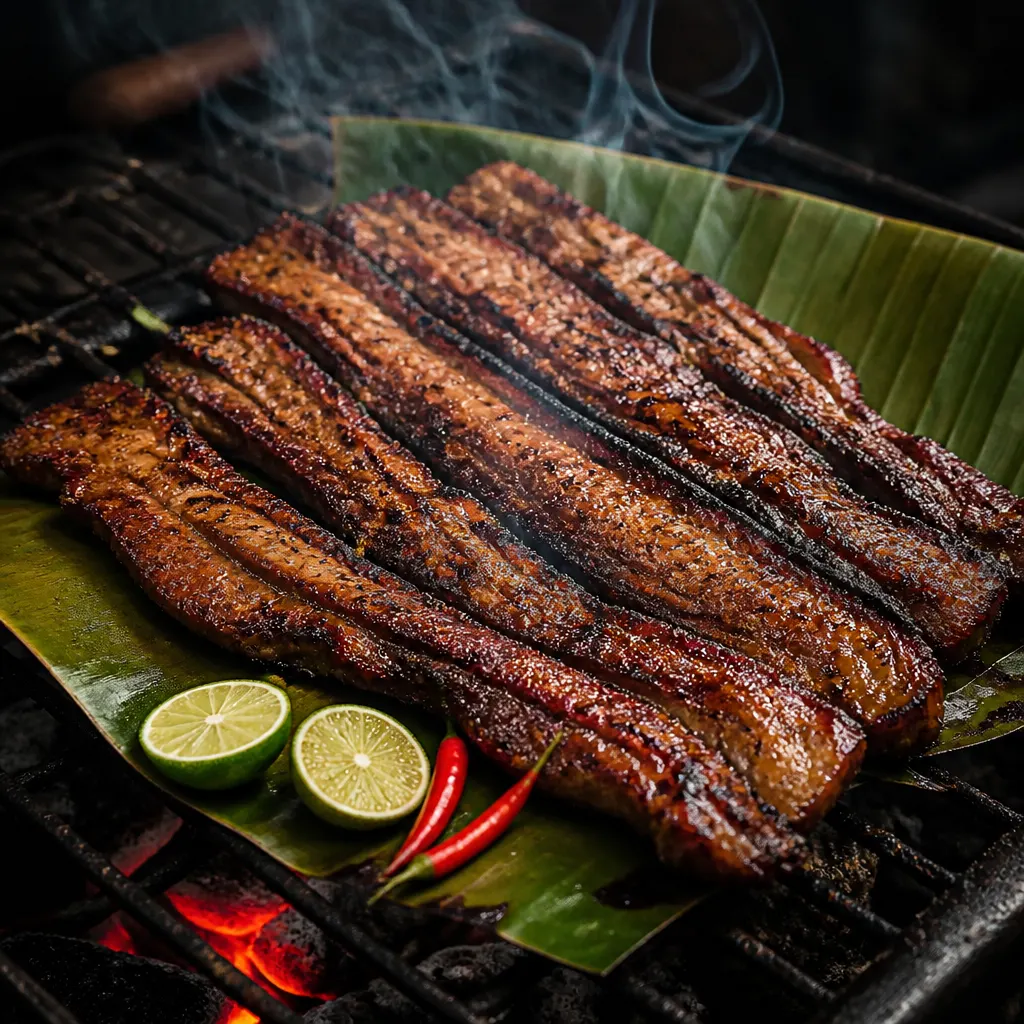
Filipino Smoked Inihaw na Liempo
Inihaw na liempo is the Filipino grilled pork belly that is a centerpiece at every backyard fiesta. Sweet, salty, garlicky, and a little funky in the best way.
Cook Mode
One step at a time, big text, timers, and your screen stays awake. 0/9 steps done.
Ingredients
Tap to tick off · 0/8 gathered
Method
- 15 min
In a large non-reactive bowl, whisk together 0.333 cup soy sauce, 0.25 cup calamansi or lemon juice, 0.25 cup banana ketchup, 0.25 cup brown sugar, 1 tbsp black pepper, 1 cup lemon-lime soda, and one whole head of crushed garlic. The lemon-lime soda acts as an unconventional home-style tenderizer because the citric acid and carbonation help break down the connective tissue in the 2.5 lbs of pork belly slabs. This ensures the 1-inch thick meat remains supple during the smoking process rather than becoming rubbery.
Why it matters
The acidity and sugars in the marinade perform chemical tenderization and deep seasoning before the heat is applied.
Common mistake
Using a reactive metal bowl which can give the marinade a metallic off-flavor due to the high acidity of the citrus.
- 40°F24h
Place the pork belly slabs into a vacuum-seal bag or a heavy-duty gallon freezer bag and pour in the marinade, ensuring the meat is fully submerged. Refrigerate for at least 6 hours, though 24 hours is the gold standard for full flavor penetration and enzymatic action. Keeping the meat below 40°F during this phase is critical to stay out of the food safety danger zone while the salt and acids work through the protein fibers.
Why it matters
Longer curing times allow the salt to denature proteins, improving moisture retention during the long smoke.
Common mistake
Marinating for less than 6 hours, which results in a flavor profile that only sits on the surface of the meat.
- 1h
Remove the pork belly from the marinade, reserving at least 1 cup of the liquid for the glaze. Pat the slabs bone-dry with paper towels and place them on a wire rack over a sheet pan in the refrigerator for 60 minutes. This air-drying process allows a 'pellicle'—a tacky, thin skin—to form on the surface, which is essential for smoke particles to adhere evenly to the meat rather than sliding off with moisture.
Why it matters
A proper pellicle creates a surface that traps smoke and prevents the meat from looking 'steamed' or gray.
Common mistake
Putting wet meat directly onto the smoker, which leads to splotchy bark and poor smoke absorption.
- 275°F45 min
Fire up your smoker to a stable 275°F using apple wood for a mild, fruity smoke profile that complements the sweetness of the banana ketchup and soda. Ensure you have 'thin blue smoke'—a clean, nearly invisible exhaust—which indicates efficient combustion. If you are using an offset or charcoal smoker, wait for the heavy white billows to subside to avoid depositing bitter creosote on the pork.
Why it matters
Consistent temperature management and clean smoke are the foundations of competition-quality flavor and color.
Common mistake
Loading the meat while the smoker is still producing thick white smoke, resulting in a bitter, ashy taste.
- 145°F2h 30m
Place the pork belly slabs on the grates, fat-side up, to allow the rendering fat to baste the meat as it cooks. Smoke for approximately 2 to 2.5 hours, or until the internal temperature reaches 145°F. You are looking for a deep mahogany color and for the fat to feel soft and 'squishy' when pressed with a gloved finger, indicating that the intramuscular lipids are beginning to render.
Why it matters
The 145°F target ensures the pork is food-safe while remaining incredibly juicy before the high-heat finish.
Common mistake
Opening the lid too often to check progress, which fluctuates the temperature and adds significant time to the cook.
- 212°F15 min
While the pork smokes, take the 1 cup of reserved marinade and bring it to a rolling boil in a small saucepan. Reduce the liquid by half until it reaches a syrupy, glossy consistency that can coat the back of a spoon. Because this liquid touched raw meat, you must maintain a boil for at least several minutes to effectively kill any bacteria, transforming it into a safe, concentrated basting sauce.
Why it matters
Reducing the marinade concentrates the sugars and umami, providing the signature sticky 'Inihaw' finish.
Common mistake
Failing to boil the marinade long enough, posing a cross-contamination risk or resulting in a watery glaze.
- 275°F10 min
Once the internal temp hits 145°F, brush both sides of the pork belly generously with the reduced glaze. Increase the heat or move the slabs to a direct heat zone of the grill for 2-3 minutes per side. Watch for the 'Inihaw' signature—charred, bubbly edges where the sugars in the banana ketchup and soda caramelize. This creates the textural contrast between soft fat and crispy, burnt ends.
Why it matters
The Maillard reaction and sugar caramelization provide the 'char-grilled' essence required for authentic Filipino BBQ.
Common mistake
Walking away during the sear; the high sugar content in the glaze can go from caramelized to burnt in seconds.
- 150°F15 min
Transfer the glazed pork belly to a cutting board and let it rest undisturbed for 10-15 minutes. This allows the internal muscle fibers to relax and the juices, which were pushed toward the center by the heat, to redistribute throughout the slab. Carryover cooking will likely nudge the final internal temperature up by 3-5 degrees, ensuring a perfect, tender bite.
Why it matters
Slicing too early causes all the internal moisture to leak out, leaving the pork dry despite the high fat content.
Common mistake
Tenting too tightly with foil, which can steam the bark and make the beautifully crispy edges soggy.
- 5 min
Slice the slabs crosswise into 1/2-inch thick strips to showcase the contrast between the dark bark and the rendered white fat. Serve immediately with a side of 'sinamak' (spiced vinegar) or a mixture of cane vinegar, crushed garlic, and bird's eye chilies. The acidity of the vinegar is a functional requirement to cut through the richness of the smoked pork belly for a balanced palate.
Why it matters
Proper slicing thickness ensures the judge or diner gets a perfect ratio of bark, fat, and meat in every bite.
Common mistake
Omitting the vinegar dipping sauce, which leaves the dish feeling overly heavy and greasy.
Sauce It
Cooks & Reviews
Guild members can rate this recipe, log their cooks and share photos.
Sign in to continueMember reviews
No reviews yet — be the first to rate this cook.
Ask the Pitmaster about this recipe
Substitutions, scaling, technique, troubleshooting — get answers grounded in this cook.
Sign in to try the AI Pitmaster on Filipino Smoked Inihaw na Liempo. New members get 3 free questions.
Sign in to tryComments(0)
Loading comments…