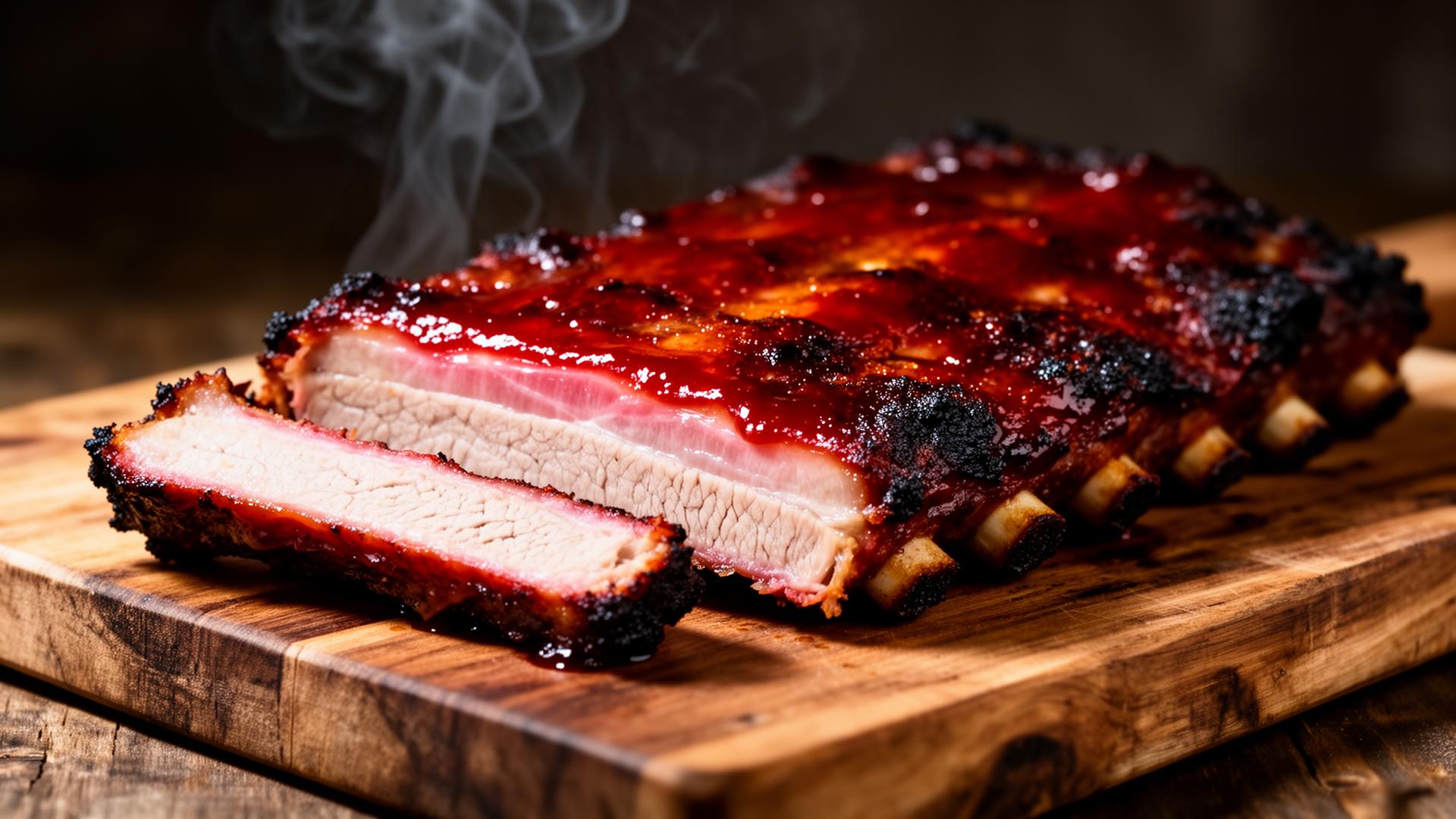
Dragon & Smoke Competition Ribs
The full three-day competition build: koji cure, enzyme soak, freeze marinade, and a multi-stage tare lacquer. Turn-in box ready.
Cook Mode
One step at a time, big text, timers, and your screen stays awake. 0/8 steps done.
Ingredients
Tap to tick off · 0/7 gathered
Method
- 24h
Begin the 72-hour competition protocol by applying 0.5 cup of Shio Koji as a thin paste across the entire surface of 2 racks of St. Louis ribs. Massage the paste into the meat fibers and vacuum seal each rack individually to ensure maximum contact. This step uses active Aspergillus oryzae proteases to break down muscle proteins into free amino acids, specifically glutamate, which tenderizes the meat from the inside out while amplifying natural umami. Refrigerate at 38°F for exactly 24 hours to achieve deep seasoning without over-curing the protein.
Why it matters
The koji enzymes pre-tenderize the pork and create a savory depth that traditional salt-rubs cannot match.
Common mistake
Exceeding the 48-hour mark, which results in a mushy, gluey texture rather than a tender bite.
- 45 min
Rinse the shio koji thoroughly from the ribs and pat them dry. Submerge the racks in 1 cup of fresh pineapple juice for exactly 45 minutes. Fresh pineapple juice contains bromelain, a powerful enzyme that attacks connective tissue. Because bromelain is highly aggressive, you must set a timer; this is a rapid-fire chemical tenderization step designed to ensure the meat pulls cleanly from the bone during the judge's bite test. Once the time is up, rinse the ribs immediately in cold water to stop the enzymatic reaction and pat bone-dry.
Why it matters
Bromelain targets the silver skin and collagen that shio koji might miss, ensuring a 'competition-clean' bite.
Common mistake
Leaving the ribs in the juice longer than an hour, which will chemically melt the surface of the meat.
- 12h
Whisk together 0.5 cup soy sauce, 0.25 cup sake, and 0.5 cup brown sugar until the sugar is fully dissolved. Place the ribs back into vacuum bags, pour in the liquid, and vacuum seal. Place the bags in the freezer for at least 12 hours. As the moisture in the meat freezes, ice crystals puncture cell walls on a microscopic level; during the slow thaw later, the soy-sake seasoning is pulled deep into the cells via capillary action. This ensures the rib is seasoned all the way to the bone, not just on the surface.
Why it matters
The freezing process forces the marinade into the meat fibers more effectively than standard refrigeration.
Common mistake
Using a marinade with too high a salt content, which can lower the freezing point and prevent proper crystal formation.
- 24h
Slow-thaw the ribs in the refrigerator over 24 hours to ensure food safety and prevent the meat from entering the 40-140°F danger zone. Once thawed, remove the ribs from the bags and pat them completely dry with paper towels. Place the racks on a wire rack over a baking sheet and leave them uncovered in the refrigerator for 2 hours. This refrigerated air circulation develops a 'pellicle'—a tacky, proteinaceous skin that allows smoke particles to adhere uniformly rather than sliding off on moisture droplets.
Why it matters
A dry, tacky surface is required for smoke adhesion and the formation of a clean, non-greasy bark.
Common mistake
Skipping the air-dry, which leads to splotchy smoke color and a muddy appearance.
- 225°F3h 30m
Preheat your smoker to 225°F using a blend of Cherry and Oak wood. The Cherry wood provides the deep mahogany hue required for KCBS appearance scores, while Oak provides a steady, clean heat and classic smoke profile. Smoke the ribs for 3.5 hours, sprizting hourly with water or a bit of leftover sake to keep the surface cool and tacky. Look for the meat to begin receding from the bone tips approx 1/4 inch, indicating the tightening of the proteins and the start of the fat render.
Why it matters
High-quality wood selection and steady temperature management are the foundation of a balanced smoke profile.
Common mistake
Opening the lid too frequently, which causes temperature swings and stalls the rendering process.
- 203°F1h 30m
When the ribs reach an internal temperature of roughly 165°F and the bark is set, lay out heavy-duty foil. Place the ribs meat-side down on a bed of butter and a ladle of the reduced Tare base. Wrap tightly to create a pressurized steam environment. This 'Texas Crutch' stage accelerates the breakdown of collagen into gelatin. Cook for roughly 90 minutes; you are looking for 'probe-tenderness.' A toothpick or temp probe should slide into the meat between the bones with the resistance of warm butter, typically around 203°F internal.
Why it matters
The wrap phase is where the final tenderness is achieved and the meat is infused with rich fat and tare flavors.
Common mistake
Wrapping too loosely, which allows the ribs to steam rather than braise, resulting in gray, boiled meat.
- 225°F20 min
Unwrap the ribs carefully, discarding the excess rendered fat but saving the dark juices. Increase smoker airflow or temp slightly to set the glaze. Apply the first coat of the 0.5 cup reduced Tare base using a silicone brush in long, thin strokes. Wait 4 minutes for the sugars to dehydrate and become tacky. Repeat this process for 5 total coats. This 'lacquer' technique builds layers of caramelized sugars and concentrated soy umami, resulting in a deep, glossy mahogany finish that reflects light—a key indicator of a high appearance score.
Why it matters
Layering thin coats creates a professional, high-gloss finish that a single thick coat of sauce cannot achieve.
Common mistake
Applying the tare too thick, which causes it to run and look messy in the turn-in box.
- 20 min
Transfer the glazed ribs to a warm area and let them rest for 20 minutes before slicing. This allows the internal juices to redistribute and the lacquer to fully set so it doesn't smear during slicing. Using a sharp boning knife, make vertical cuts between the bones in a single clean motion. For a KCBS turn-in box, select the six most uniform bones. Brush a final thin layer of warm tare over the cut edges only for extra shine and immediate flavor impact. Arrange over a bed of fresh parsley and present immediately.
Why it matters
The rest prevents the juices from purging, ensuring the rib remains moist until the judge takes their bite.
Common mistake
Slicing while the ribs are too hot, which causes the bark and glaze to peel away from the meat.
Sauce It
Cooks & Reviews
Guild members can rate this recipe, log their cooks and share photos.
Sign in to continueMember reviews
No reviews yet — be the first to rate this cook.
Ask the Pitmaster about this recipe
Substitutions, scaling, technique, troubleshooting — get answers grounded in this cook.
Sign in to try the AI Pitmaster on Dragon & Smoke Competition Ribs. New members get 3 free questions.
Sign in to tryComments(0)
Loading comments…