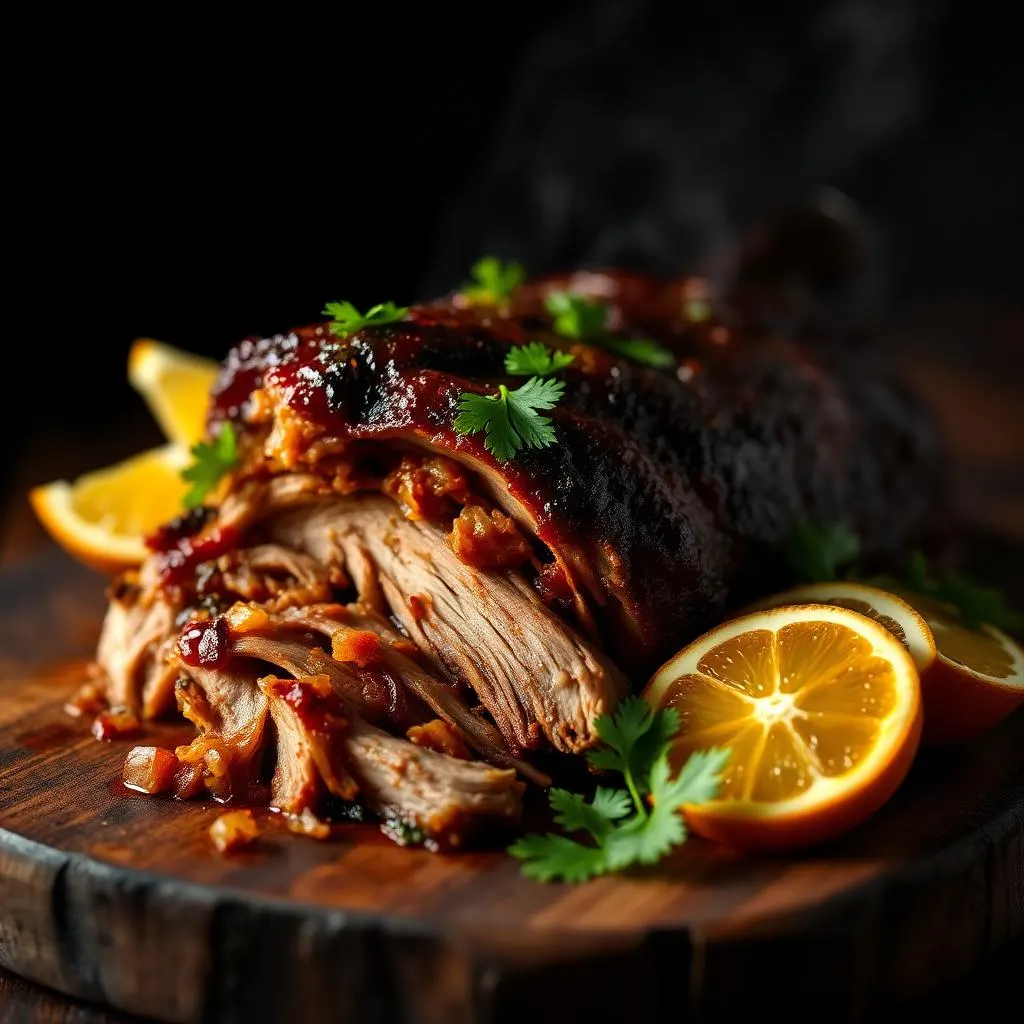
Cuban Mojo Smoked Pork
The smooth cousin of jerk. Sour orange, garlic, oregano, cumin — bright citrus carrying a pork shoulder through a long smoke. No fire on the tongue, just depth and brightness.
Cook Mode
One step at a time, big text, timers, and your screen stays awake. 0/8 steps done.
Ingredients
Tap to tick off · 0/9 gathered
- — MAIN —
- — MOJO MARINADE —
Method
- 15 min
Begin by whisking together the Mojo Marinade. Combine 1 cup sour orange juice (or the 2/3 orange to 1/3 lime mix), 10 cloves of smashed garlic, 1 tbsp dried oregano, 1 tsp ground cumin, 0.5 cup olive oil, 1 handful of chopped cilantro, 1 tbsp salt, and 1 tsp black pepper. Whisk vigorously to emulsify the oil and citrus. Scale out exactly 0.5 cup of this mixture and store it in a sealed container in the refrigerator to use as a finishing sauce. This ensures the bright acidity of the citrus and the punch of raw garlic are preserved for the final presentation.
Why it matters
Reserving fresh marinade separates the deep, cooked-in flavor from the bright, acidic finish needed to cut through pork fat.
Common mistake
Using all the marinade for the soak and having no fresh acid to brighten the heavy smoked meat at the end.
- 38°F12h
Place the 8 lb bone-in pork shoulder into a heavy-duty vacuum bag or a large BPA-free marinating bag. Pour the remaining mojo over the meat, ensuring all surfaces are coated. Squeeze out as much air as possible to maximize surface contact with the citrus and salt. Refrigerate for at least 8 hours, though 12–24 hours is preferred for a shoulder of this size. The salt in the mojo will begin a brining process, drawing the garlic and cumin flavors into the muscle fibers rather than just resting on the surface.
Why it matters
The acidity of the citrus partially denatures the surface proteins while the salt seasons the interior of the thick shoulder.
Common mistake
Marinating for less than 4 hours, which prevents the flavors from penetrating past the fat cap.
- 45 min
Remove the pork from the marinade and discard the liquid. Pat the meat completely dry with paper towels to remove excess moisture and oil. Let the pork sit on a wire rack at room temperature for about 45 minutes while you prep the smoker. This helps the meat surface tacky up for better smoke adhesion and reduces the time the meat spends in the 40-140°F danger zone by taking the chill off before it hits the heat.
Why it matters
A dry, tacky surface allows smoke particles to stick efficiently, creating a clean bark rather than a muddy surface.
Common mistake
Putting a wet, dripping wet shoulder directly on the grate, which leads to 'steaming' rather than smoking.
- 250°F30 min
Preheat your smoker to a steady 250°F using oak or apple wood. These woods provide a medium-to-light smoke profile that complements citrus without overpowering it. Ensure you have a 'clean' blue smoke coming from the exhaust; thick white smoke indicates poor combustion and will leave a bitter, creosote taste on the delicate mojo flavors. Confirm your water pan is full to maintain a humid environment, which helps the smoke penetrate the meat's surface.
Why it matters
Stability at 250°F ensures a predictable rendering of the intramuscular fat without scorching the sugars in the citrus residue.
Common mistake
Starting the cook before the fire has settled, leading to acrid 'dirty' smoke flavoring the meat.
- 250°F6h
Place the pork shoulder on the grate, fat-side up or down depending on your heat source (fat toward the heat). Smoke undisturbed until the internal temperature reaches approximately 165°F. During this stage, you are looking for the 'bark' to set—the surface should be a deep mahogany brown and shouldn't rub off when touched. This usually takes 5 to 6 hours. Do not open the lid frequently, as heat recovery on a long cook like this can add hours to your total time.
Why it matters
This phase builds the foundation of flavor and texture through the Maillard reaction and smoke absorption.
Common mistake
Spritzing too early, which can wash away the spices before the bark has a chance to set.
- 200°F3h
As the pork hits 165°F, evaporative cooling will cause the internal temperature to plateau—this is 'the stall.' If your bark looks perfect, you may wrap the pork in peach butcher paper or heavy-duty foil to power through this phase (the 'Texas Crutch'). If you prefer a crunchier, darker bark, leave it unwrapped. Continue cooking until the internal temperature reaches 200°F. The goal is 'probe tenderness,' where a thermometer probe slides into the meat with zero resistance, like a hot knife through softened butter.
Why it matters
Bringing the pork to 200°F is necessary to fully break down tough collagen into silky gelatin for easy pulling.
Common mistake
Pulling the meat by temperature alone without checking for the 'butter-like' tactile resistance.
- 1h
Remove the pork from the smoker and wrap it tightly in foil if it wasn't already. Place it in an insulated cooler (no ice) or a turned-off oven for at least 45 to 60 minutes. This allows the internal muscle fibers to relax and reabsorb the rendered juices. If you shred it immediately, the steam will escape and the meat will dry out instantly. This step is the difference between juicy pulled pork and 'dry' stringy meat.
Why it matters
Resting allows for carryover cooking to finish and for the moisture to redistribute throughout the 8lb mass.
Common mistake
Skipping the rest due to hunger, resulting in a pool of discarded juice on the cutting board instead of inside the meat.
- 160°F15 min
Transfer the pork to a large tray. Remove the bone—it should pull out clean with no meat attached. Shred the pork into chunks or strands by hand or with forks, discarding any large unrendered fat caps. While the meat is still piping hot, pour the reserved 0.5 cup of fresh Mojo Marinade over the pork and toss. The heat from the meat will 'bloom' the garlic and oregano in the sauce, providing a final hit of Cuban brightness before serving.
Why it matters
The final toss in fresh marinade replaces moisture lost during the smoke and re-introduces the signature citrus profile.
Common mistake
Over-shredding the meat into a mushy texture; aim for distinct chunks and strands for better mouthfeel.
Sauce It
Cooks & Reviews
Guild members can rate this recipe, log their cooks and share photos.
Sign in to continueMember reviews
No reviews yet — be the first to rate this cook.
Ask the Pitmaster about this recipe
Substitutions, scaling, technique, troubleshooting — get answers grounded in this cook.
Sign in to try the AI Pitmaster on Cuban Mojo Smoked Pork. New members get 3 free questions.
Sign in to tryComments(0)
Loading comments…