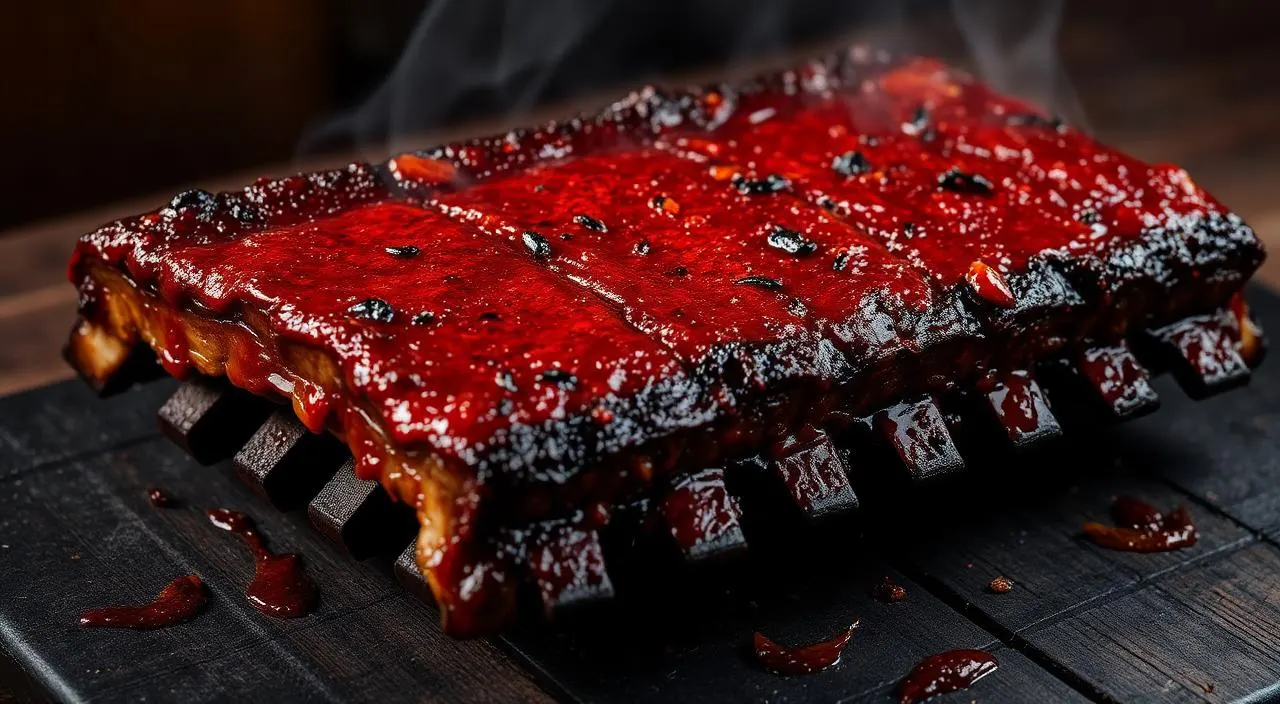
Costillas a la Brasa — Peruvian Pork Ribs
These aren't Kansas City ribs and they're not Memphis ribs. The ají panca and cumin give them a deep earthy warmth. The finish is direct heat for a char that balances the richness.
Cook Mode
One step at a time, big text, timers, and your screen stays awake. 0/9 steps done.
Ingredients
Tap to tick off · 0/10 gathered
Method
- 15 min
Begin by preparing 2 racks of baby back or St. Louis pork ribs. Use a paper towel to grip the silver skin membrane on the bone side of the ribs and pull it away entirely; this ensures the marinade penetrates the meat and prevents a rubbery texture. Trim any loose fat or 'shiners' (exposed bones) to ensure even cooking across the rack. This preparation is the first step toward the KCBS-style uniformity required for a professional presentation.
Why it matters
The membrane acts as a plastic-like barrier that prevents smoke and seasoning from reaching the meat.
Common mistake
Leaving the membrane on, which results in a tough, chewy bite that pulls off the bone.
- 10 min
In a bowl, combine 3 tbsp ají panca paste, 6 cloves minced garlic, 2 tbsp ground cumin, 1 tbsp smoked paprika, 1 tbsp dried oregano, 2 tsp salt, 1 tsp black pepper, 2 tbsp vegetable oil, and the juice of 1 lime. Whisk into a thick, uniform paste. The oil acts as a fat-soluble carrier for the spice flavors, while the lime juice provides essential acidity to begin tenderizing the muscle fibers before heat is applied.
Why it matters
Creating a wet paste ensures the spices are evenly suspended and provides better coverage than a dry rub alone.
Common mistake
Using a dry rub without the oil and citrus, which leads to uneven seasoning and less bark depth.
- 2h
Apply the paste generously to all sides of the ribs, ensuring every crevice is coated. For the best infusion of the earthy ají panca and cumin, wrap the ribs tightly in plastic wrap or place them in a vacuum seal bag for at least 2 hours, though 12–24 hours is preferred. Keep the meat refrigerated at or below 40°F to stay out of the bacterial danger zone. This time allows the salt to penetrate the protein and the enzymes in the lime juice to soften the connective tissue.
Why it matters
Time allows the salt and spices to move from the surface into the deep tissue via osmosis.
Common mistake
Marinating at room temperature, which risks foodborne illness.
- 275°F30 min
Set up your smoker for indirect heat and stabilize the temperature at 275°F. Use apple or oak pellets; these woods provide a clean, mild smoke that allows the unique, smoky-fruit flavor of the ají panca to shine without being overpowered by heavy hickory or mesquite. Ensure your exhaust is fully open to maintain a clean burn (thin blue smoke), as stagnant smoke creates a bitter creosote flavor on the meat.
Why it matters
Consistent airflow and temperature are the foundations of building a 'judging-grade' bark.
Common mistake
Adding meat before the smoker has stabilized, leading to heavy, soot-flavored bark.
- 275°F2h 30m
Place the ribs bone-side down on the grate. This position protects the delicate meat from direct heat while the bones act as radiators. Cook for approximately 2 to 2.5 hours. During this phase, the fat renders and the paste sets into a deep mahogany bark. Monitor the color; do not open the lid frequently as heat loss can extend the cook time significantly and dry out the ribs.
Why it matters
Indirect heat slowly breaks down collagen into gelatin without burning the sugars in the marinade.
Common mistake
Opening the lid too often ('if you're lookin', you ain't cookin''), which causes temperature swings.
- 195°F30 min
Check the ribs for doneness by looking for the 'pull-back'—the meat should have retreated from the bone ends by about 1/4 to 1/2 inch. For a competition-style texture, the meat should have a slight tug but pull cleanly off the bone. Internal temperature should be roughly 195°F to 203°F at this stage, but the tactile 'bend test' or toothpick test is the master's choice for identifying perfectly rendered fat.
Why it matters
Proper rendering ensures the rib isn't mushy like 'boiled' meat but isn't tough either.
Common mistake
Pulling the ribs too early when the collagen is still tight and rubbery.
- 450°F10 min
Move the ribs to the direct heat side of the grill or increase your smoker's temperature to 400°F+. Sear the ribs for 3 to 5 minutes per side. The goal is 'la brasa'—a slight char that caramelizes the remaining ají panca paste and adds a crispy texture to contrast the tender interior. Watch closely for flare-ups from the oil in the marinade; you want a uniform char, not a scorched surface.
Why it matters
Direct heat creates complex flavor compounds through the Maillard reaction that low-and-slow cannot achieve.
Common mistake
Walking away during the sear, leading to bitter, burnt meat.
- 15 min
Transfer the ribs to a cutting board and tent loosely with foil. Let them rest for at least 10 to 15 minutes. During this rest, the internal juices redistribute within the muscle fibers. If you slice immediately, the moisture will purge out, leaving the ribs dry. Carryover cooking will occur here, allowing the final internal temperature to stabilize.
Why it matters
Resting prevents moisture loss and ensures every bite is juicy.
Common mistake
Slicing while the meat is piping hot, which dries out the rack instantly.
- 5 min
Flip the ribs bone-side up to clearly see the path for your knife. Slice cleanly between each bone with a sharp chef's knife. For a professional presentation, arrange the ribs in a fanned-out pattern on a platter or a bed of fresh herbs. The ribs should show a distinct pink smoke ring and a dark, glossy, charred bark. Serve immediately with extra lime wedges to brighten the earthy panca flavors.
Why it matters
Visual uniformity and clean slices are the first things a judge or guest notices.
Common mistake
Using a dull knife that shreds the bark and tears the meat.
Sauce It
Cooks & Reviews
Guild members can rate this recipe, log their cooks and share photos.
Sign in to continueMember reviews
No reviews yet — be the first to rate this cook.
Ask the Pitmaster about this recipe
Substitutions, scaling, technique, troubleshooting — get answers grounded in this cook.
Sign in to try the AI Pitmaster on Costillas a la Brasa — Peruvian Pork Ribs. New members get 3 free questions.
Sign in to tryComments(0)
Loading comments…