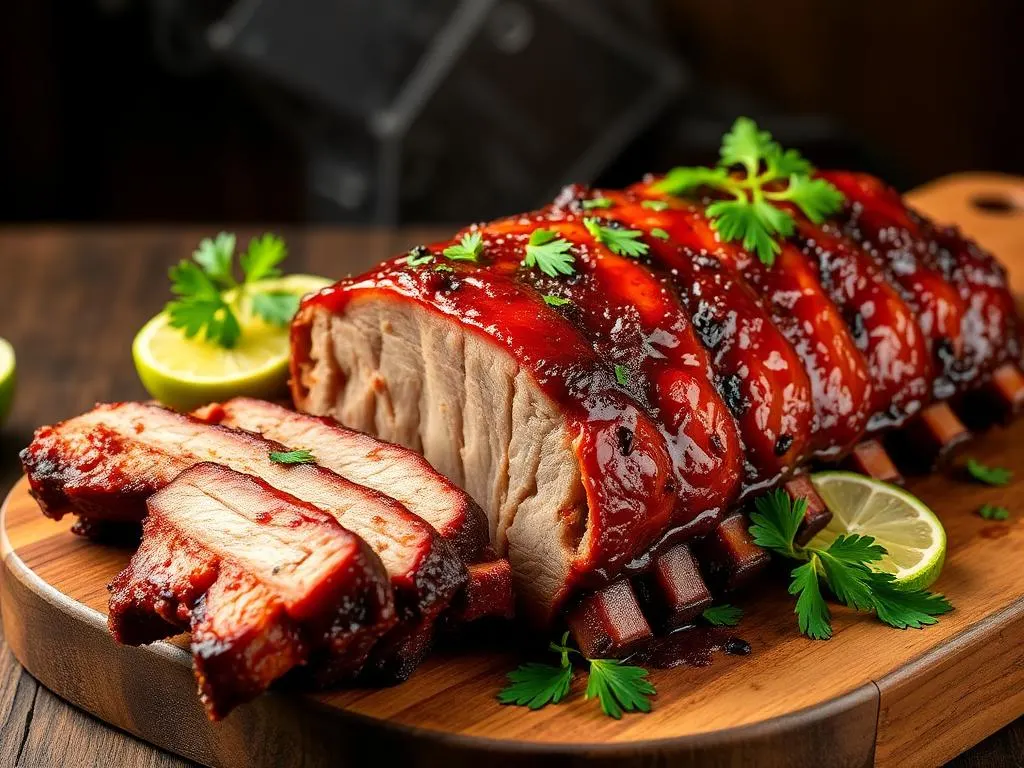
Costelinha — Brazilian Smoked Pork Ribs
Brazilian pork ribs skip the heavy sweet sauce and lean on garlic, lime, and beer. Cleaner, brighter, more about the pork than the glaze. Use the wrap method and they basically cook themselves.
Cook Mode
One step at a time, big text, timers, and your screen stays awake. 0/9 steps done.
Ingredients
Tap to tick off · 0/8 gathered
- — MAIN —
- — MARINADE —
Method
- 15 min
Begin by removing the silver-skin membrane from the bone side of the 2 racks of pork ribs. Insert a butter knife between the membrane and a bone near the center of the rack, lift to create a grip, and pull it off with a paper towel for traction. Removing this allows the marinade to penetrate the meat rather than bouncing off a rubbery barrier and ensures the ribs are not chewy after the cook.
Why it matters
The membrane is an impenetrable barrier that prevents seasoning and smoke from reaching the meat on the bone side.
Common mistake
Leaving the membrane on, which results in a plastic-like texture on the back of the rib.
- 40°F8h
Whisk together 1 cup lager, 6 cloves of crushed garlic, 0.25 cup lime juice, 2 tbsp oil, 1 tbsp coarse salt, 1 tsp black pepper, and 1 tsp paprika in a large non-reactive container or zip-top bag. Submerge the ribs completely in this acidic, savory marinade and refrigerate for 4 to 12 hours. The salt and lime juice function as a wet brine, denaturing proteins to improve moisture retention while the garlic and beer infuse the muscle fibers with traditional Brazilian flavors.
Why it matters
The acid in the lime and beer tenderizes the pork while the salt pulls moisture and aromatics into the center of the rack.
Common mistake
Marinating for over 24 hours, which can cause the lime juice to turn the pork surface mushy.
- 38°F1h
Remove the ribs from the marinade and pat them thoroughly dry with paper towels. Place them on a wire rack over a baking sheet and return them to the refrigerator uncovered for 60 minutes. This creates a 'pellicle'—a tacky surface layer that allows smoke particulates to adhere evenly to the meat. A wet rib will steam rather than take on smoke, resulting in a gray, unappealing appearance.
Why it matters
A dry surface is essential for smoke adhesion and the development of a professional-grade bark.
Common mistake
Putting wet meat directly into the smoker, which leads to splotchy color and poor smoke flavor.
- 250°F30 min
Fire your smoker to a steady 250°F using a clean-burning fire of Apple or Oak wood. Ensure the smoke is 'blue' and nearly translucent rather than thick and white. If using an offset, manage your split sizes to maintain a consistent bed of coals; if using a pellet grill, ensure your hopper is full. Aim for a clean airflow to prevent creosote buildup, which would ruin the bright, citrusy profile of the Costelinha marinade.
Why it matters
Clean smoke provides a light campfire flavor that complements rather than overpowers the delicate garlic and lime.
Common mistake
Cooking with 'dirty' white smoke, which leaves a bitter, ashy taste on the pork.
- 250°F2h 30m
Place the ribs bone-side down on the grate. Smoke at 250°F for approximately 150 minutes (2.5 hours) without opening the lid. During this phase, the surface proteins undergo the Maillard reaction, and the smoke penetrates the meat to the 40-140°F danger zone rapidly for safety. Look for the meat to begin pulling back about 1/4 inch from the ends of the bones and for the surface to change from pink to a mahogany hue.
Why it matters
This phase sets the smoke ring and establishes the outer texture of the rib.
Common mistake
Opening the lid frequently, which causes temperature swings and adds 15-20 minutes to the cook each time.
- 250°F1h 30m
Lay out two large sheets of heavy-duty aluminum foil. Place each rack on the foil and slightly turn up the edges to create a boat. Pour a splash of fresh lager into the foil (about 2 tbsp per rack), then seal the foil tightly. Return to the smoker for 90 minutes. This 'Texas Crutch' technique uses steam to break down the connective collagen in the ribs, ensuring they achieve the perfect tenderness without drying out the exterior.
Why it matters
Wrapping accelerates the cook and tenderizes the meat by trapping internal moisture and steam.
Common mistake
Wrapping too loosely, which allows steam to escape and results in tough ribs.
- 195°F45 min
Carefully unwrap the ribs, reserving any juices for a later mop if desired. Brush the ribs with a small amount of the remaining (boiled/safe) marinade or a light beer-based glaze. Increase the heat slightly or leave at 250°F for another 30-45 minutes. The ribs are finished when they pass the 'bend test': pick the rack up with tongs from one end; the middle should bend significantly and the bark should start to crack.
Why it matters
This final 'tack up' period dries the surface back out after the braise, restoring the bark's integrity.
Common mistake
Pulling the ribs by time alone instead of using the bend test to verify collagen breakdown.
- 15 min
Transfer the finished ribs to a cutting board and tent loosely with foil. Allow them to rest for at least 10-15 minutes. During this time, the internal temperature will equalize and the muscle fibers will relax, reabsorbing the rendered fats and juices. Cutting into them too early will cause the moisture to run out, leaving the meat dry despite a perfect cook.
Why it matters
Resting prevents the purge of juices, ensuring every bite is moist and flavorful.
Common mistake
Slicing the ribs immediately upon removal from the smoker.
- 5 min
Flip the rack bone-side up on the board so you can see the path of the bones clearly. Slice between each bone with a long, sharp knife in one clean motion. Arrange the ribs on a platter with fresh lime wedges for squeezing. In the Brazilian style, the focus is on the quality of the pork and the brightness of the garlic-lime aromatics, so serve them clean without heavy dipping sauces.
Why it matters
Slicing from the bone-side ensures uniform portions and prevents the bark from crumbling during the cut.
Common mistake
Slicing from the meat-side and 'guessing' where the bones are, leading to uneven or mangled ribs.
Sauce It
Cooks & Reviews
Guild members can rate this recipe, log their cooks and share photos.
Sign in to continueMember reviews
No reviews yet — be the first to rate this cook.
Ask the Pitmaster about this recipe
Substitutions, scaling, technique, troubleshooting — get answers grounded in this cook.
Sign in to try the AI Pitmaster on Costelinha — Brazilian Smoked Pork Ribs. New members get 3 free questions.
Sign in to tryComments(0)
Loading comments…