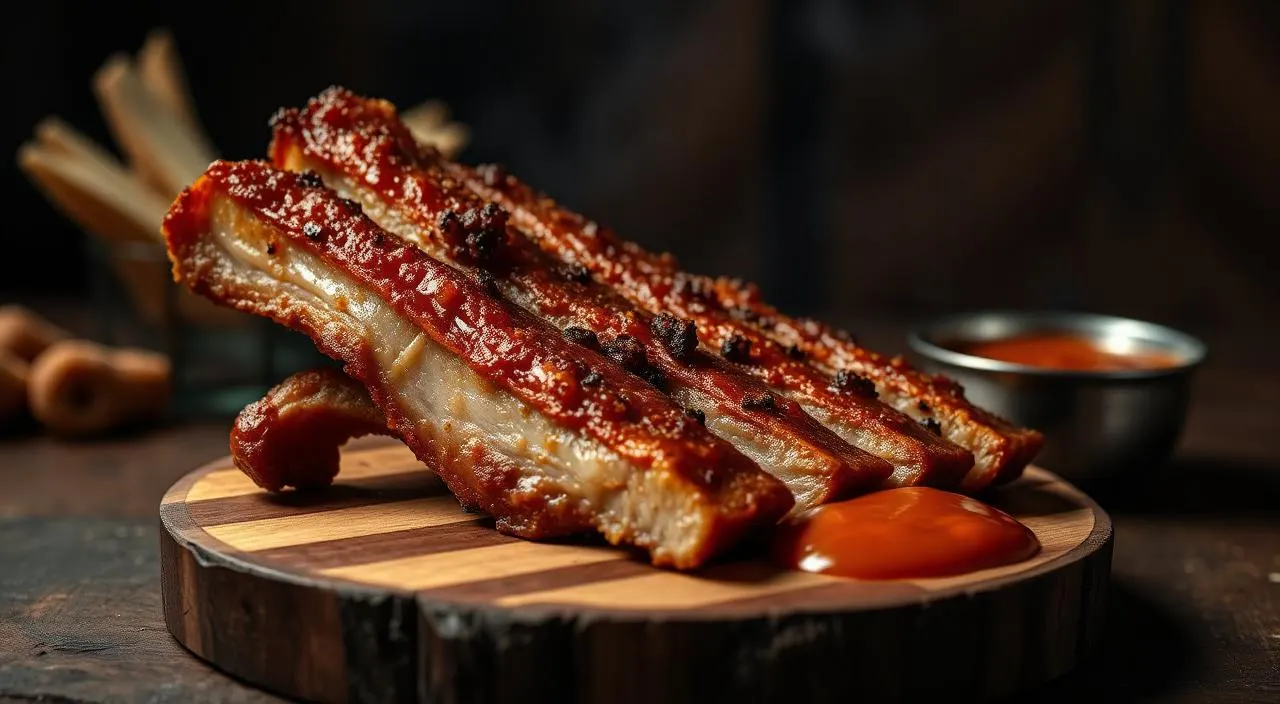
Colombian Chicharrón — Smoked Then Crisped Pork Belly
Colombian chicharrón is a bit different from the Mexican version — it keeps the meat attached to the skin, so you get the textural contrast of the crackle on top and juicy pork underneath. Smoking it first before crisping adds a layer most versions skip.
Cook Mode
One step at a time, big text, timers, and your screen stays awake. 0/8 steps done.
Ingredients
Tap to tick off · 0/6 gathered
Method
- 2h
Begin by scoring the skin of your 3 lbs of pork belly in 1-inch intervals using a sharp knife or razor. Be cautious to only pierce the skin and a fraction of the fat; do not slice into the meat. Apply 1 tbsp of baking soda across the skin surfaces only, rubbing it in thoroughly. The baking soda raises the pH level, breaking down the peptide bonds in the skin to ensure a blistered, bubbly texture during the final crisping phase. Place the strips on a wire rack uncovered in the refrigerator for at least 2 hours, or ideally overnight, to dehydrate the surface.
Why it matters
Dehydrating the skin and raising its pH is the chemical foundation for achieving a loud, shatter-crisp crackle rather than a chewy rind.
Common mistake
Cutting too deep into the meat layer, which causes the juices to bubble up and soften the skin during the cook.
- 15 min
Remove the belly from the fridge and wipe away any excess moisture or residual baking soda. Apply 1 tbsp of white vinegar to the skin using a pastry brush or paper towel; the acid reacts with the remaining soda to neutralize the flavor while further prepping the skin for heat. Season the meat sides (bottom and sides only) with 2 tbsp coarse salt, 1 tsp black pepper, and 1 tsp ground cumin. Do not put spices on the skin, as they will burn during the high-heat crisping phase and prevent the skin from bubbling evenly.
Why it matters
Vinegar ensures no alkaline aftertaste remains from the soda while the salt and cumin provide the traditional Colombian flavor profile to the muscle meat.
Common mistake
Getting pepper or cumin on the skin, which creates dark, bitter burnt spots during the final sear.
- 250°F30 min
Preheat your smoker to a steady 250°F using a clean-burning wood like apple or cherry. These fruitwoods provide a mild, sweet smoke profile that complements the natural sweetness of pork fat without overpowering the delicate cumin notes. Ensure you have a water pan in place to maintain a humid environment, which helps keep the internal meat tender during the first two hours of cooking and prevents the fat from rendering too quickly before the skin is ready.
Why it matters
Clean blue smoke at a stable temperature prevents the 'creosote' bitter taste that often plagues fatty cuts like pork belly.
Common mistake
Using heavy woods like mesquite or hickory which can easily overwhelm the flavor of the belly.
- 175°F2h
Place the pork belly strips on the grates skin-side up. This orientation is critical; it allows the rendering fat to baste the meat below while the skin continues to dry out in the convection of the smoker. Smoke for approximately 120 minutes until the internal temperature reaches 175°F. At this temperature, the collagen in the meat has begun to break down, and the fat is sufficiently softened, but the meat remains structured enough to handle during the high-heat finish. Always use a probe to ensure you stay out of the 40-140°F danger zone as quickly as possible.
Why it matters
The smoking phase renders the internal fat and infuses flavor, which is the main differentiator between authentic Colombian chicharrón and standard fried versions.
Common mistake
Pulling the meat too early (below 165°F), which results in a tough, rubbery bite regardless of how crispy the skin gets.
- 400°F15 min
Remove the belly from the smoker and immediately pat the skin side dry with fresh paper towels. Any surface moisture at this stage will turn to steam and prevent the skin from frying. For the finishing move, you can either crank your grill/oven to 400°F or preheat a heavy cast iron skillet with a thin layer of high-smoke-point oil over medium-high heat. The goal is a rapid, intense thermal shock to the skin to trigger the 'puffing' effect.
Why it matters
Moisture is the enemy of the Maillard reaction; high heat and dry skin are required for the iconic blistered appearance.
Common mistake
Allowing the meat to cool too much before the crisping move, which makes the fat turn gummy.
- 15 min
Place the strips skin-side down onto the hot surface or grate. If using a skillet, use a press or another heavy pan to ensure the skin makes 100% contact with the heat. Monitor closely for 10-15 minutes; you are looking for the skin to transform from a flat, leathery surface to a golden-brown, bubbly, and porous 'crackle.' Once the skin is fully blistered and sounds hollow when tapped with a knife, remove it immediately to prevent the meat from overcooking into the 190°F range, which would make it shred like pulled pork.
Why it matters
The skin-down contact creates the textural contrast that defines Colombian chicharrón—the crunch must be uniform across the entire strip.
Common mistake
Walking away during this step; the high fat content and high heat can lead to a grease fire or burnt skin in seconds.
- 10 min
Transfer the chicharrón to a cutting board, skin-side UP. Let the meat rest for 5-10 minutes. This allows the internal juices to redistribute throughout the muscle fibers and lets the skin fully harden into its final crispy state through carryover cooling. Resting skin-side up is vital to prevent steam from the hot meat from softening the crackle you just worked to achieve.
Why it matters
Resting ensures the meat stays juicy when sliced and prevents the skin from losing its 'crunch' due to trapped moisture.
Common mistake
Slicing immediately, which causes all the flavorful juices to run out, leaving the pork dry.
- 5 min
Using a serrated knife or a very sharp cleaver, slice the strips into bite-sized pieces following the score marks you made in Step 1. The sound of the knife breaking through the skin is your primary indicator of success. Serve immediately while hot alongside white rice, fresh arepas, and a side of ají hot sauce for acidity. For the best experience, each bite should contain a layer of crackle, rendered fat, and seasoned meat.
Why it matters
Proper slicing preserves the integrity of the skin-to-meat ratio in every serving, honoring the Colombian tradition.
Common mistake
Using a dull knife that crushes the skin rather than slicing through it, ruining the presentation.
Sauce It
Cooks & Reviews
Guild members can rate this recipe, log their cooks and share photos.
Sign in to continueMember reviews
No reviews yet — be the first to rate this cook.
Ask the Pitmaster about this recipe
Substitutions, scaling, technique, troubleshooting — get answers grounded in this cook.
Sign in to try the AI Pitmaster on Colombian Chicharrón — Smoked Then Crisped Pork Belly. New members get 3 free questions.
Sign in to tryComments(0)
Loading comments…