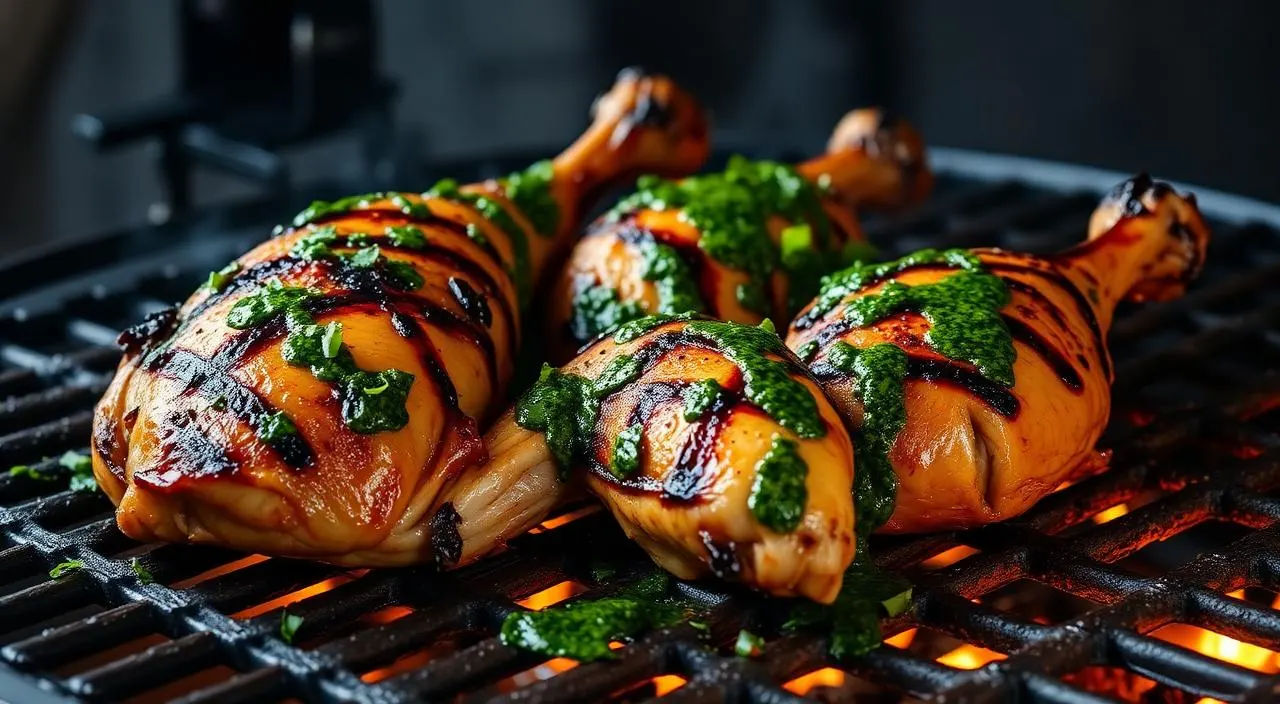
Chimichurri Chicken Quarters — Bone-In Thighs and Drums
Real chimichurri isn't the thick green sauce from the jar at the grocery store. It's loose, oily, bright, and punchy. Make it the day before if you can — the flavors open up overnight. This is a simple cook that punches way above its weight.
Cook Mode
One step at a time, big text, timers, and your screen stays awake. 0/8 steps done.
Ingredients
Tap to tick off · 0/10 gathered
- — CHIMICHURRI —
- — CHICKEN —
Method
- 15 min
Begin by finely chopping 1 cup of flat-leaf parsley and mincing 6 cloves of garlic. Combine these in a bowl with 0.33 cup red wine vinegar, 0.66 cup extra virgin olive oil, 1 tsp dried oregano, 1 tsp red pepper flakes, 1 tsp coarse salt, and 0.5 tsp black pepper. Whisk vigorously to emulsify the oil and vinegar. Immediately divide the mixture into two separate containers: one for the marinade and one for the finished serving sauce. This separation is a crucial food safety barrier to prevent cross-contamination from raw poultry pathogens.
Why it matters
Dividing the sauce before it touches raw meat ensures your finishing sauce is sterile and safe for consumption.
Common mistake
Using curly parsley instead of flat-leaf, which results in a bitter, grassy flavor and poor texture.
- 2h
Take 4 chicken leg quarters and pat them completely dry with paper towels. Place them in a heavy-duty vacuum seal bag or gallon zip-top bag. Add the 'marinade' half of your chimichurri mixture. If you have time, freeze the bag flat for 24 hours; the ice crystals will rupture the muscle fibers, allowing the vinegar and garlic to penetrate deep into the thigh meat. If cooking same-day, marinate in the refrigerator for at least 2 hours, rotating the bag every 30 minutes to ensure total surface contact.
Why it matters
Acidic marinades require time and physical fiber breakdown to season the interior of thick poultry cuts.
Common mistake
Marinating in a bowl where the top of the chicken is exposed to air, leading to uneven seasoning.
- 10 min
Remove the chicken from the marinade and allow any excess oil to drip off, but do not wash the chicken. Season the skin side specifically with a blend of 1 tbsp coarse salt, 1 tsp black pepper, and 1 tsp smoked paprika. The salt in this rub assists in drawing moisture out of the skin during the cook, while the smoked paprika provides the deep mahogany color judges look for in a competition-style box.
Why it matters
The extra layer of dry seasoning ensures the flavor isn't lost when the marinade oil drips away during the cook.
Common mistake
Applying too much rub over the oil, which can create a muddy paste rather than a clean bark.
- 375°F20 min
Preheat your smoker to a target ambient temperature of 375°F using apple or cherry wood for a mild, sweet smoke profile. Configure the grill for two-zone cooking: bank your coals or heat source to one side (direct) and leave the other side empty (indirect). At 375°F, you are above the rendering point for chicken fat, which is necessary to prevent 'rubbery' skin, but high enough to move the meat through the 40-140°F danger zone rapidly.
Why it matters
High heat is essential for bone-in poultry to render subcutaneous fat and achieve bite-through skin.
Common mistake
Smoking chicken at 225°F, which results in tough, inedible skin that judges will penalize.
- 375°F40 min
Place the chicken leg quarters on the indirect (cool) side of the grate, skin-side up. Close the lid and monitor the internal temperature. The goal is to gently bring the internal temperature of the thickest part of the thigh to 160°F. The indirect heat allows the connective tissue in the drumstick joints to break down without burning the delicate herbs from the chimichurri that are clinging to the skin.
Why it matters
Indirect heat cooks the meat evenly from all sides like a convection oven, preventing the bottom from scorching.
Common mistake
Opening the lid frequently, which drops the temperature and extends the cook time significantly.
- 165°F5 min
Once the internal temperature hits 160°F, move the chicken quarters to the direct heat side, skin-side down. Listen for the sizzle but stay vigilant; the olive oil from the marinade will cause flare-ups. Sear for 2-4 minutes until the skin is golden brown and crispy. Flip once and sear the bottom for 1 minute. Remove the chicken when the internal temperature reaches 165°F in the thigh, ensuring the thermometer does not touch the bone.
Why it matters
The direct sear provides the final Maillard reaction needed for appearance and texture scores.
Common mistake
Walking away during the sear; chicken fat and olive oil can create a grease fire in seconds.
- 170°F10 min
Transfer the chicken to a room-temperature cutting board or warm platter. Do not tent tightly with foil, as this will trap steam and soften the crispy skin you just worked to achieve. Allow the meat to rest for 5 to 10 minutes. During this time, carryover cooking will likely bring the final internal temperature to 170°F, and the juices will redistribute throughout the muscle fibers for a moist bite.
Why it matters
Resting prevents the juices from rushing out the moment you cut into the joint, keeping the meat succulent.
Common mistake
Slicing immediately, which leaves the juice on the cutting board instead of in the meat.
- 5 min
Whisk the reserved, clean chimichurri sauce one last time to re-incorporate the oil and vinegar. Spoon the sauce generously over the chicken quarters just before serving. The brightness of the raw garlic and vinegar in the fresh sauce will cut through the fatty richness of the smoked chicken. Serve immediately while the skin maintains its maximum crunch and the interior remains at a safe, hot temperature.
Why it matters
Applied too early, the sauce will soak the skin and ruin the texture; applied at service, it provides a punchy contrast.
Common mistake
Using the same brush that touched the raw marinating chicken to apply the final sauce.
Sauce It
Cooks & Reviews
Guild members can rate this recipe, log their cooks and share photos.
Sign in to continueMember reviews
No reviews yet — be the first to rate this cook.
Ask the Pitmaster about this recipe
Substitutions, scaling, technique, troubleshooting — get answers grounded in this cook.
Sign in to try the AI Pitmaster on Chimichurri Chicken Quarters — Bone-In Thighs and Drums. New members get 3 free questions.
Sign in to tryComments(0)
Loading comments…