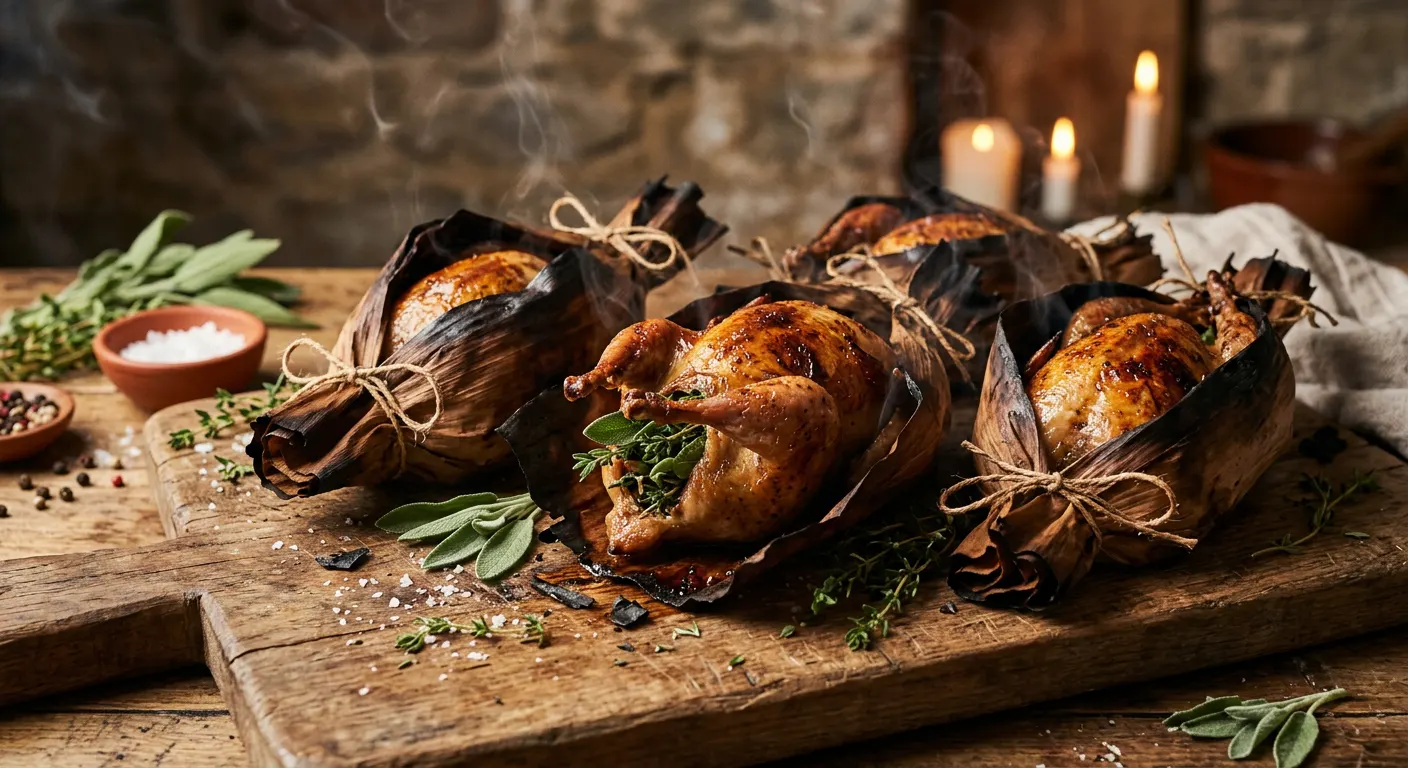
Cedar-Wrapped Smoked Game Birds
Pacific Northwest / Eastern Woodlands. Wild game birds, grouse, quail, partridge, pheasant, fed Indigenous peoples across the continent, and wrapping them in cedar to smoke is a beautiful Pacific Northwest technique that protects the lean birds while perfuming them deeply. Small game birds are notoriously easy to dry out, so the cedar wrap and a careful watch on temperature make this an advanced cook. The result is delicate, aromatic, and genuinely special, the kind of dish that connects you to the land.
Cook Mode
One step at a time, big text, timers, and your screen stays awake. 0/8 steps done.
Ingredients
Tap to tick off · 0/10 gathered
Method
- 12h
Begin by whisking 0.33 cup of salt and 0.25 cup of maple syrup into 6 cups of water until fully dissolved. Add 1 tbsp of crushed juniper berries and 1 tbsp of black peppercorns to provide traditional forest-floor aromatics. Submerge your 5 small game birds or 2 pheasants completely in this solution, ensuring they are weighted down to avoid exposure to air. This saline-sugar environment initiates denaturing of the muscle proteins, which allows the lean game meat to hold on to moisture more effectively during the heat of the smoke.
Why it matters
The brine equilibrates moisture and seasons through the flesh; skipping it gives you dry, bland game birds.
Common mistake
Using a warm brine which raises the meat temperature into the bacterial danger zone before the cook begins.
- 1h
Remove the birds from the brine and discard the liquid. Pat each bird completely dry inside and out with paper towels to prepare the surface for the fat rub. Place the birds on a wire rack in the refrigerator for at least one hour to allow the skin to dry further; this creates a tacky surface known as the pellicle. A dry surface allows the smoke particles to adhere evenly rather than sliding off a wet surface, which prevents a blotchy appearance and ensures deep flavor penetration.
Why it matters
The pellicle provides the necessary surface tension for smoke adhesion and prevents the meat from looking washed out.
Common mistake
Wrapping wet birds in cedar, which results in soggy, steamed skin without any smoke color.
- 15 min
Lightly rub the exterior of each bird with butter or rendered fat to provide a conductive layer for heat and to encourage browning. Stuff the cavities of the birds with a mix of fresh sage, thyme, and wild onion or garlic. These aromatics will steam from the inside out, flavoring the meat from within the cedar envelope. Traditional game birds lack the subcutaneous fat of domestic poultry, so adding this external fat and internal moisture is critical for a succulent final product.
Why it matters
Internal aromatics provide a secondary flavor profile that balances the resinous notes of the cedar wrap.
Common mistake
Neglecting to season or stuff the cavity, leading to an unbalanced flavor profile that is only seasoned on the skin.
- 20 min
Ensure your cedar wrapping papers or sheets have been soaked in water for at least 30 minutes to prevent them from igniting. Place each bird in the center of a cedar sheet and wrap it snugly, overlapping the edges to create a sealed environment. Secure the wrap tightly with butcher’s twine. This technique creates a micro-environment for each bird, shielding the lean breast meat from direct heat while saturating the bird in wood oils and aromatic steam.
Why it matters
The cedar act as a physical thermal barrier, preventing the notoriously lean game bird breasts from drying out before the legs are done.
Common mistake
Using dry cedar wraps which catch fire and char the meat rather than perfuming it.
- 275°F30 min
Prepare your smoker for indirect cooking using alder wood as your primary fuel source. Target a steady temperature of 275°F. Alder is the traditional choice for this PNW method as its smoke profile is mild and sweet, which complements the intense resinous flavor of the cedar wraps without overwhelming the delicate flavor of wild grouse or quail. Ensure the smoke is 'blue'—thin and almost translucent—before loading the meat.
Why it matters
A stable 275°F temperature is high enough to render fat but gentle enough to prevent the small birds from overcooking instantly.
Common mistake
Loading meat while the smoker is producing heavy, white 'creosote' smoke which leaves a bitter taste.
- 165°F1h 30m
Place the cedar-wrapped birds on the grate, spaced at least two inches apart to allow for airflow. Smoke until the thickest part of the breast reaches an internal temperature of 165°F. Monitor the internal temperature closely starting at the 60-minute mark; small quail will cook significantly faster than pheasant. The cedar will begin to release a fragrant, woody aroma as it heats, which is the indicator that the volatile oils are being driven into the meat.
Why it matters
Reaching 165°F ensures food safety for wild game while the cedar wrap preserves the bird's internal juices.
Common mistake
Removing birds based on time alone, leading to either undercooked poultry or chalky, dry meat.
- 10 min
Remove the wrapped birds from the smoker and let them rest in their cedar wraps for 10 minutes. During this period, carryover cooking will finish the job while the internal juices redistribute from the center back toward the surface of the meat. Keeping them wrapped during the rest captures the final release of aromatic steam and prevents the skin from drying out immediately upon contact with room-temperature air.
Why it matters
Resting allows the muscle fibers to relax, ensuring the juices stay in the meat when the wrap is opened.
Common mistake
Unwrapping the birds immediately, which causes a rapid loss of moisture and heat.
- 5 min
Carefully snip the butcher's twine and peel back the cedar wraps just before serving. Discard the cedar sheets, as they are for flavoring and protection only, not for consumption. Present the birds whole alongside wild rice and wojapi (berry sauce). The contrast between the smoky, resinous poultry and the tart fruit sauce highlights the natural flavors of the forest.
Why it matters
The immediate release of cedar aromatics at the table is a crucial part of the sensory experience of this dish.
Common mistake
Serving the birds cold or letting them sit too long after unwrapping, which causes the lean skin to toughen.
6 more steps locked
You've seen the ingredients and the first two steps. Pit Members get every step, every temp, every glaze — plus the Cook Monitor and Pitmaster AI.
See Membership OptionsAlready a member? Sign in.
Sauce It
Cooks & Reviews
Guild members can rate this recipe, log their cooks and share photos.
Sign in to continueMember reviews
No reviews yet — be the first to rate this cook.
Ask the Pitmaster about this recipe
Substitutions, scaling, technique, troubleshooting — get answers grounded in this cook.
Sign in to try the AI Pitmaster on Cedar-Wrapped Smoked Game Birds. New members get 3 free questions.
Sign in to tryComments(0)
Loading comments…