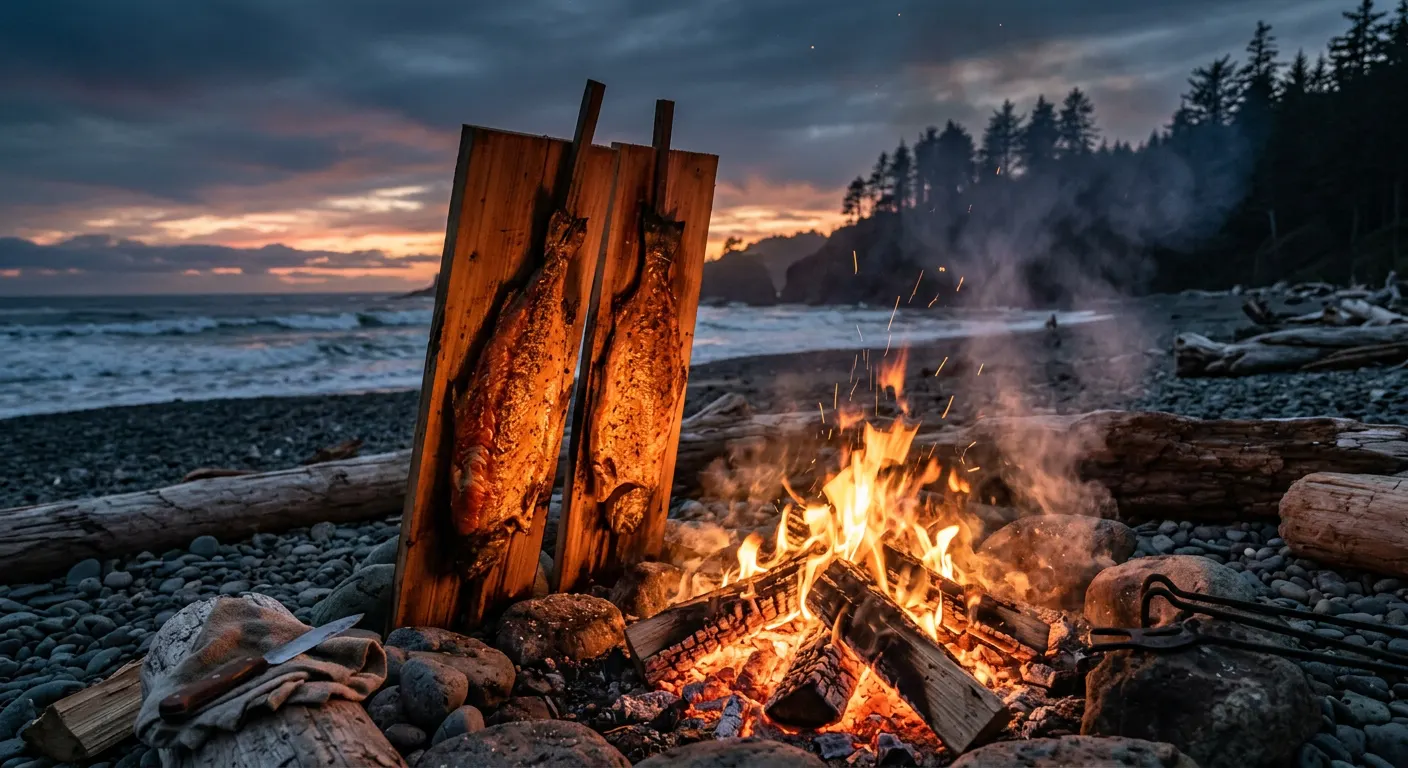
Cedar-Stake Pit-Smoked Salmon (Ceremonial-Style)
Pacific Northwest (Coast Salish / Chinook). This is the iconic image of Pacific Northwest cooking, whole sides of salmon splayed on cedar stakes and arranged around an open alder fire, slowly cooking in the radiant heat and smoke. It's a ceremonial and communal method that nations of the Northwest coast have used for countless generations. Translated to a backyard setup, it means cedar-staking large salmon sides beside a live fire or in a smoker rigged for radiant heat. A spectacular, labor-intensive showpiece with profound cultural roots.
Cook Mode
One step at a time, big text, timers, and your screen stays awake. 0/7 steps done.
Ingredients
Tap to tick off · 0/6 gathered
Method
- 4h
Begin by laying out the two 3-pound salmon sides on a clean work surface. In a small bowl, combine 0.25 cup coarse salt, 3 tbsp maple syrup, and 1 tbsp coarse black pepper to create a wet cure. Rub this mixture evenly over the flesh side of the fish. Refrigerate the salmon for 2 to 4 hours; this step draws out excess moisture and seasons the flesh through osmosis, which is critical for food safety and texture when cooking at lower, slow-radiant temperatures.
Why it matters
The brine equilibrates moisture and seasons through the flesh; skipping it gives you dry, bland salmon.
Common mistake
Curing for too long, which results in a rubbery, overly salty 'ham' texture in the fish.
- 1h
Rinse the cured salmon sides under cold running water to remove excess surface salt and syrup, then pat them completely dry with paper towels. Place the salmon on a wire rack in a cool, breezy spot or under a fan for 30 to 60 minutes. You are looking for the surface to become tacky and shiny to the touch; this sticky layer, called the pellicle, is essential for the alder smoke to adhere properly to the fish rather than sliding off.
Why it matters
The pellicle provides a tacky surface that traps smoke particles for a deep, even color and flavor.
Common mistake
Applying smoke to wet fish, which results in a dull, grey appearance and acrid flavor.
- 250°F45 min
Build a live fire using alder wood, which provides the traditional, mild, and slightly sweet flavor profile of the Pacific Northwest. If using a smoker, you must maintain a clean-burning fire with a small, hot coal bed to generate the 250°F ambient temperature required for this slow radiant cook. Ensure your cedar stakes or planks have been soaked in water for at least 2 hours to prevent them from igniting during the cook.
Why it matters
Alder provides the authentic regional flavor profile that complements the natural fats of the salmon.
Common mistake
Using resinous woods like pine or fir which produce bitter, unpalatable smoke.
- 250°F1h
Secure the salmon sides to the soaked cedar stakes or lay them skin-side down on large cedar planks. In a traditional setup, the stakes are angled toward the fire; in a smoker, position the fish in the path of the heat but not directly over the flame. The goal is to maximize radiant heat—heat transferring through the air—to gently melt the fats and cook the protein without scorching the exterior.
Why it matters
Radiant heat allows for a gradual internal temperature rise, keeping the delicate proteins intact.
Common mistake
Placing the fish too close to the flame, which causes the surface to char before the middle is cooked.
- 140°F3h
Cook the salmon for approximately 3 to 4 hours total, rotating the stakes or planks halfway through to ensure even exposure to the heat source. Watch for the 'albumin' (white protein) just starting to bead on the surface. Check the internal temperature at the thickest part of the fillet frequently toward the end of the cook. You are aiming for an internal temperature of 140°F, which ensures the fish is safe from pathogens while remaining moist.
Why it matters
Pulling at 140°F accounts for carryover cooking, ensuring the fish does not exceed 145°F and become dry.
Common mistake
Relying on time alone rather than taking an internal temperature reading.
- 15 min
Once the target internal temperature is reached, carefully move the staked or planked salmon away from the heat source. Let the fish rest for 10 to 15 minutes. This allows the internal juices, which have been pushed toward the surface by the heat, to redistribute through the muscle fibers. Resting also allows the fish to finish cooking via carryover heat, settling the texture for a clean flake when served.
Why it matters
Resting prevents the juices from running out the moment the fish is flaked, keeping it succulent.
Common mistake
Serving immediately from the fire, which leads to a dry mouthfeel and loss of moisture.
Present the salmon still on the cedar stakes or planks for a dramatic and authentic presentation. Carefully slide a wide spatula between the skin and the flesh to lift large, smoky portions for the 12 guests. The cedar-scented, alder-smoked salmon should flake easily into large chunks. Serve immediately while the fats are still warm and the cedar aroma is at its peak.
Why it matters
The communal style honors the traditional Pacific Northwest preparation and cultural significance.
Common mistake
Over-handling the fish during service, which causes it to crumble into small pieces.
Sauce It
Cooks & Reviews
Guild members can rate this recipe, log their cooks and share photos.
Sign in to continueMember reviews
No reviews yet — be the first to rate this cook.
Ask the Pitmaster about this recipe
Substitutions, scaling, technique, troubleshooting — get answers grounded in this cook.
Sign in to try the AI Pitmaster on Cedar-Stake Pit-Smoked Salmon (Ceremonial-Style). New members get 3 free questions.
Sign in to tryComments(0)
Loading comments…