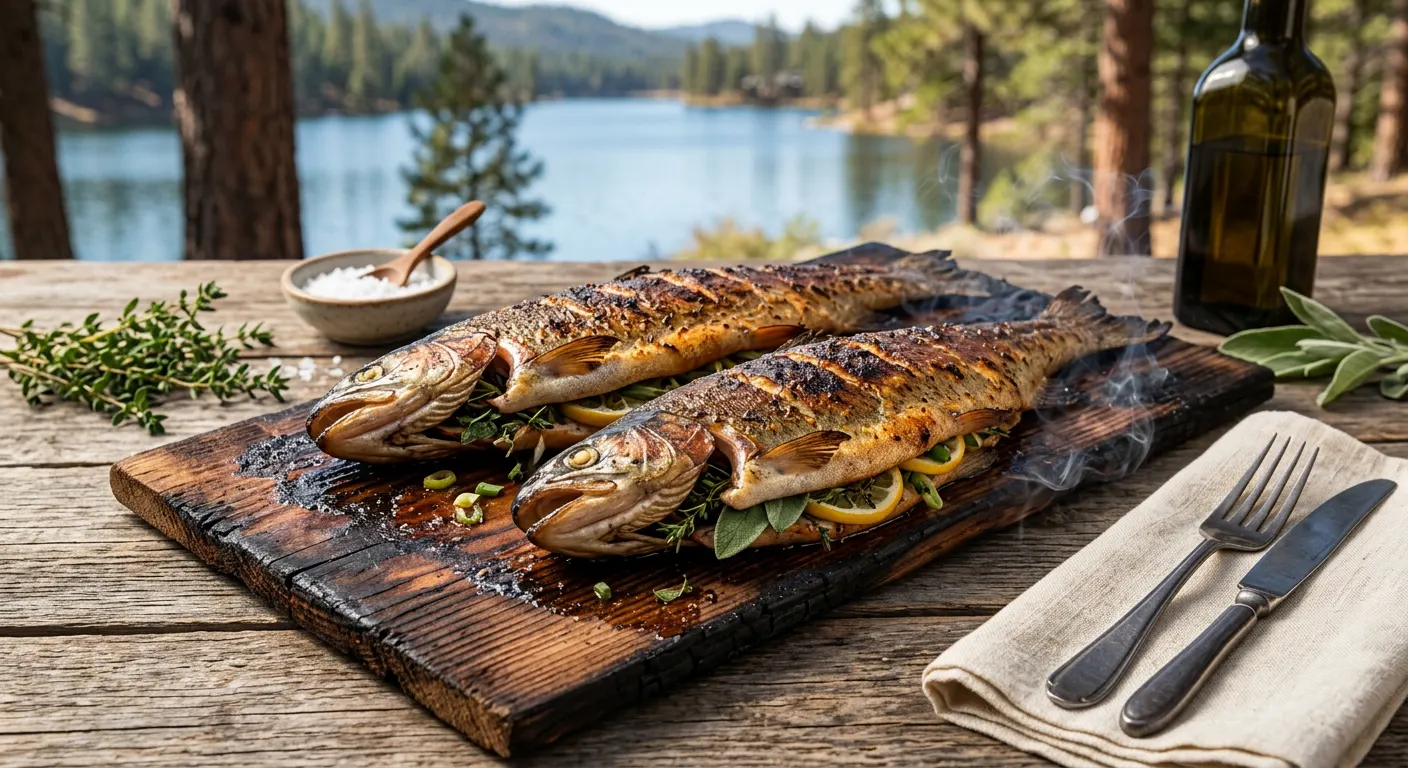
Cedar-Smoked Whole Trout
Pacific Northwest / Great Lakes. Freshwater trout has been a staple for inland and coastal nations alike, and smoking it whole over cedar and alder is about as traditional as cooking gets. A simple brine seasons it through, cedar and alder give it that distinctive Northwest perfume, and the whole fish stays moist on the bone. Stuff the cavity with foraged-style aromatics and you've got a clean, beautiful plate that's nearly foolproof.
Cook Mode
One step at a time, big text, timers, and your screen stays awake. 0/7 steps done.
Ingredients
Tap to tick off · 0/8 gathered
Method
- 1h
Combine 4 cups of water, 0.25 cup coarse salt, 2 tbsp maple syrup, and 1 tbsp black peppercorns in a saucepan. Bring to a simmer only until the salt and maple syrup are fully dissolved, then remove from heat. You must chill this brine to below 40°F before adding the trout; adding raw fish to warm liquid creates a bacterial breeding ground in the danger zone. Once cold, submerge the two 1lb whole cleaned trout completely, ensuring the brine reaches inside the cavities.
Why it matters
The brine seasons the fish to the bone and denatures proteins to help the delicate flesh retain moisture during smoking.
Common mistake
Using warm brine which partially cooks the fish and creates a food safety hazard.
- 45 min
Remove the trout from the brine and discard the liquid. Pat the skin and the interior cavity of the fish bone-dry using paper towels. Place the fish on a cooling rack over a sheet pan and leave them in a cool, breezy spot or under a fan for 30 to 60 minutes. You are looking for the skin to become tacky and slightly shiny to the touch; this sticky layer is the pellicle.
Why it matters
A proper pellicle provides a surface for smoke vapors to adhere to, preventing a muddy or bitter flavor profile.
Common mistake
Smoking a wet fish, which results in steamed skin and poor smoke absorption.
- 10 min
Once the pellicle has set, prepare your aromatics. Stuff each trout cavity with the fresh sage, thyme, lemon slices, and wild onion or scallions. Do not overstuff; you want enough room for heat to circulate through the cavity to ensure the fish cooks evenly from the inside out. The aromatics will steam slightly inside the fish, perfuming the meat while the wood smoke flavors the exterior.
Why it matters
Interior aromatics provide a counterpoint to the heavy smoke and season the meat from the inside.
Common mistake
Packing the cavity so tightly that the thickest part of the fish takes too long to reach a safe temperature.
- 200°F20 min
Preheat your smoker to a steady 200°F using a blend of alder pellets and cedar accents. If using a charcoal smoker, place cedar planks or chips over alder wood. Ensure your grates are clean and lightly oiled. This low temperature is critical for delicate trout; high heat will cause the proteins to contract too quickly, squeezing out the fats and leaving the fish dry and chalky.
Why it matters
Maintaining a low, consistent temperature prevents 'white albumin' from leaking out and drying the fish.
Common mistake
Running the smoker too hot, which destroys the delicate texture of freshwater trout.
- 145°F1h 15m
Place the whole trout directly on the smoker grates, or on a cedar plank if preferred for more intense flavor. Close the lid and maintain a thin, blue smoke. Smoke the fish until the internal temperature at the thickest part—just behind the head—reaches 145°F. The skin should look bronzed and the meat should feel firm but should yield slightly when pressed.
Why it matters
Cooking to a specific internal temperature rather than time ensures food safety and optimal moisture.
Common mistake
Opening the lid repeatedly to check progress, which causes temperature swings and lengthens cook time.
- 10 min
Remove the trout from the smoker and place them on a warm platter. Tent very loosely with foil—do not wrap tightly or the skin will turn soggy from trapped steam. Let the fish rest for 10 minutes. During this time, the internal juices will redistribute, and the carryover heat will finish the setting of the proteins, making it easier to pull the meat away from the bones cleanly.
Why it matters
Resting allows the muscle fibers to relax, ensuring the fish stays moist when carved or flaked.
Common mistake
Shredding the fish immediately, which causes the moisture to evaporate instantly.
To serve, use a flat spatula to lift the trout. If serving on the bone, demonstrate how to lift the top fillet away from the spine, pull the spine out whole, and access the bottom fillet. Serve warm with your choice of maple-mustard glaze or traditional wojapi. The meat should be flakey, moist, and carry a distinct scent of cedar and sage.
Why it matters
Proper presentation honors the whole-animal cooking tradition and ensures no small bones are missed by the diner.
Common mistake
Forgetting to warn diners about the small pin bones inherent in whole trout.
Sauce It
Cooks & Reviews
Guild members can rate this recipe, log their cooks and share photos.
Sign in to continueMember reviews
No reviews yet — be the first to rate this cook.
Ask the Pitmaster about this recipe
Substitutions, scaling, technique, troubleshooting — get answers grounded in this cook.
Sign in to try the AI Pitmaster on Cedar-Smoked Whole Trout. New members get 3 free questions.
Sign in to tryComments(0)
Loading comments…