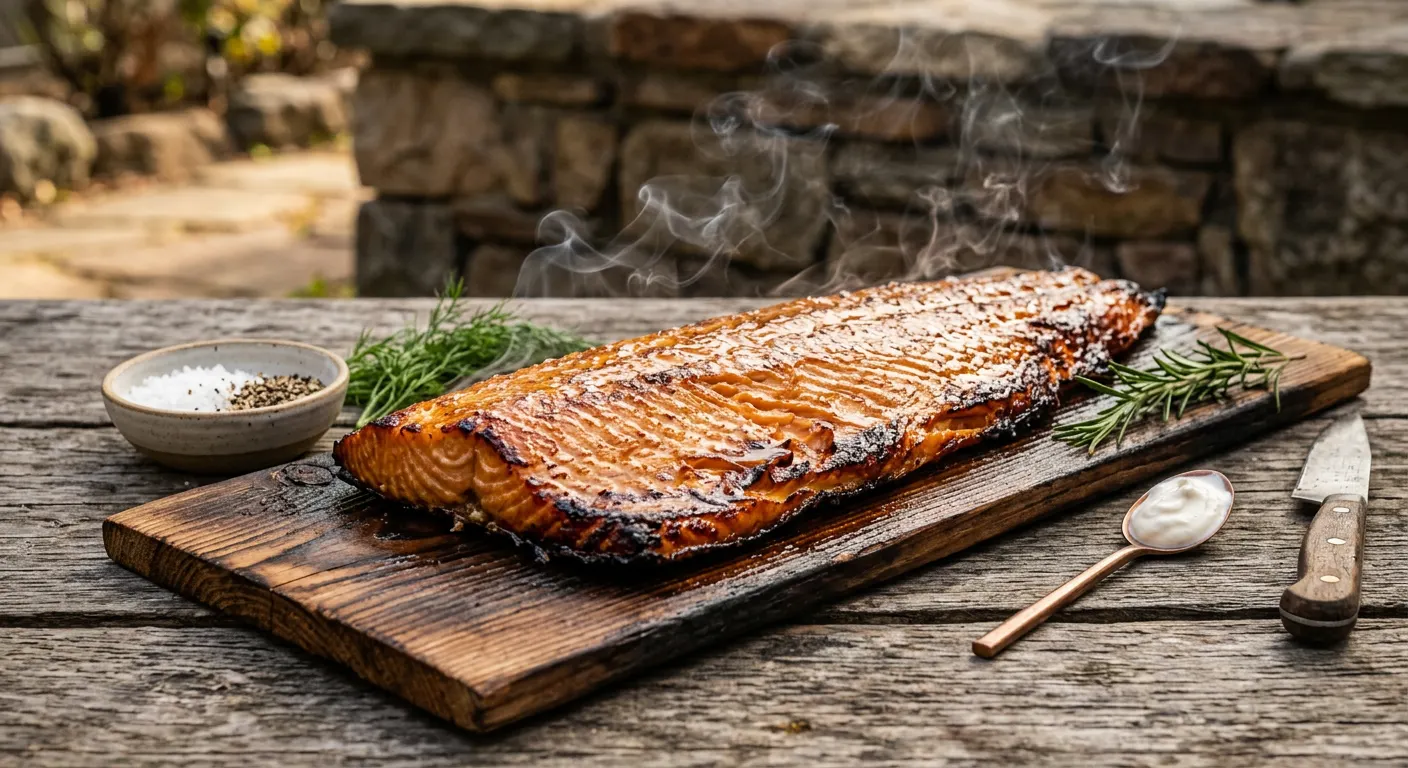
Cedar-Plank Smoked Salmon
Pacific Northwest (Coast Salish / Chinook). This is the dish at the very root of North American smoking. Pacific Northwest nations have cooked salmon on cedar beside the fire for thousands of years, and it remains one of the most beautiful ways to treat the fish. A simple maple-and-salt cure, a soaked cedar plank, and gentle alder smoke. The cedar steams and chars from below, perfuming the salmon with woodsmoke and resin. Start here, it's where the whole tradition begins.
Cook Mode
One step at a time, big text, timers, and your screen stays awake. 0/8 steps done.
Ingredients
Tap to tick off · 0/6 gathered
Method
- 2h
Begin by fully submerging one cedar grilling plank in water for at least 120 minutes. Use a heavy weight like a cast-iron skillet to keep it from floating, ensuring the wood fibers are completely saturated. This saturation is critical because it creates a barrier of steam between the hot grate and the fish, allowing the wood to char and release its aromatic oils without igniting. A dry plank will catch fire and incinerate the protein before it reaches doneness.
Why it matters
Proper soaking prevents the plank from catching fire while providing the essential steam that keeps the salmon moist.
Common mistake
Using a dry or only partially soaked plank which leads to flare-ups and bitter, burnt fish.
- 2h
In a small bowl, mix 3 tbsp maple syrup, 2 tbsp coarse salt, 1 tbsp coarsely ground black pepper, and the zest of 1 lemon to create a thick curing paste. Pat the 2.25 lbs salmon side dry with paper towels and coat the flesh side evenly with the mixture. The salt-to-sugar ratio in this cure is designed to denature the proteins slightly and draw out excess moisture, which firms up the texture and seasons the deep layers of the fish rather than just the surface.
Why it matters
The salt and sugar work together to bridge the gap between seasoning and preservation, improving both texture and shelf life.
Common mistake
Skipping the cure time, which results in a mushy texture and a lack of salt penetration in the thickest part of the fillet.
- 1h
After the 2–4 hour cure, rinse the salmon under cold running water to remove excess surface salt and maple, then pat it bone-dry with paper towels. Place the salmon on a wire rack over a baking sheet and refrigerate it uncovered for at least 60 minutes. This process develops the 'pellicle,' a tacky/sticky skin on the surface of the flesh. Without a pellicle, the alder smoke cannot properly adhere to the fish, and you risk the protein 'bleeding' white albumin during the cook.
Why it matters
The pellicle acts as the landing pad for smoke molecules, ensuring a deep color and rich smoky flavor.
Common mistake
Putting wet fish into the smoker, which prevents smoke adhesion and causes the finish to look gray and unappealing.
- 225°F20 min
Preheat your smoker to a steady 225°F using alder wood pellets or chunks. Alder is the traditional choice for Northwest salmon because its mild, sweet smoke profile doesn't overpower the delicate fat of the fish. Ensure your grates are clean and that you have a spray bottle of water nearby. While the plank is soaked, the edges can still catch a flame if the airflow is high or the fat drippings ignite.
Why it matters
Establishing a clean, thin blue smoke at 225°F ensures the fish gently warms through without the fats breaking down too rapidly.
Common mistake
Trying to smoke with heavy or acrid smoke which can make the delicate salmon taste like campfire ash.
- 225°F1h 15m
Place the salmon skin-side down on the soaked cedar plank and set the plank directly on the smoker grates. Close the lid and maintain 225°F. During this phase, the salmon is heated from above by the alder smoke and from below by the steaming, charring cedar. Monitor the chamber temp closely; salmon is highly sensitive to the 'Danger Zone' (40-140°F), so you want a steady rise in temperature to ensure safety without drying out the edges.
Why it matters
The dual-action of the alder smoke and the cedar steam creates the complex, authentic Pacific Northwest flavor profile.
Common mistake
Opening the lid too often, which lets out the cedar steam and causes the plank to dry out and potentially ignite.
- 140°F
Using a high-quality instant-read thermometer, check the thickest part of the salmon. You are looking for an internal temperature of 140°F. At this point, the salmon will be opaque and flake easily with a fork, but will still be moist. Carryover cooking will bring the final temperature to approximately 145°F, which is the USDA recommended temperature for fish. If you see white beads of protein (albumin) pushing out of the flesh, you are cooking it too fast or too hot.
Why it matters
Precision temperature control is the only way to guarantee the salmon is safe to eat while remaining juicy.
Common mistake
Relying on time rather than internal temperature, leading to either undercooked centers or dry, chalky fish.
- 145°F10 min
Remove the plank and salmon from the smoker carefully. Allow the fish to rest on the plank for 10 minutes before serving. During this time, the internal juices redistribute throughout the fillet. If you cut into it immediately, the moisture will leak out, leaving the fish dry. The cedar plank will continue to smell incredible as it cools, adding to the sensory experience of the dish.
Why it matters
Resting allows the muscle fibers to relax and reabsorb moisture lost during the heat of the smoke.
Common mistake
Moving the salmon to a cold plate immediately, which stops the gentle finishing process provided by the warm plank.
Serve the salmon directly on the charred cedar plank for a traditional presentation. Drizzle a small amount of fresh maple syrup over the top to refresh the glaze if desired. Use a spatula to lift the flesh away from the skin, which should remain stuck to the wood. This method highlights the contrast between the sweet maple cure, the sharp lemon zest, and the deep, resinous cedar smoke.
Why it matters
Serving on the plank retains heat and maintains the aromatic connection to the wood that defines this cooking style.
Common mistake
Scraping the skin off the plank, which often results in serving the bitter, charred bits of the wood-facing skin.
Sauce It
Cooks & Reviews
Guild members can rate this recipe, log their cooks and share photos.
Sign in to continueMember reviews
No reviews yet — be the first to rate this cook.
Ask the Pitmaster about this recipe
Substitutions, scaling, technique, troubleshooting — get answers grounded in this cook.
Sign in to try the AI Pitmaster on Cedar-Plank Smoked Salmon. New members get 3 free questions.
Sign in to tryComments(0)
Loading comments…