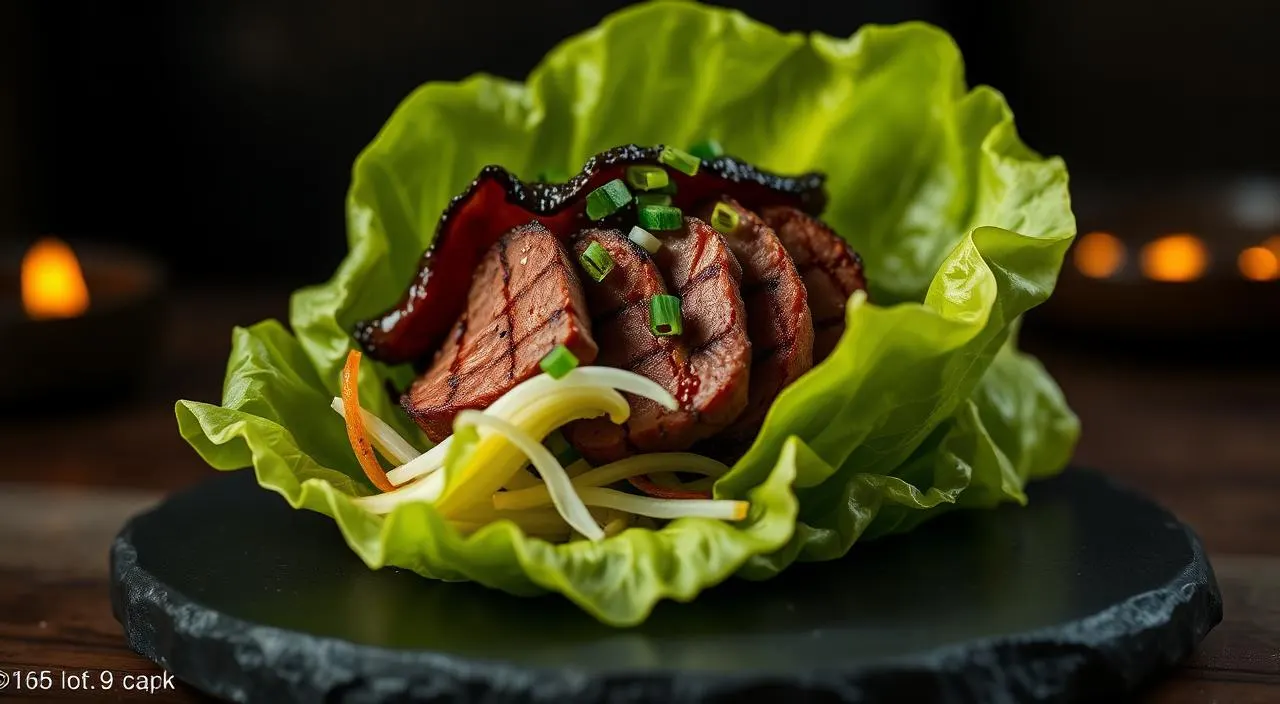
Carne Asada Korean Fusion Ssam
Uruguayan thin beef, grilled over high heat with nothing but salt, wrapped in butter lettuce with gochujang chimichurri and pickled daikon. Two minimalist traditions colliding. You'd think they'd fight — they don't.
Cook Mode
One step at a time, big text, timers, and your screen stays awake. 0/7 steps done.
Ingredients
Tap to tick off · 0/17 gathered
- — CARNE ASADA —
- — GOCHUJANG CHIMICHURRI —
- — QUICK-PICKLED DAIKON —
- — SSAM —
Method
- 30 min
Begin by prepping your quick-pickled components to allow for acid penetration. In a small non-reactive bowl, combine 1 cup of julienned daikon radish with 0.5 cup rice wine vinegar, 1 tbsp sugar, and 1 tsp salt. Stir vigorously until the sugar and salt are fully dissolved. This process uses acetic acid to soften the cellular structure of the radish while providing a bright, acidic counterpoint to the fatty skirt steak. Refrigerate for at least 30 minutes to ensure the pickling brine fully equilibrates.
Why it matters
The acidity of the pickled daikon cuts through the richness of the beef fat and the heat of the gochujang.
Common mistake
Using a reactive metal bowl which can impart a metallic taste to the vinegar-based brine.
- 10 min
Compose the fusion sauce by whisking together 2 tbsp gochujang, 0.5 cup finely chopped flat-leaf parsley, and 3 cloves of minced garlic. Slowly emulsify in 0.25 cup olive oil and 1 tsp sesame oil, then balance the mixture with 2 tbsp red wine vinegar, 1 tsp honey, and 0.5 tsp salt. The gochujang provides deep fermented umami and moderate heat, while the oils carry the aromatic oils from the garlic and parsley. Allow this to sit at room temperature while you prep the beef to let the flavors meld.
Why it matters
Emulsifying the oils with the vinegar and paste ensures a consistent flavor profile in every bite of the ssam.
Common mistake
Adding too much honey early on, which can mask the complex fermentation notes of the gochujang.
- 10 min
Trim any excessive silverskin from the 2 lbs of outside skirt steak, but leave the intramuscular fat intact for flavor. Pat the meat completely dry with paper towels to ensure a rapid Maillard reaction once it hits the heat. Season aggressively with 2 tbsp coarse salt and 1 tbsp black pepper. Skirt steak is a thin, fibrous muscle; the coarse salt helps create a crust that traps juices within the loose grain of the beef during the high-heat sear.
Why it matters
Removing surface moisture is the most critical step for achieving a professional-grade crust on thin cuts of beef.
Common mistake
Using fine table salt which can easily over-season and chemically 'cook' the thin meat surface too quickly.
- 600°F15 min
Prepare your grill for direct high-heat cooking, aiming for a grate temperature of at least 600°F. If using charcoal, wait until the coals are glowing orange and covered in a light gray ash. Clean the grates thoroughly and wipe them with a lightly oiled towel using tongs. This high temperature is necessary to achieve a char on the outside of the skirt steak before the thin interior exceeds a medium-rare temperature, preventing the meat from becoming rubbery.
Why it matters
A ripping hot grill minimizes the time meat spends in the heat, preserving the internal moisture of thin cuts.
Common mistake
Attempting to grill skirt steak over a medium flame, which results in grey, overcooked meat without a crust.
- 130°F8 min
Place the seasoned skirt steak directly over the hottest part of the fire. Grill for approximately 3 to 4 minutes per side. Watch for the meat to release easily from the grates; if it sticks, the crust hasn't formed yet. Because skirt steak is thin, use an instant-read thermometer to pull the meat as soon as it hits an internal temperature of 130°F. The 40-140°F danger zone is passed almost instantly here, so focus entirely on preventing overcooking.
Why it matters
Skirt steak becomes incredibly tough if cooked past medium due to its coarse muscle fibers.
Common mistake
Walking away from the grill; the high fat content in skirt steak can cause significant flare-ups.
- 135°F7 min
Transfer the beef to a warm cutting board and tent loosely with foil. Allow the meat to rest for at least 5 to 7 minutes. This allows the muscle fibers to relax and reabsorb localized moisture, and permits carryover cooking to bring the final internal temperature to a perfect 135°F. After resting, identify the grain—which runs crosswise on skirt steak—and slice thin strips at a 45-degree angle against that grain to ensure a tender, easy-to-bite texture.
Why it matters
Slicing with the grain instead of against it will make even the best-quality skirt steak feel impossible to chew.
Common mistake
Slicing the meat immediately after it leaves the grill, causing all the internal juices to run out onto the board.
- 5 min
Wash and dry the butter lettuce leaves, ensuring they are pliable and intact. To serve, place a small amount of optional steamed white rice in the center of a leaf, followed by 2-3 slices of the grilled beef. Top with a generous spoonful of the gochujang chimichurri, a few strands of pickled daikon, and a sprinkle of sliced scallions. The goal is a 'one-bite' wrap that hits every flavor profile: fat, salt, acid, heat, and umami.
Why it matters
The structural integrity of the butter lettuce is what makes the ssam a functional and clean hand-held meal.
Common mistake
Overstuffing the wrap, which causes the leaf to tear and the sauces to spill.
Sauce It
Cooks & Reviews
Guild members can rate this recipe, log their cooks and share photos.
Sign in to continueMember reviews
No reviews yet — be the first to rate this cook.
Ask the Pitmaster about this recipe
Substitutions, scaling, technique, troubleshooting — get answers grounded in this cook.
Sign in to try the AI Pitmaster on Carne Asada Korean Fusion Ssam. New members get 3 free questions.
Sign in to tryComments(0)
Loading comments…