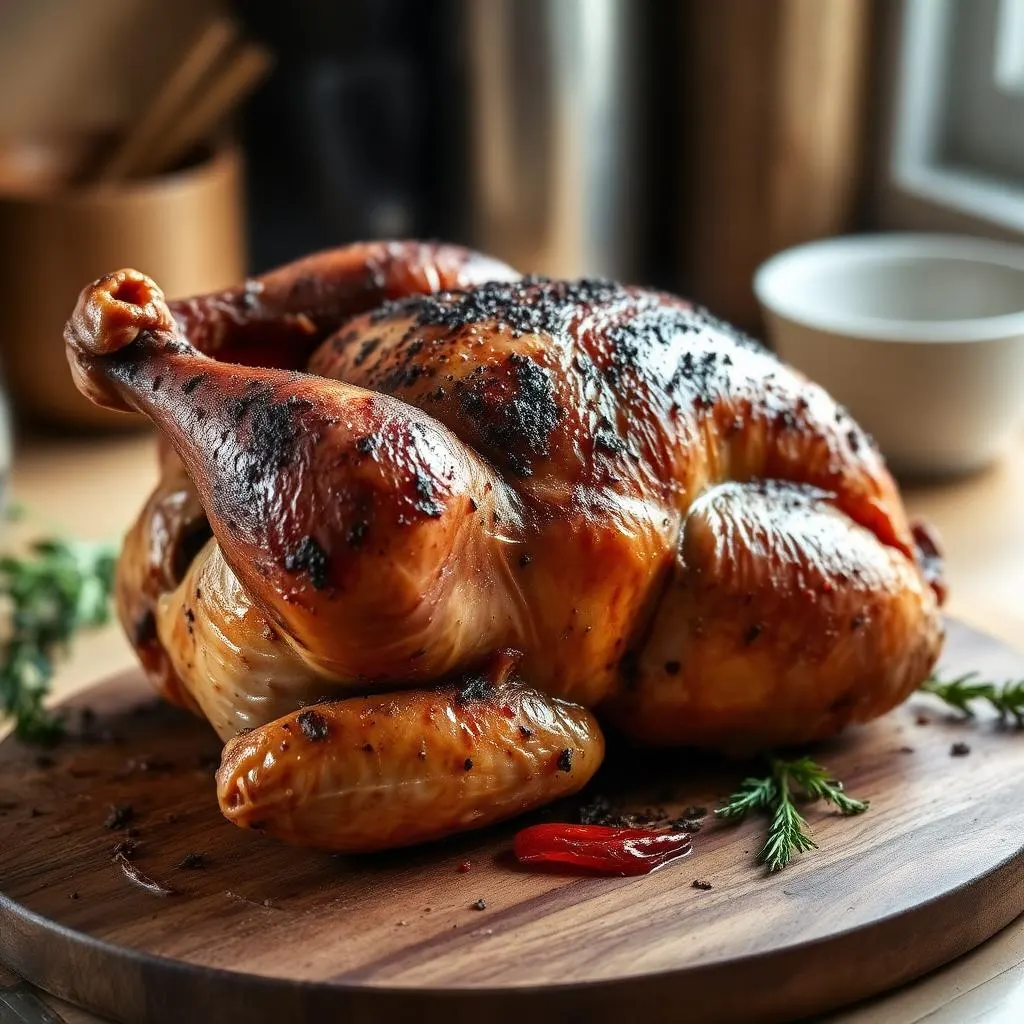
Caraway-Juniper Smoked Chicken
Caraway is the taste of central Europe — the seed in rye bread and sauerkraut. Paired with juniper and spatchcocked for even cooking, an everyday smoke with real regional character.
Cook Mode
One step at a time, big text, timers, and your screen stays awake. 0/8 steps done.
Ingredients
Tap to tick off · 0/7 gathered
- — MAIN —
- — RUB —
Method
- 15 min
Begin by removing the backbone of the 4.5 lb chicken using kitchen shears, then flip it over and press firmly on the breastbone until it cracks and the bird lies completely flat. This technique, called spatchcocking, ensures even heat distribution across both the white and dark meat, preventing the breast from drying out while the thighs reach safe temperatures. Pat the entire surface bone-dry with paper towels to ensure the oil and spices adhere properly and to facilitate a better skin set during the smoking process.
Why it matters
Flattening the bird ensures the leg quarters and breast meat finish cooking at the same time, maximizing moisture retention.
Common mistake
Leaving the backbone in or failing to flatten the breastbone, which leads to uneven cooking speeds.
- 10 min
Combine 1 tbsp pulverized toasted caraway seeds, 1 tbsp ground toasted juniper berries, 1 tbsp coarse salt, 1 tsp black pepper, and 1 tsp garlic powder with 2 tbsp neutral oil to form a thick paste. Carefully loosen the skin over the breast and thighs with your fingers and work about half of the mixture directly onto the meat underneath; apply the remaining paste to the exterior skin. Using oil as a binder helps the fat-soluble aromatics in the caraway and juniper penetrate the muscle fibers more effectively than a dry rub alone.
Why it matters
Direct meat-to-spice contact under the skin ensures the deep European flavors of rye and pine permeate the bird rather than just sitting on the surface.
Common mistake
Only seasoning the skin, which results in flavorful skin but bland, unseasoned meat.
- 4h
Place the seasoned chicken on a wire rack over a baking sheet and refrigerate uncovered for 4 to 12 hours. This period allows the 1 tbsp of coarse salt to draw moisture out of the skin through osmosis, dissolving the salt into a brine that is then reabsorbed deeper into the meat for seasoning. The cold air also dries the skin surface, which is critical for achieving a bite-through texture rather than rubbery skin once it hits the smoker.
Why it matters
The dry-brining process seasons the bird to the bone while preparing the skin for maximum smoke absorption and crispness.
Common mistake
Covering the chicken with plastic wrap, which traps moisture and prevents the skin from drying out.
- 275°F30 min
Preheat your smoker to a steady 275°F using beech or apple wood for a mild, clean smoke profile that won't overwhelm the delicate juniper notes. Ensure your fire is producing 'blue smoke'—a thin, barely visible vapor—rather than thick white billows, which can leave a bitter, creosote-like taste on poultry skin. Adding a water pan to the cook chamber is recommended to keep the environment humid, which prevents the exterior of the chicken from toughening during the first hour of the cook.
Why it matters
Poultry skin acts like a sponge for smoke; clean combustion is vital to prevent the bird from tasting like an ash tray.
Common mistake
Putting meat on before the smoker has stabilized, leading to temperature swings and soot deposition.
- 275°F2h 15m
Place the chicken skin-side up on the grate, ensuring the legs are pointed toward the hotter part of your smoker if applicable. Smoke at 275°F for approximately 2 to 2.5 hours, monitoring the bird's progress with a wireless probe thermometer. You are looking for a deep mahogany color to develop on the skin as the caraway and juniper oils toast in the heat. Monitor for the 'Danger Zone' (40°F-140°F); poultry must move through this range within 4 hours to remain food safe.
Why it matters
A consistent 275°F is high enough to render some of the subcutaneous fat for better skin texture while low enough to infuse smoke.
Common mistake
Opening the lid frequently to look at the bird, which drops the temperature and adds 15 minutes to the cook time per peek.
- 165°F5 min
The cook is complete when the thickest part of the breast reaches 165°F and the thighs reach at least 175°F. Measuring the thighs at a higher temperature ensures the connective tissue has broken down sufficiently for a tender, succulent bite, while pulling the breast at exactly 165°F prevents the lean white meat from becoming stringy. Use a high-quality instant-read thermometer to check multiple spots, as spatchcocked birds can have slight variations in thickness.
Why it matters
Pulling at these precise temperatures guarantees the optimal balance of safety and juiciness for two different types of muscle.
Common mistake
Relying on 'clear juices' as an indicator of doneness rather than using a calibrated thermometer.
- 20 min
Move the chicken to a warm cutting board and let it rest undisturbed for 15 to 20 minutes. During this time, carryover cooking will finish the bird, and the internal juices—which have been pushed toward the center by the heat—will redistribute throughout the meat. If you carve too early, the moisture will flood the board, leaving you with dry meat; resting ensures every bite remains succulent.
Why it matters
Temperature stabilization during the rest allows the muscle fibers to relax and retain their natural moisture.
Common mistake
Tenting too tightly with foil, which creates steam and softens the skin you worked so hard to dry out.
- 10 min
Separate the drumsticks from the thighs, and the wings from the body, then slice the breast meat into thick, uniform strips against the grain. Serve immediately while the skin is still bite-through and the caraway-juniper aroma is at its peak. This dish pairs excellently with traditional central European sides like sauerkraut or braised red cabbage, which echo the caraway notes in the rub.
Why it matters
Proper carving ensures every guest gets a mix of seasoned skin and juicy meat, presenting the 'Excellent' appearance required by KCBS standards.
Common mistake
Using a serrated or dull knife, which tears the skin and ruins the visual presentation.
Sauce It
Cooks & Reviews
Guild members can rate this recipe, log their cooks and share photos.
Sign in to continueMember reviews
No reviews yet — be the first to rate this cook.
Ask the Pitmaster about this recipe
Substitutions, scaling, technique, troubleshooting — get answers grounded in this cook.
Sign in to try the AI Pitmaster on Caraway-Juniper Smoked Chicken. New members get 3 free questions.
Sign in to tryComments(0)
Loading comments…