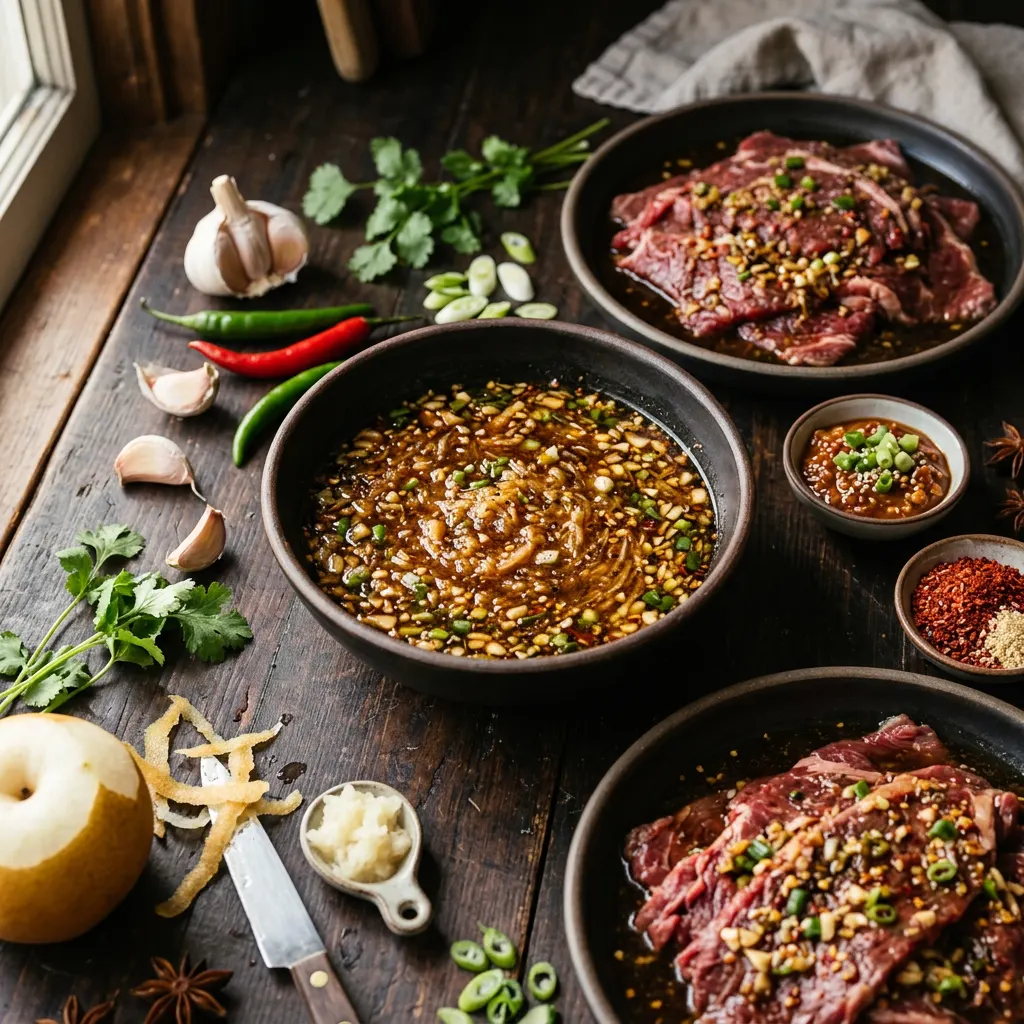
Korean Bulgogi Marinade
Grated Asian pear is the restaurant secret — a natural enzyme that leaves the beef silky. Pairs with Ssamjang and the gochugaru rub. Best on thin-sliced ribeye, sirloin, and short rib.
Cook Mode
One step at a time, big text, timers, and your screen stays awake. 0/13 steps done.
Ingredients
Tap to tick off · 0/24 gathered
Method
Whisk everything together in a bowl until the sugar dissolves.
- 10 min
Peel and grate the Asian pear. Mince the garlic and grate the fresh ginger. Gather all other marinade ingredients.
Why it matters
Prepping all ingredients before mixing ensures a smooth and efficient workflow.
Common mistake
Skipping precise measurements can throw off the delicate balance of the marinade's flavors.
- 5 min
In a large bowl, combine the soy sauce, sesame oil, and brown sugar. Whisk until the sugar is fully dissolved.
Why it matters
Dissolving the sugar ensures even distribution of sweetness throughout the marinade, preventing graininess.
Common mistake
Not fully dissolving the sugar, leading to inconsistent flavor.
- 10 min
Grate the Asian pear directly into the bowl. Add the minced garlic, grated ginger, chopped green onions, black pepper, and toasted sesame seeds to the marinade. Mix thoroughly.
Why it matters
The grated Asian pear contains enzymes (proteases) that naturally tenderize the meat, making it incredibly tender and juicy. This is a key secret to authentic bulgogi.
Common mistake
Skipping the Asian pear or using other fruits; other fruits may not have the same tenderizing enzymes or can alter the flavor profile significantly.
Marinate thin-sliced beef 2 to 6 hours, or a thicker cut overnight. Do not push past a day — the pear enzyme keeps working the whole time and will over-soften the surface. Pat dry, then cook hot and fast.
- 5 min
In a medium bowl, combine the grated Asian pear, soy sauce, brown sugar, sesame oil, minced garlic, grated ginger, and black pepper. Whisk until the brown sugar is fully dissolved.
Why it matters
Thoroughly mixing ensures all flavors are evenly distributed, creating a consistent marinade.
Common mistake
Not fully dissolving the sugar can lead to uneven sweetness and sticky spots on the meat.
Place your thin-sliced beef (ribeye, sirloin, or short rib are ideal) into a large zip-top bag or a shallow dish. Pour the prepared bulgogi marinade over the beef, ensuring all pieces are well coated. Seal the bag or cover the dish.
Why it matters
Proper coating ensures maximum flavor absorption and tenderization from the pear enzyme.
Common mistake
Overcrowding the meat in the marinade can prevent even coating and result in underdeveloped flavor.
- 2h
Refrigerate the marinating beef for at least 2 hours, or preferably overnight for best results.
Why it matters
The enzymes in the Asian pear need time to break down tough muscle fibers, resulting in incredibly tender meat.
Common mistake
Marinating for too short a time won't allow the flavors to fully impart or the pear to tenderize the meat effectively. Marinating for more than 24 hours can make the meat mushy due to over-tenderizing.
- 4h
Cover the bowl tightly with plastic wrap and refrigerate for at least 4 hours, or preferably overnight (up to 24 hours).
Why it matters
This extended marination time allows the enzymes from the pear to break down muscle fibers, resulting in melt-in-your-mouth tenderness, and for the flavors to deeply penetrate the meat.
Common mistake
Marinating for too short a time, which doesn't allow for proper tenderization and flavor development, or marinating for too long (over 24-36 hours) as the pear enzymes can turn the meat mushy.
- 425°F15 min
Set up your smoker or pellet grill for high-heat searing, around 400-450°F (204-232°C). If you don't have a searing function, use a cast-iron skillet over high heat on your grill or stove.
Why it matters
Bulgogi cooks quickly; high heat creates a delicious caramelized crust (Maillard reaction) without overcooking the thin slices.
Common mistake
Using too low a temperature will stew the meat rather than sear it, leading to a gray, less flavorful product.
- 10 min
Remove the beef from the refrigerator. If desired, pat the beef slices dry with paper towels to remove excess marinade for better smoke adhesion, but ensure some marinade remains to create a slight 'pellicle' for flavor.
Why it matters
A slightly drier surface allows the meat to better absorb smoke flavor and can help in developing a smoky crust.
Common mistake
Washing off all the marinade, which removes much of the flavor, or leaving too much liquid, which steams the meat instead of smoking it.
- 4 min
Remove the beef from the marinade, letting excess drip off. Place the thin slices of marinated beef directly onto the hot grates or cast iron in a single layer. Cook for 1-2 minutes per side, until browned and caramelized.
Why it matters
Cooking quickly at high heat preserves the juiciness of the thin slices and develops rich, savory flavors.
Common mistake
Overcrowding the cooking surface lowers the temperature and steams the meat instead of searing, preventing a good crust.
- 5 min
Once cooked, transfer the bulgogi to a serving platter. Garnish generously with freshly sliced green onions. Serve immediately with ssamjang on the side and a sprinkle of gochugaru to taste.
Why it matters
Green onions add a fresh, pungent contrast to the rich marinade. Ssamjang and gochugaru allow for personalized flavor customization.
Common mistake
Allowing the bulgogi to cool too much after cooking will diminish its tenderness and flavor.
Cooks & Reviews
Guild members can rate this recipe, log their cooks and share photos.
Sign in to continueMember reviews
No reviews yet — be the first to rate this cook.
Ask the Pitmaster about this recipe
Substitutions, scaling, technique, troubleshooting — get answers grounded in this cook.
Sign in to try the AI Pitmaster on Korean Bulgogi Marinade. New members get 3 free questions.
Sign in to tryComments(0)
Loading comments…