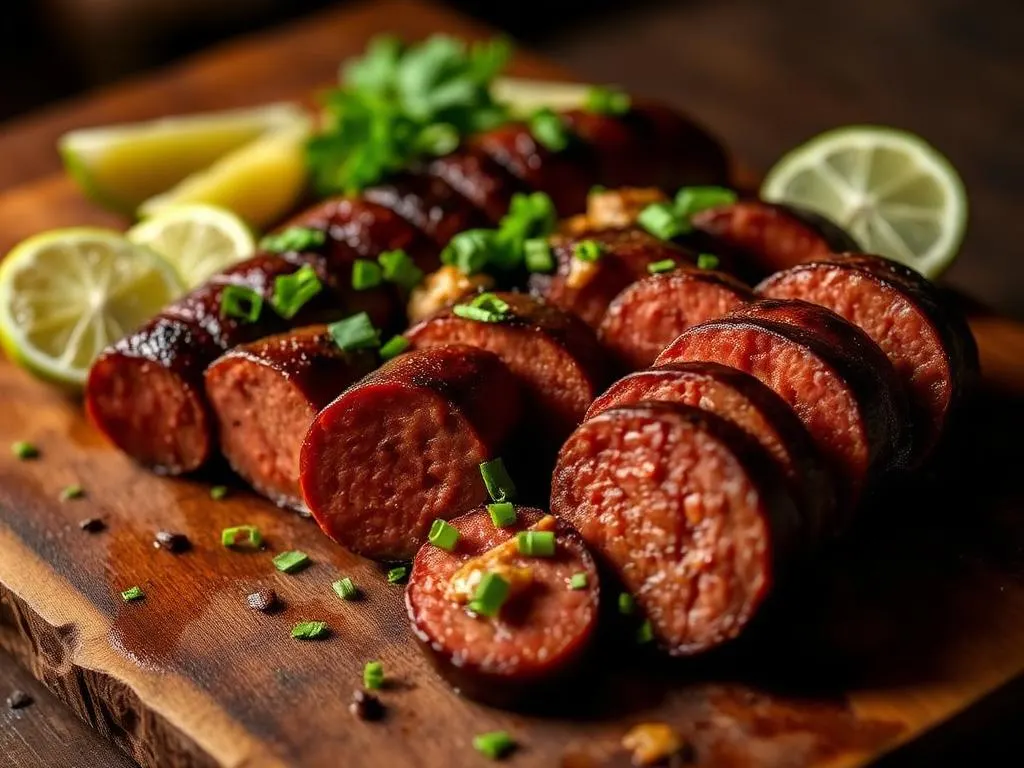
Brazilian Smoked Linguiça
The easiest thing on the list and a churrascaria staple. Linguiça is the Brazilian pork sausage, garlicky and a little smoky already. Run it through real smoke and it goes from good to addictive. Almost impossible to mess up.
Cook Mode
One step at a time, big text, timers, and your screen stays awake. 0/6 steps done.
Ingredients
Tap to tick off · 0/2 gathered
- — MAIN —
Method
- 10 min
Begin with 2 lbs of fresh linguiça sausage. Carefully separate the links if they are attached, but do not prick or pierce the casings; keeping the casing intact is critical to retaining the garlic-infused fats and juices that define this Brazilian staple. Ensure the sausage is cold when it goes onto the smoker, as this allows for better smoke adhesion during the initial rise in temperature. If the surface of the sausage is overly wet, pat it dry with a paper towel to facilitate better bark formation later.
Why it matters
Piercing the casing allows the internal moisture and flavored fats to escape, resulting in a dry, crumbly sausage.
Common mistake
Pricking the sausages with a fork which causes flare-ups and dry meat.
- 250°F30 min
Preheat your smoker to a steady 250°F using oak or apple wood. Oak provides a classic, robust depth that mimics the traditional churrascaria wood-fire profile, while apple offers a milder sweetness that complements the pork and garlic. Stabilize the temperature for at least 20 minutes before adding the meat to ensure clean blue smoke; heavy white smoke at this stage will produce a bitter, acrid flavor on the delicate sausage casings.
Why it matters
Consistent temperature management prevents the casing from becoming tough and rubbery due to heat spikes.
Common mistake
Adding meat before the fire is clean, leading to creosote buildup on the links.
- 250°F1h
Place the 2 lbs of linguiça on the grate, ensuring at least one inch of space between each link for total smoke coverage. Close the lid and monitor the internal temperature using a fine-tip probe thermometer. You are looking for a gradual climb past the 40-140°F danger zone to ensure food safety while allowing the wood chips or splits to infuse the meat. Smoke until the internal temperature reaches 150°F; do not take it to the final 160°F yet, as we need headroom for the high-heat finish.
Why it matters
Slow rendering of internal fat ensures a juicy, tender bite rather than a greasy, separated texture.
Common mistake
Crowding the links, which results in pale sides and uneven cooking.
- 160°F5 min
Once the internal temperature hits 150°F, move the sausages directly over the heat source or increase your pellet grill to its highest setting. Sear the links for 2-3 minutes per side. Watch for the casing to tighten and take on a deep mahogany color. This 'snap' is the hallmark of a professional linguiça; the high heat triggers the Maillard reaction, intensifying the garlic and smoke flavors while providing the necessary tactile resistance when bitten.
Why it matters
The high-heat finish creates the signature 'snap' and renders the final bit of surface fat for a glossy appearance.
Common mistake
Walking away during the sear; the high fat content can cause rapid flare-ups that char the casing.
- 160°F10 min
Transfer the smoked linguiça to a warm platter. Allow the sausages to rest for 5 to 10 minutes uncovered. This brief rest allows the internal juices, which are currently under pressure from the heat, to redistribute through the meat fibers and for the internal temperature to carry over to the final food-safe 160°F. Cutting into the sausage immediately will cause the flavorful juices to pour out onto the board.
Why it matters
Resting ensures the internal juices remain inside the meat when sliced, maintaining the 'addictive' quality.
Common mistake
Tenting tightly with foil, which steams the casing and ruins the 'snap' you just achieved.
- 5 min
Slice the linguiça on a sharp bias into 1-inch thick coins. This increases the surface area for the accompanying acids to penetrate. Arrange the slices on a platter with fresh lime wedges and a bowl of traditional Brazilian vinagrete (tomato and onion salsa). The acidity of the lime and the brightness of the vinagrete are essential to cut through the heavy, fatty richness of the smoked pork, creating the balanced flavor profile found in South American steakhouses.
Why it matters
Proper slicing and acidic accompaniment provide the essential balance between heavy smoke/fat and bright freshness.
Common mistake
Slicing too thin, which causes the sausage to lose its heat and textural impact rapidly.
Sauce It
Cooks & Reviews
Guild members can rate this recipe, log their cooks and share photos.
Sign in to continueMember reviews
No reviews yet — be the first to rate this cook.
Ask the Pitmaster about this recipe
Substitutions, scaling, technique, troubleshooting — get answers grounded in this cook.
Sign in to try the AI Pitmaster on Brazilian Smoked Linguiça. New members get 3 free questions.
Sign in to tryComments(0)
Loading comments…