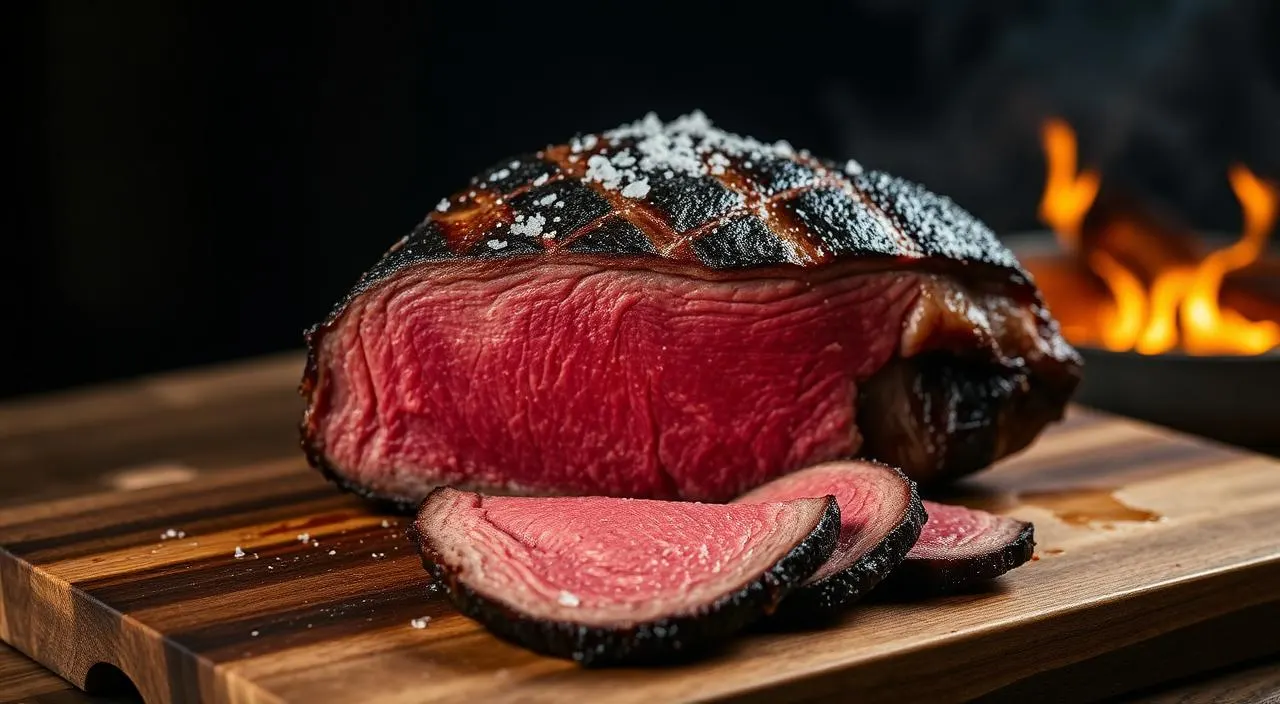
Brazilian Picanha — Rump Cap Smoked Then Seared
Picanha (the rump cap or sirloin cap) is THE Brazilian BBQ cut. It's got a thick fat cap on top that bastes the meat as it cooks. Salt only. That fat cap does everything else.
Cook Mode
One step at a time, big text, timers, and your screen stays awake. 0/7 steps done.
Ingredients
Tap to tick off · 0/3 gathered
Method
- 10 min
Take the 3.5 lb picanha and identify the thick fat cap. Using a sharp knife, score the fat in a crosshatch pattern, cutting roughly 1/4-inch deep into the fat but being careful not to pierce the red muscle underneath. This process creates more surface area for the salt to penetrate and allows the fat to render and 'baste' the meat more effectively during the cooking process.
Why it matters
Scoring prevents the fat cap from curling during the cook and ensures the salt can penetrate deep into the tissue.
Common mistake
Cutting too deep into the meat which allows juices to escape and dries out the roast.
- 45 min
Apply the 3 tbsp of coarse sea salt or rock salt generously over all sides of the roast, focusing heavily on the scored fat cap. The large salt crystals are traditional to Brazilian churrascaria and provide a crunch without over-salting as quickly as fine salt. Let the meat sit at room temperature for 30 to 45 minutes; this allows the salt to draw out moisture, dissolve, and then reabsorb back into the muscle fibers via osmosis.
Why it matters
The brine period seasons the interior of the meat and alters the protein structure to hold more moisture during the heat of the smoke.
Common mistake
Using fine table salt instead of coarse salt, which will result in an overly salty exterior.
- 250°F20 min
Set up your smoker for indirect cooking at a steady 250°F. Add your oak or applewood chunks once the temperature is stable. Avoid heavy smoke; you want a clean, blue smoke (TBS) to complement the beef rather than overpower it. Picanha is a relatively lean muscle with a heavy fat cap, so clean combustion is vital to prevent the fat from taking on a bitter, creosote flavor.
Why it matters
A stable, low temperature allows the internal temperature to rise slowly, ensuring an edge-to-edge pink interior.
Common mistake
Rushing the process and adding meat while the wood is still producing thick white, acrid smoke.
- 250°F1h
Place the picanha on the smoker fat-cap up. This position allows the rendering fat to flow over the sides of the roast as it cooks. Smoke the roast until the internal temperature reaches exactly 115°F in the thickest part. This stage is about heat penetration and smoke infusion, not the final sear. Monitor the temp closely, as picanha can move through the danger zone quickly given its shape.
Why it matters
Stopping at 115°F accounts for the carryover cooking that will occur during the high-heat sear phase.
Common mistake
Smoking the meat to your final desired doneness (135°F+) before the sear, which results in overcooked, gray meat.
- 15 min
Remove the picanha from the smoker and tent it loosely with foil. While the meat rests, open your vents or prep your grill for traditional high-heat direct searing (at least 450°F+). The rest allows the internal juices to redistribute, preventing them from bleeding out when the meat hits the intense heat of the sear. Keep the roast away from the heat for about 15 minutes.
Why it matters
Resting before the sear prevents the 'gray ring' by equalizing the heat gradient throughout the roast.
Common mistake
Moving directly from smoke to sear without a rest, which causes the exterior to overcook.
- 130°F10 min
Place the picanha over direct heat, fat-cap down first. Be extremely careful of flare-ups, as the rendered fat will drip directly onto the coals or heat source. Sear the fat for 3 to 4 minutes until it is deeply browned and crispy. Flip and sear the bottom and sides for 2 minutes each until the internal temperature reaches your target (130°F for medium-rare or 135°F for medium).
Why it matters
The sear triggers the Maillard reaction, creating the crust and complex flavors that define Brazilian BBQ.
Common mistake
Leaving the fat cap unattended; it can catch fire and char to carbon in seconds.
- 10 min
Allow a final 10-minute rest after the sear. Observe the grain of the picanha; it typically runs at a diagonal from the corner. Slice the roast against the grain into 1/2-inch strips. Slicing against the grain is mandatory for picanha because it shortens the muscle fibers, making a relatively tough sirloin cut feel incredibly tender on the palate.
Why it matters
Proper slicing technique is the difference between a tender bite and a chewy, stringy experience.
Common mistake
Slicing with the grain, which makes the meat difficult to chew regardless of how well it was cooked.
Sauce It
Cooks & Reviews
Guild members can rate this recipe, log their cooks and share photos.
Sign in to continueMember reviews
No reviews yet — be the first to rate this cook.
Ask the Pitmaster about this recipe
Substitutions, scaling, technique, troubleshooting — get answers grounded in this cook.
Sign in to try the AI Pitmaster on Brazilian Picanha — Rump Cap Smoked Then Seared. New members get 3 free questions.
Sign in to tryComments(0)
Loading comments…