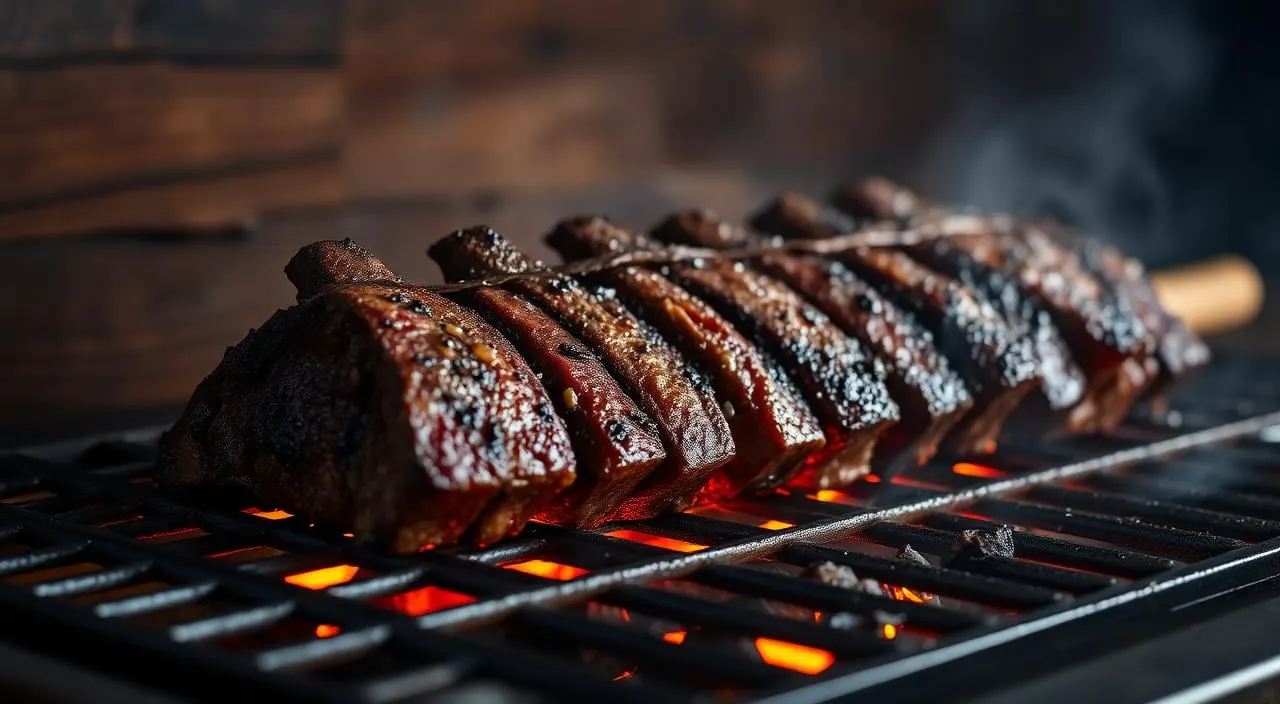
Asado de Tira — Argentine Flanken-Cut Short Ribs
Asado is the soul of Argentine BBQ, and the tira cut (flanken-style short ribs cut across the bone) is one of the most traditional things you can throw on a fire. The goal is low heat, patience, and wood smoke. No sauces, no rubs — just salt and fire doing what they do.
Cook Mode
One step at a time, big text, timers, and your screen stays awake. 0/7 steps done.
Ingredients
Tap to tick off · 0/3 gathered
Method
- 1h
Begin by removing 4 lbs of flanken-cut short ribs from the refrigerator 60 minutes prior to cooking. Pat the meat thoroughly dry with paper towels to remove surface moisture, which allows for better searing. Apply 2 tbsp of coarse kosher salt or sea salt evenly across both sides of the ribs; the salt will penetrate the muscle fibers to season deep into the tissue and improve moisture retention. Let the meat rest at room temperature during this hour to 'temper,' ensuring the cold center doesn't shock when hitting the heat, which promotes even rendering.
Why it matters
Salting early allows the sodium to denature proteins, locking in juices and ensuring seasoning isn't just surface-level.
Common mistake
Using fine table salt which can easily over-salt the thin 1/2 inch strips.
- 275°F30 min
Establish a clean indirect fire using charcoal and Quebracho wood chunks (or oak/mesquite) to reach a steady ambient temperature of 275°F. Clean the grates thoroughly to prevent sticking. If using a charcoal grill, bank your coals to one side to create a clear cool zone; if using a pellet smoker, ensure your water pan is full to maintain a humid environment. Wait for 'blue smoke'—a thin, translucent vapor—before adding meat to avoid the bitter creosote flavor that comes from heavy white smoke.
Why it matters
A stable temperature at 275°F is the sweet spot for rendering the high fat content in short ribs without drying out the thin meat.
Common mistake
Placing the meat on the grill before the fire has stabilized, leading to acrid soot on the beef.
- 275°F45 min
Place the ribs on the indirect (cool) side of the grate, bone-side down. Positioning the bones toward the heat source acts as a thermal shield, protecting the delicate marbling of the flanken cut while the heat begins to render the connective tissue. Close the lid and resist the urge to peek for at least 45 minutes. This phase is critical for the smoke to adhere to the salt-tack surface of the meat, developing the foundation of your bark.
Why it matters
Bone-side down cooking prevents the meat from tightening too quickly and protects the lower surface from drying out.
Common mistake
Opening the lid frequently, which causes temperature swings and stalls the rendering process.
- 185°F1h
At approximately the one-hour mark, flip the ribs using tongs. You are looking for a deep mahogany color and signs that the fat is beginning to bubble and soften. Monitor the internal temperature using a thermoprobe; because these are thin, the window between 'tough' and 'perfect' is narrow. Continue cooking on the indirect side until the internal temperature reaches approximately 185°F. The meat should feel yielding when pressed but still hold firmly to the bone.
Why it matters
The flip ensures both sides receive even convection heat and prevents the fat from pooling on one side.
Common mistake
Judging doneness by time alone rather than tactile cues and internal temperature.
- 203°F10 min
Move the ribs directly over the hot coals or the burner's sear zone for the final 5 to 10 minutes of the cook. This 'Argentine finish' is designed to crisp the exterior fat and create a slight char that mimics the authentic Parrilla style. Stay vigilant; the high fat content in short ribs will cause immediate flare-ups. Flip every 60 seconds until the exterior is sizzling and the internal temperature hits a final 195°F to 203°F, ensuring all collagen has converted to gelatin.
Why it matters
High-heat finishing produces the Maillard reaction, providing the signature 'grilled' flavor that smoking alone lacks.
Common mistake
Walking away during the sear, leading to carbonized, burnt meat from grease fires.
- 10 min
Transfer the ribs to a warm platter or cutting board and tent loosely with foil. Allow the meat to rest for at least 10 minutes. During this time, carryover cooking will finish the tenderization process, and the internal juices—which were pushed to the center by the high heat of the finish—will redistribute back into the muscle fibers. This ensures that when you slice the ribs, the juice stays in the meat rather than spilling onto the board.
Why it matters
Resting allows the muscle fibers to relax, converting a potentially chewy rib into a tender, succulent bite.
Common mistake
Slicing too early, resulting in dry meat and a loss of all flavorful intramuscular fats.
- 5 min
Slice the flanken strips vertically between the bones to create individual rib lollipops. Ensure each guest gets a mix of the charred exterior and the tender, smoky interior. Serve immediately while the fat is still in its rendered, silky state. In the traditional Argentine style, provide only a simple chimichurri on the side, allowing the natural beef flavor and the Quebracho smoke to remain the primary focus of the dish.
Why it matters
Properly slicing between the bones maximizes the surface area of the seasoned bark for every bite.
Common mistake
Serving on cold plates, which causes the rendered beef fat to coagulate and become waxy.
Sauce It
Cooks & Reviews
Guild members can rate this recipe, log their cooks and share photos.
Sign in to continueMember reviews
No reviews yet — be the first to rate this cook.
Ask the Pitmaster about this recipe
Substitutions, scaling, technique, troubleshooting — get answers grounded in this cook.
Sign in to try the AI Pitmaster on Asado de Tira — Argentine Flanken-Cut Short Ribs. New members get 3 free questions.
Sign in to tryComments(0)
Loading comments…