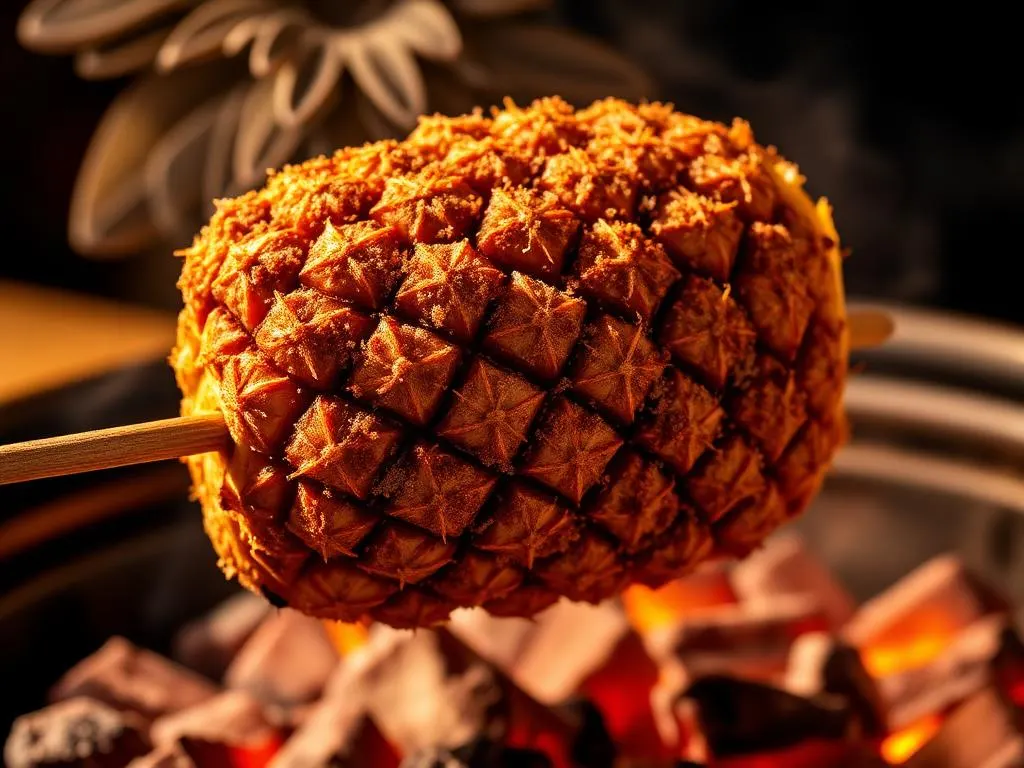
Abacaxi Assado — Smoked Cinnamon Pineapple
The churrascaria dessert, and it's pure showmanship for almost no effort. A whole pineapple crusted in cinnamon sugar, smoked until the outside caramelizes, then carved in slices right at the table. Sweet, warm, smoky, gone.
Cook Mode
One step at a time, big text, timers, and your screen stays awake. 0/6 steps done.
Ingredients
Tap to tick off · 0/3 gathered
- — MAIN —
- — CINNAMON CRUST —
Method
- 10 min
Select a ripe whole pineapple that is firm enough to withstand the heat; peel the skin deeply enough to remove the 'eyes' but leave the core intact to provide structural integrity for the skewer. Removing the skin exposes the moist flesh, which is necessary for creating the initial tackiness required to hold the dry cinnamon sugar rub during the first stage of the process.
Why it matters
Leaving the core intact prevents the fruit from softening too quickly and falling off the skewer or collapsing on the grate.
Common mistake
Removing the core too early, which causes the pineapple to lose its shape under heat.
- 5 min
In a shallow tray, combine 0.5 cup sugar and 2 tbsp ground cinnamon, mixing thoroughly to ensure even distribution. Roll the peeled pineapple through the mixture, pressing firmly so the 80/20 sugar-to-cinnamon ratio adheres to the natural juices of the fruit to create a thick, consistent coating. This initial layer is the foundation for the caramelized crust, known as the 'bark' in traditional BBQ, but here it serves as a sweet glaze.
Why it matters
The sugar draws out a small amount of surface moisture, creating a syrup that binds the cinnamon to the fruit.
Common mistake
Using a light sprinkle instead of a heavy roll, resulting in a thin, patchy glaze.
- 275°F15 min
Preheat your smoker to a steady 275°F using a clean-burning fire fueled by fruit wood like apple, cherry, or peach. Ensure the grates are scrubbed clean to prevent savory fat drippings from previous cooks from tainting the delicate sweet profile of the dessert. Indirect heat is mandatory here; we want the convective airflow to dehydrate the sugar coating into a crust rather than burning it over direct flame.
Why it matters
Fruit woods provide a mild, sweet smoke profile that complements the natural acidity of the pineapple without being overpowering.
Common mistake
Using heavy woods like mesquite or hickory which can make the fruit taste bitter and acrid.
- 275°F30 min
Place the skewered or whole pineapple on the grates and close the lid, maintaining an internal air temperature of 275°F. During this first 30 minutes, the sugar begins to melt and react with the pineapple's citric acid, while the smoke particles adhere to the tacky surface. You are looking for the sugar to transition from a dry crystalline state to a bubbling, translucent liquid state.
Why it matters
This phase allows the smoke to penetrate the outer half-inch of the fruit while the sugars undergo early-stage caramelization.
Common mistake
Opening the lid too frequently, which fluctuates the temperature and stalls the caramelization process.
- 275°F23 min
Open the smoker and carefully apply a second dusting of the remaining cinnamon-sugar mixture over the bubbling surface of the pineapple. The moisture released from the fruit will act as a glue for this second layer, building a thicker, candy-like shell. This layering technique is the secret to getting the 'churrascaria' style crust that crunches when sliced.
Why it matters
Layering the sugar ensures a varied texture where some sugar is deeply caramelized and some is newly melted.
Common mistake
Applying the second coat too early before the first layer has fully liquefied.
- 5 min
Remove the pineapple when the exterior is a deep mahogany brown and the fruit feels slightly tender when squeezed with tongs. For authentic service, hold the pineapple vertically by the skewer and use a sharp knife to shave thin, hot slices directly onto plates, moving from the top down. This exposes the steaming, pale yellow interior against the dark, smoky crust for maximum visual contrast.
Why it matters
Serving immediately ensures the temperature contrast between the hot, crispy sugar crust and the juicy, warm fruit is preserved.
Common mistake
Slicing the fruit into thick chunks, which loses the delicate ratio of crust to fruit.
Cooks & Reviews
Guild members can rate this recipe, log their cooks and share photos.
Sign in to continueMember reviews
No reviews yet — be the first to rate this cook.
Ask the Pitmaster about this recipe
Substitutions, scaling, technique, troubleshooting — get answers grounded in this cook.
Sign in to try the AI Pitmaster on Abacaxi Assado — Smoked Cinnamon Pineapple. New members get 3 free questions.
Sign in to tryComments(0)
Loading comments…